
Curiosity and independence in bloom at Starflower Montessori School
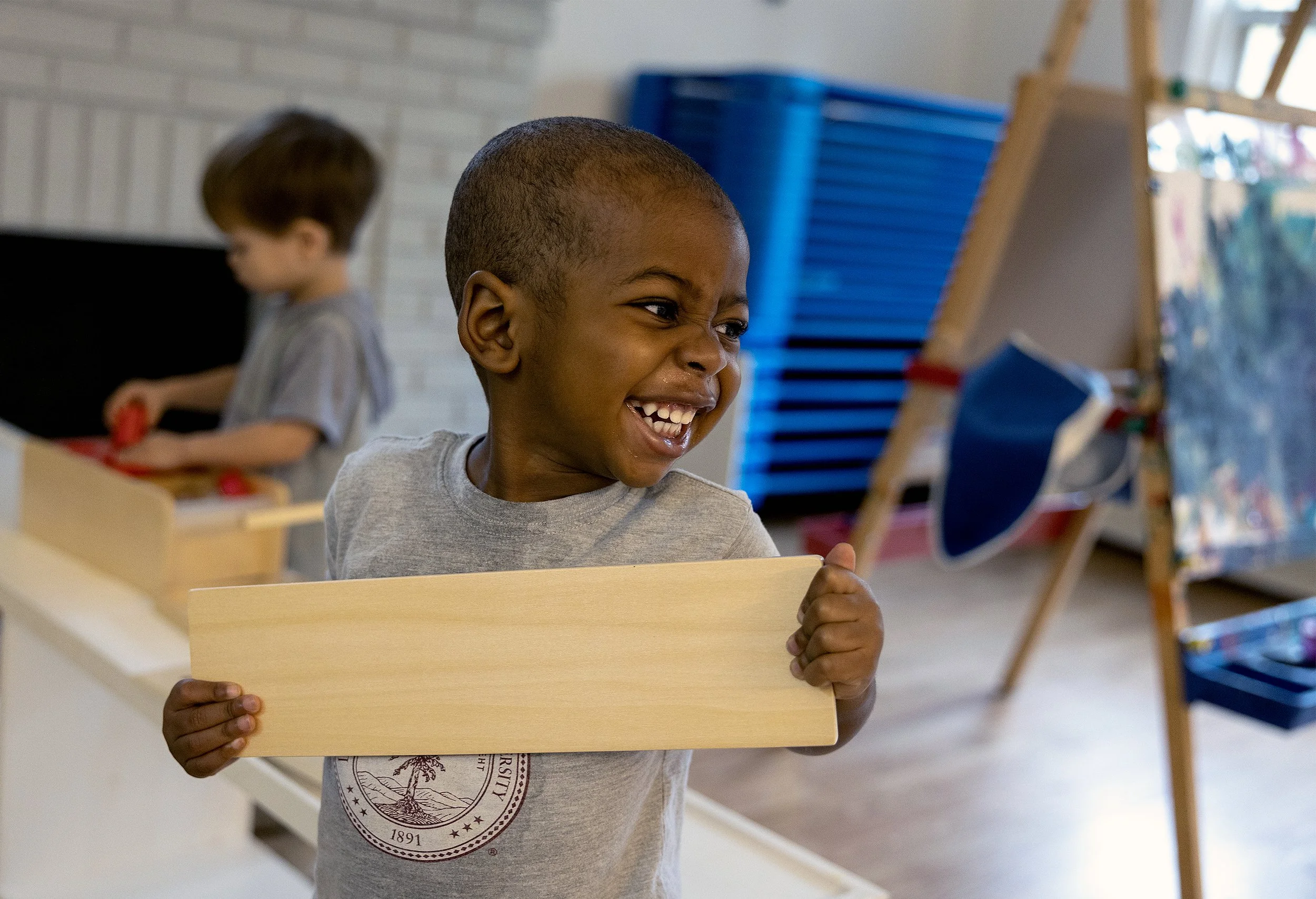
After breakfast, Jazz, right, and Maks gravitated toward a shelf of puzzles to begin a day of enrichment.
Photos and story by David Pierini, Editor
Starflowers are native to Minnesota, thriving in rich soil with tiny, eye-catching blossoms that mirror the shine of a clear nighttime sky.
Krista Lucas chose the name Starflower for her small Montessori school at 1714 Vincent Ave. N., to cultivate a bright light in each student through lessons that build curiosity, independence, and a sense of collective good.
Lucas opened Starflower’s door in June with four students. Starflower’s student body consists of toddlers, but the school is creating space for older children up to 6.
“With Montessori, children are choosing the activities they want to do throughout the day,” Lucas said. “This allows them to follow their own interests and development. And they have to learn how to navigate around each other and coordinate with each other. This gives them a beautiful social foundation.”
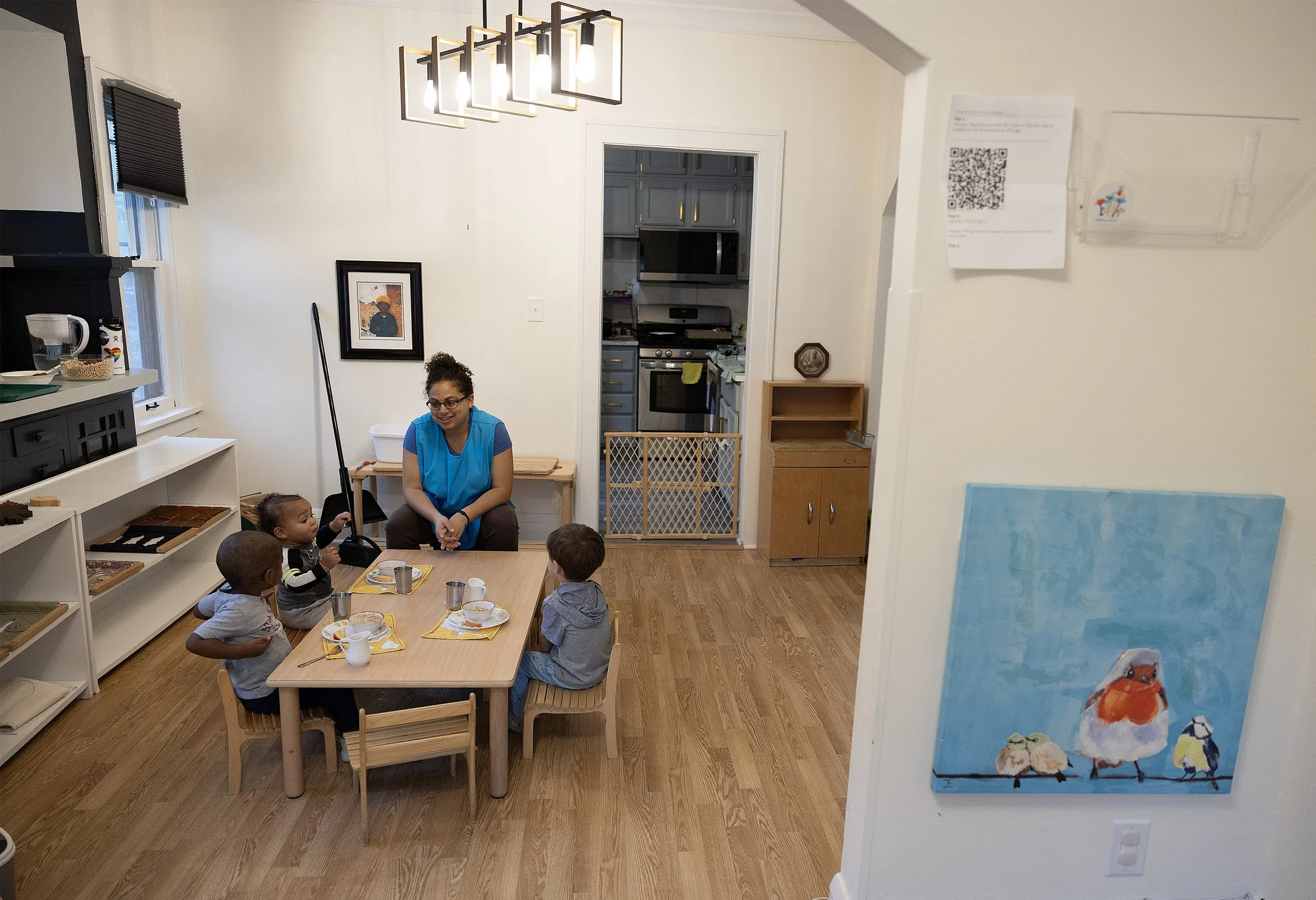
Lewis with three of her students chat and sing during breakfast.
Lucas is far from being passive in her oversight. Sometimes, she deliberately sends gentle nudges toward activities like art, card games that build memory and vocabulary, puzzles for problem-solving, and little tasks that build a sense of care in the space they are in.
The kids bus their own dishes, help sweep after breakfast, and even water plants, all with little or no prompting. Each room layout, every task, or toy is part of an environment prepared to spark development. Everything, from toys to a tub for dirty dishes, is at their level.
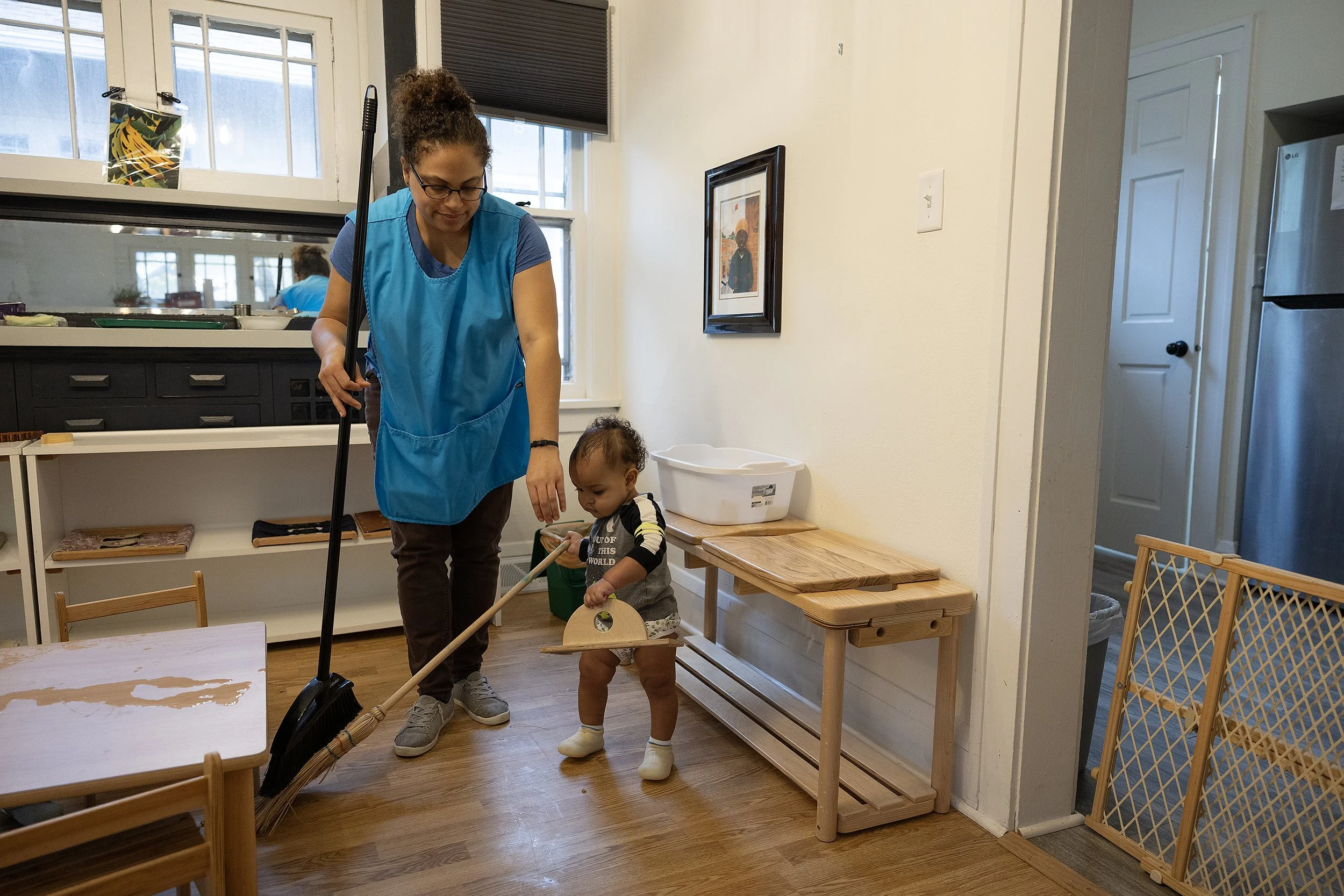
Soleil, 1, grabbed the shorter broom to help Lucas sweep up after breakfast.
Removing shoes at the door, setting the table for meals, eating and then clearing their dishes becomes routine.
“I would explain it this way,” said the Northside parent of one 2-year-old Wildflower student. She asked not to be identified. “Imagine your toddler stepping into their own world. Like adults - who show up for work, come home, take their shoes off at the door, unpack – children in a Montessori setting know what to do. A 1-and-a-half or 2-year-old setting the table, serving themselves and washing their hands without being told? Oh my gosh.”
The Wildflower mother had known Lucas when an older child had her as a teacher at a now-closed Montessori school in North. She knew Lucas had intended to start her own school and kept in touch.
A seasoned Montessori teacher who has taught in North Minneapolis, Lucas had her sights set on opening her own school on the Northside. She had a couple of partners when she began looking for a building in 2019.
She found it challenging to find a building to rent. When the COVID-19 pandemic hit, her partners dropped out, and Lucas focused on a smaller model in which teachers, not school administrators, determine the direction of the school.
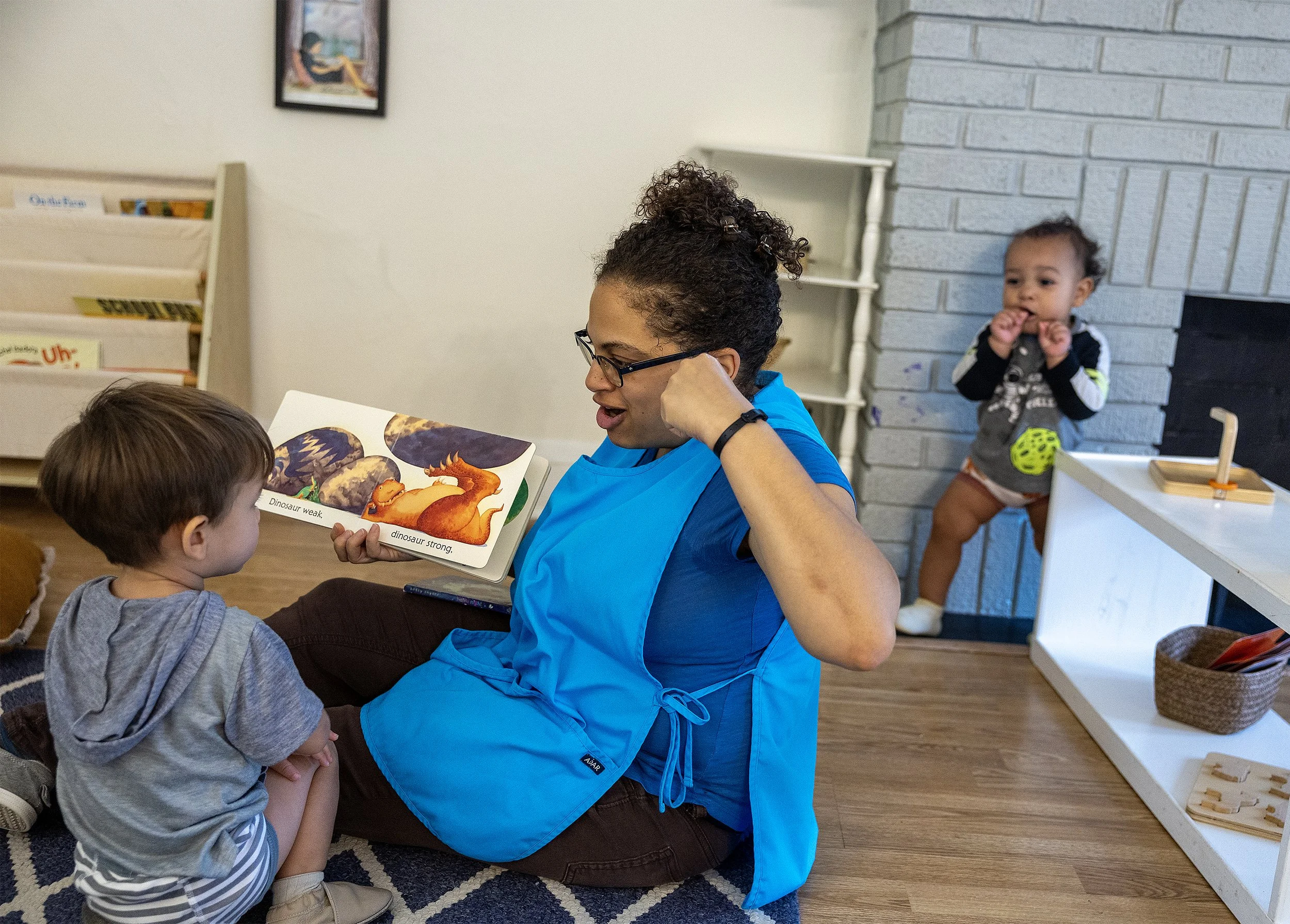
Lucas reads to Maks, flexing a bicep to illustrate the dinosaur's strength in the story.
Montessori schools began in the early 1900s and eschew formal teaching models to encourage individual interests. The method promotes confidence and independence through activities that build practical skills and problem-solving.
In a Montessori school, it is not uncommon to refer to teachers as guides. These schools come in all sizes, from small ones like Starflower to large school buildings with administrators.
Starflower is part of a network of Wildflower Montessori schools, all of which are teacher-run and in neighborhoods. The intimate setting – resembling a cross between an in-home daycare and a country schoolhouse – gives kids a chance to build relationships, both with the teacher (or guide) and fellow students.

Language cards are used for a fun, visual way to expand vocabulary. The brain is its most absorbent, Lucas said, from birth to 6.
Star Flower embraces the values of Kwanzaa – unity, self-determination, cooperative economics, collective responsibility, purpose, faith and creativity.
“It’s really about creating a culture where the children understand that we are a community together,” Lucas said. “That means we look out for each other and take care of each other. That becomes their norm for how to interact with other people.”
That model merges childcare licensing, and with rental homes cheaper and more available, Lucas found the Vincent Avenue location to be ideal. She was drawn to the open floor plan and an ample backyard for play and exploration.
If a family decides on a more traditional school setting down the road, Lucas believes the child will hold onto their curiosity and love of learning.
Montessori schools have survived seismic historical events since 1905, and Lucas sees how children in this type of setting could be peacemakers in divisive times.
“The creator of Montessori said education is the best weapon for peace,” she said. “(The Montessori student) has developed creativity in problem-solving, and they’re going to reach for those tools in a conflict. The child grows up and becomes the adult who can have an impact on the world.”
Visit https://www.starflowermontessori. org/ to learn more. Families pay $276 per week, though a scholarship is available for those who cannot afford the weekly cost.
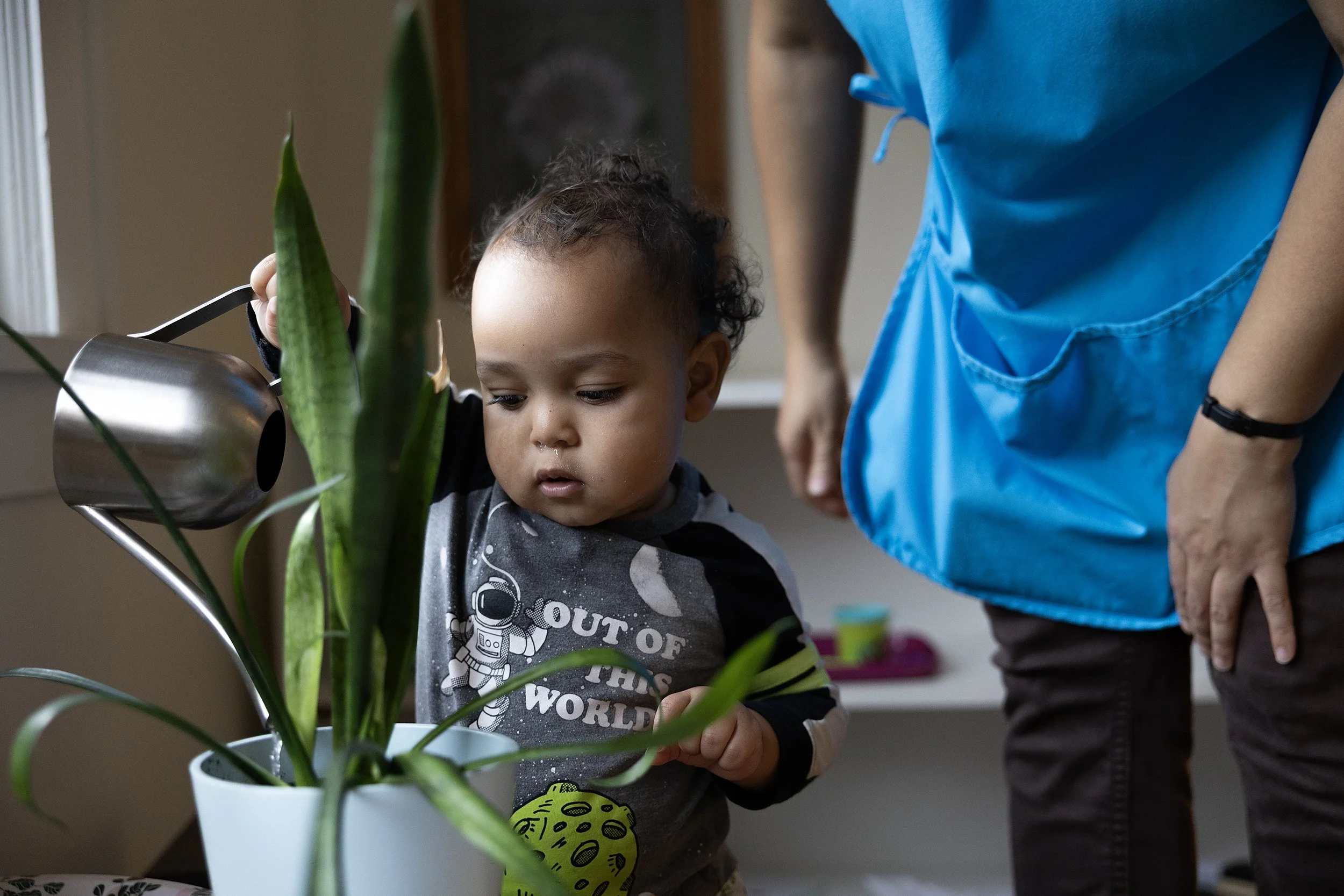
Soleil grabbed a small watering can for his guide to fill so that he could water it.