
A church’s future depends on selling off a beloved neighborhood resource
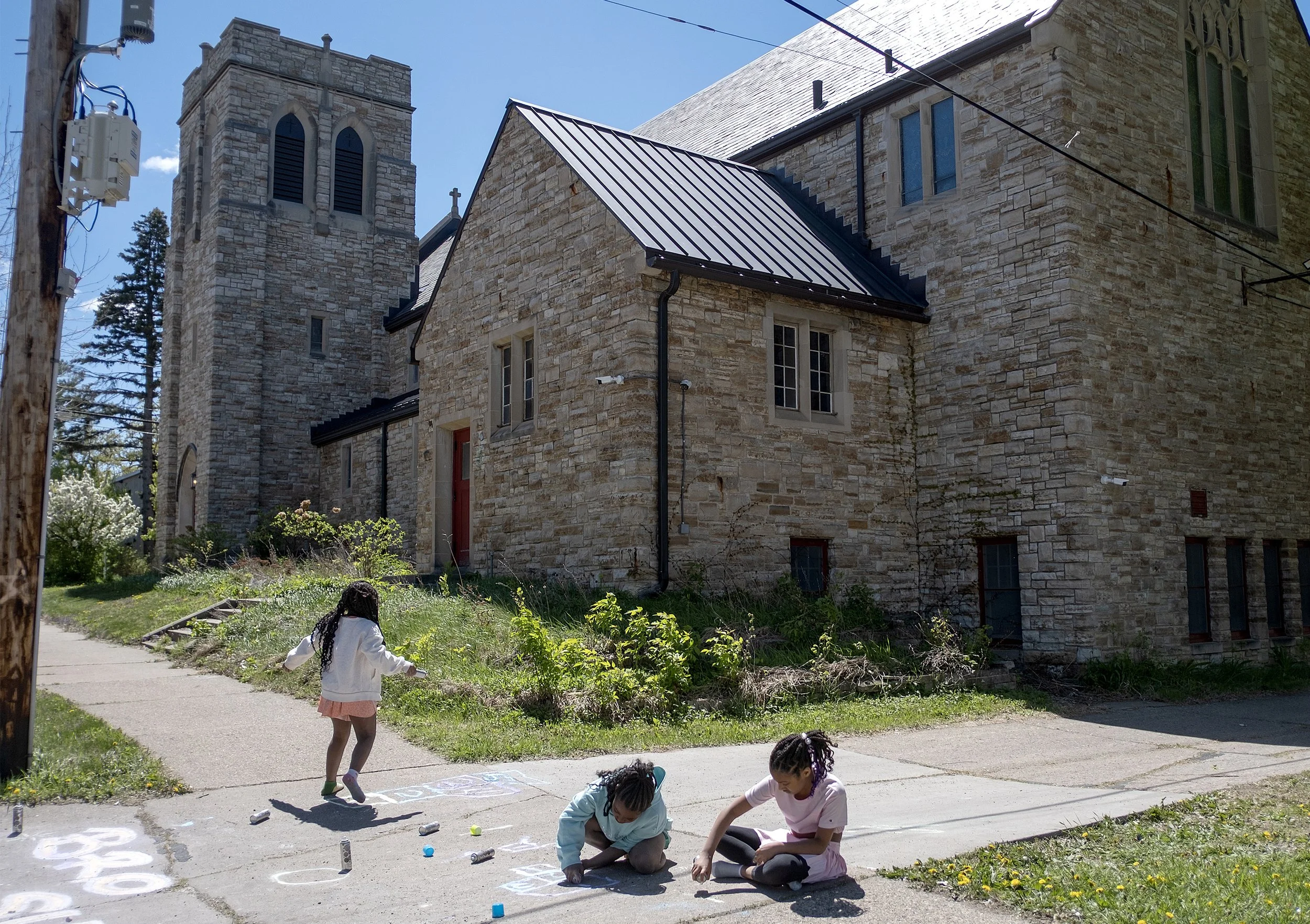
Girls chalk up the sidewalk outside Redeemer Lutheran Church during a recent block party. Photo by David Pierini
By David Pierini, Editor
Like most churches, Redeemer Lutheran has a generous sanctuary where the congregation gathers for Sunday worship.
Yet the century-old church has always ministered beyond its walls, meeting the needs of the Harrison neighborhood, regardless of belief or church attendance.
This spirit of the open table grew to include buildings that provided affordable housing, workforce development, a community gathering space, and a new home for Milda’s, a popular diner started by a widowed mother who secured a loan when she brought the bank officer one of her home-made pasties.
But when the non-profit that ran the social enterprises dissolved last year, the church inherited the properties and a sizable debt that, if not paid off soon, could close Redeemer’s doors for good.
The pressure is such that the church has now asked longtime members to tithe their full portion for the year, if they are able.
The financial reality has spurred difficult conversations between church leaders and some residents, who worry about rising rents and property taxes spurred by development and gentrification.
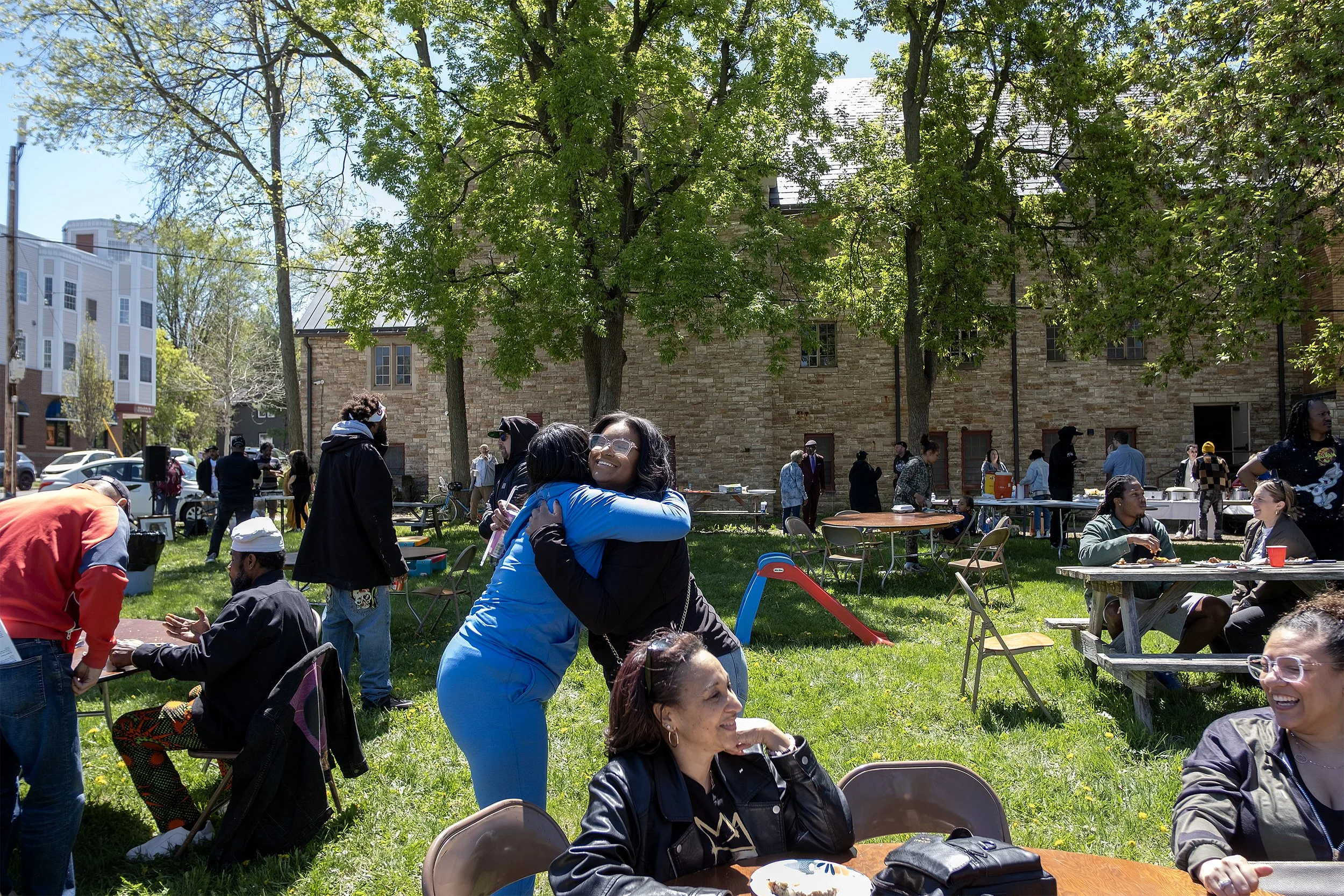
A celebration behind Redeemer Lutheran for the late poet and Harrison resident Kirk Washington Jr. brought together family, friends, and members of the church family (the church did not organize the event). Photo by David Pierini
The Harrison Neighborhood Association wants the church to commit to conditions of a sale that will keep
apartments affordable, keep the popular Living Room open for community events, and preserve Milda’s.
Church leaders say the building at 1720 Glenwood Ave. N., which houses Milda’s, The Living Room, and seven apartments, needs to be sold quickly to wipe out a debt of three-quarters of a million dollars. The building was recently listed for sale at $875,000.
“We’re not looking to get rich off this property sale,” said Sam Benson, a member of the church council. “But we do have a responsibility to get enough money so we can pay off our debts and then make much-needed repairs on the church so it can continue to operate in the months ahead. If we don’t do that, it becomes really challenging for us to continue to operate as a church.”
‘Stone Soup’
Redeemer Lutheran was founded in 1910, and leaders saw the church as a beacon of hope in North Minneapolis. Its impact on the local economy increased significantly under the direction of Pastor Kelly Chatman, who retired in 2020 after more than 20 years of service.
Redeemer, under Chatman’s leadership, invested in the neighborhood by acquiring an entire block of property, from 1830 Glenwood Ave. to 1720 Glenwood Ave. and from Glenwood Avenue North to Fourth Street.
Chatman and church leadership created affordable housing, built youth programs that nurtured scholars, artists, musicians and a new generation of ministers. They founded Venture North, a coffee and bicycle shop that trained youth how to fix bikes. An apartment building with several units became a lifeline for unhoused people. There is also a nearby duplex.
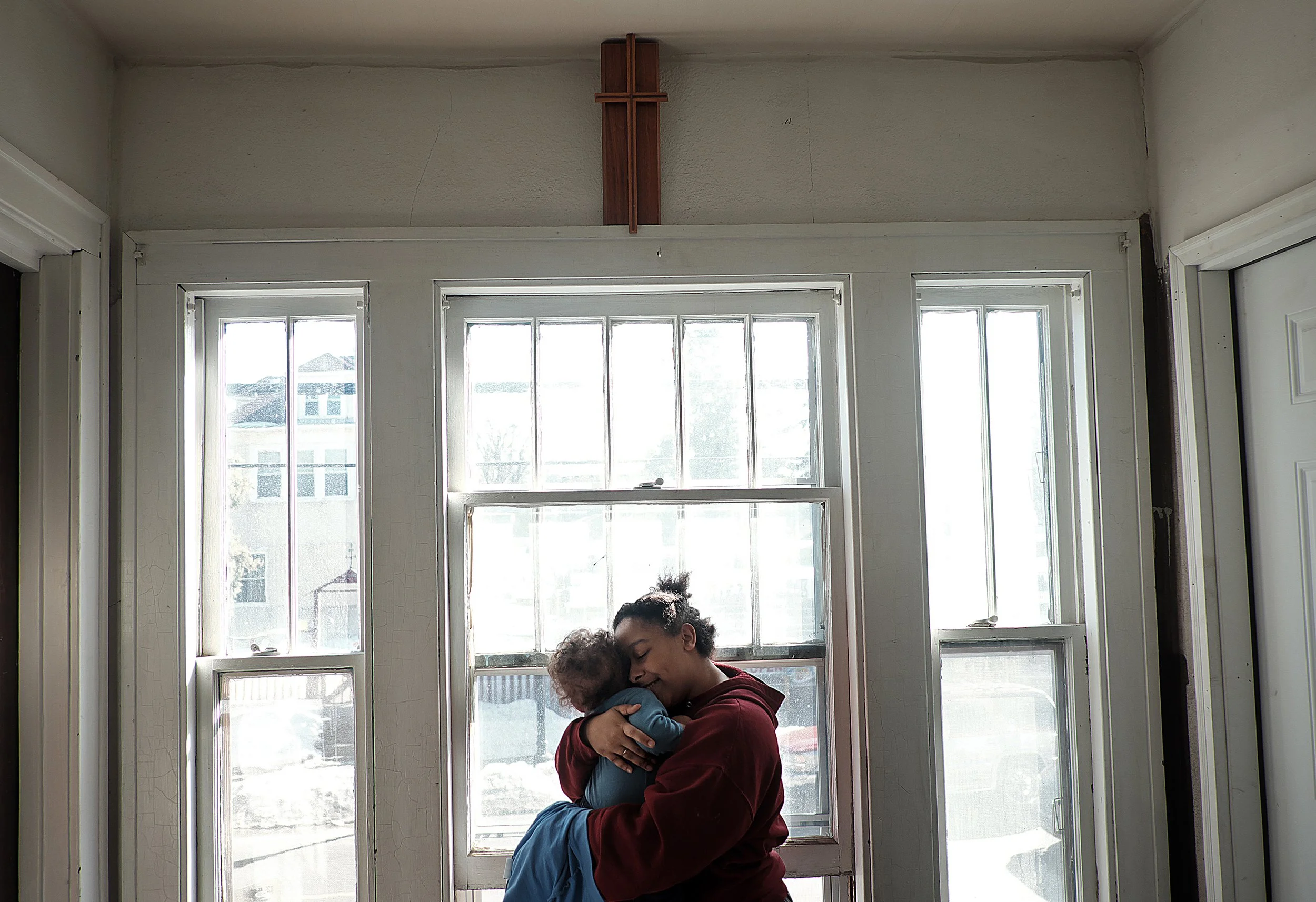
Cora Iverson and her son, Elijah, 1, lived in an apartment next door to the church in 2018. The church’s nonprofit arm managed apartments to provide housing for the unhoused and low-income people. Photo by David Pierini
Church leaders formed a non-profit called Redeemer Center for Life to manage the properties. Church and community members 30 years ago raised money to buy the building housing Milda’s.
Chatman used to compare the church’s work in Harrison to the story of Stone Soup, with “everyone putting
something small into the pot, resulting in something magnificent.
At a recent block party behind the church to celebrate the late poet Kirk Washington Jr., Manuel Lewis reflected on growing up in the church, learning music through a hip-hop group started there and how he naturally gravitates to community events in and around Redeemer (the church did not organize the block party).
“Redeemer has always meant community as a form of action, not just a word,” Lewis said. “I think a lot of people like to throw around the word community, but this is a place where one summer, you’ll have volunteers raising chickens, someone teaching how to grow and your own food and being in a place that is welcoming.
“Everybody talks about how inclusive they are. (Redeemer) actually embodies it. They believe what they say about being a beacon. They practice it year-in and year-out.”
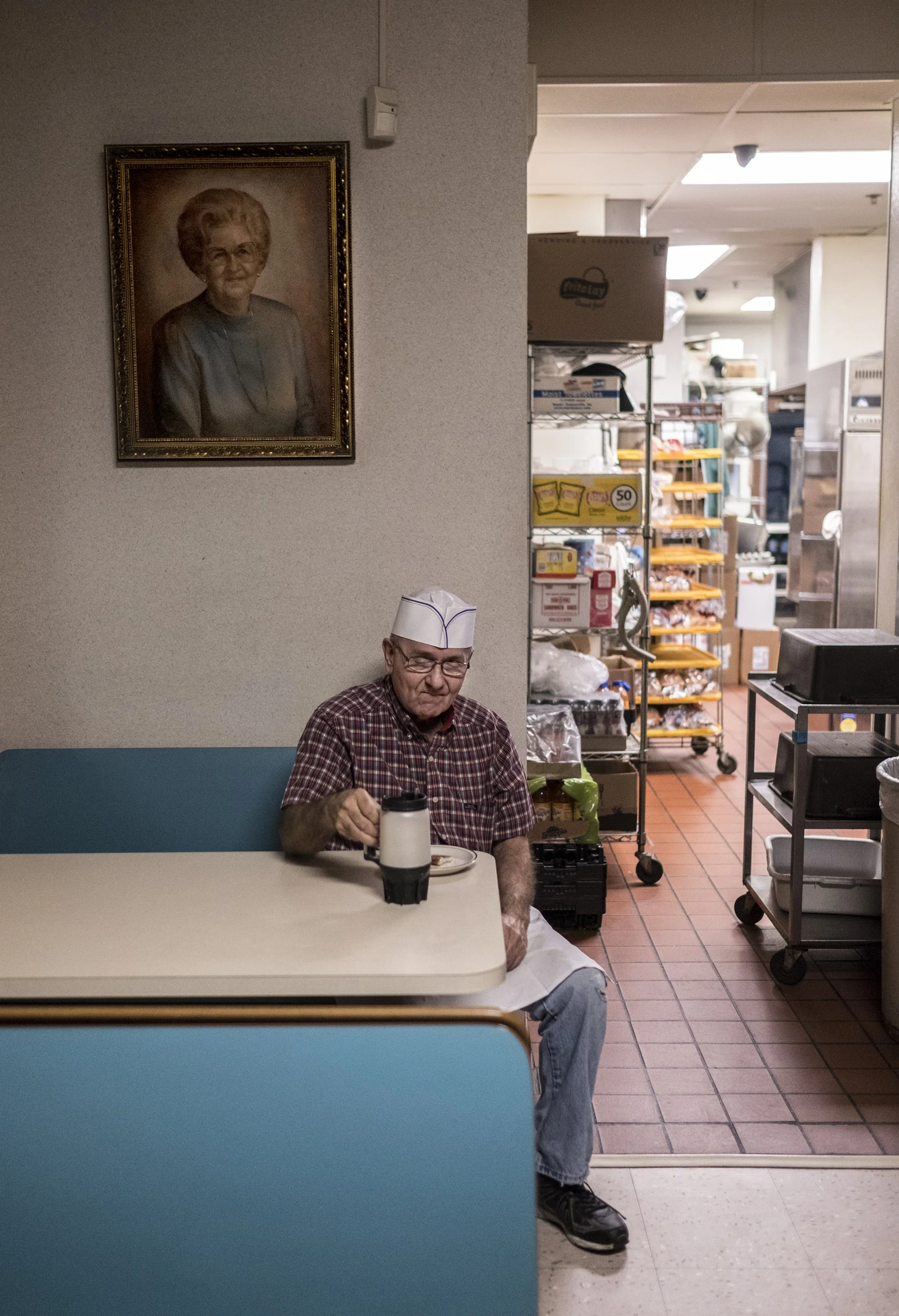
Seated beneath a portrait of the namesake for Milda’s Cafe, baker Jeff Nelson takes an early-morning break from making pasties at the diner in 2019. Photo by David Pierini
Discomfort in The Living Room
At a meeting last month next door to Milda’s in The Living Room, church leaders and Harrison residents sat with each not unlike what families do when they air shifting dreams and financial worries.
There was straight talk, some defensive posturing and anxiety that the growing gentrification was pricing out
some in Harrison and will eventually claim the pieces of community created around Redeemer.
Harrison Neighborhood Association President Nichole Buehler said she felt like church leaders were pushing back when she wanted reassurances that the church would find a seller for the Milda’s building that would keep the restaurant there, The Living Room as a free or low-cost events space and affordable rent on the seven units.
She worried the asking price would make that impossible.
“What I’m not hearing is the responsibility of mishap,” said longtime Harrison resident Marcus Carr. “I want you to name the breakup. I get it, this is business, but I think what people want to hear is an account for the fact that we’re losing a community resource.”
Church council members suggested that the selling of the Milda’s building would lift the debt, which includes taxes, unpaid rent, and a backlog of maintenance issues, and allow them to sell remaining properties with conditions they remain aligned with church wishes. They said they could have a hard time selling the Milda’s building with such conditions.
Denetrick Powers defended church leadership. He grew up in the church and stood as proof that the church wants most of the properties to stay with the neighborhood. He bought the former Venture North café and bike shop and is planning to reopen it as Kirk’s Café, in honor of Kirk Washington Jr., later this summer.
“Everybody that was responsible for the maintenance of these buildings and properties are no longer around,” said Powers, who is interested in purchasing the Milda’s building. “At the end of the day, they received the properties in terrible condition and they got this debt.”
Pastor Eric Hoffer, one of two pastors who share the Redeemer pulpit, trained under Chatman at the church. He said Chatman instilled in him the open table values and an extension of ministry to the
surrounding neighborhood.
If there was anyone with the church at the meeting who came close to answering Carr’s request with emotional honesty, it was Hoffer.
He said leadership is struggling to admit that the church's remaining a fixture in Harrison is in jeopardy.
“If we’re trying to be real, we’re going to sell the (Milda’s) building,” he said. “We have to sell it or we die. I think there’s a shame in admitting that we’re worried about dying. We’ve poured a lot into community over the decades. That doesn’t mean the community owes us anything because we are a community together. That’s part of the truth.”