
Why does gun violence in North Minneapolis feel like background noise to youth?
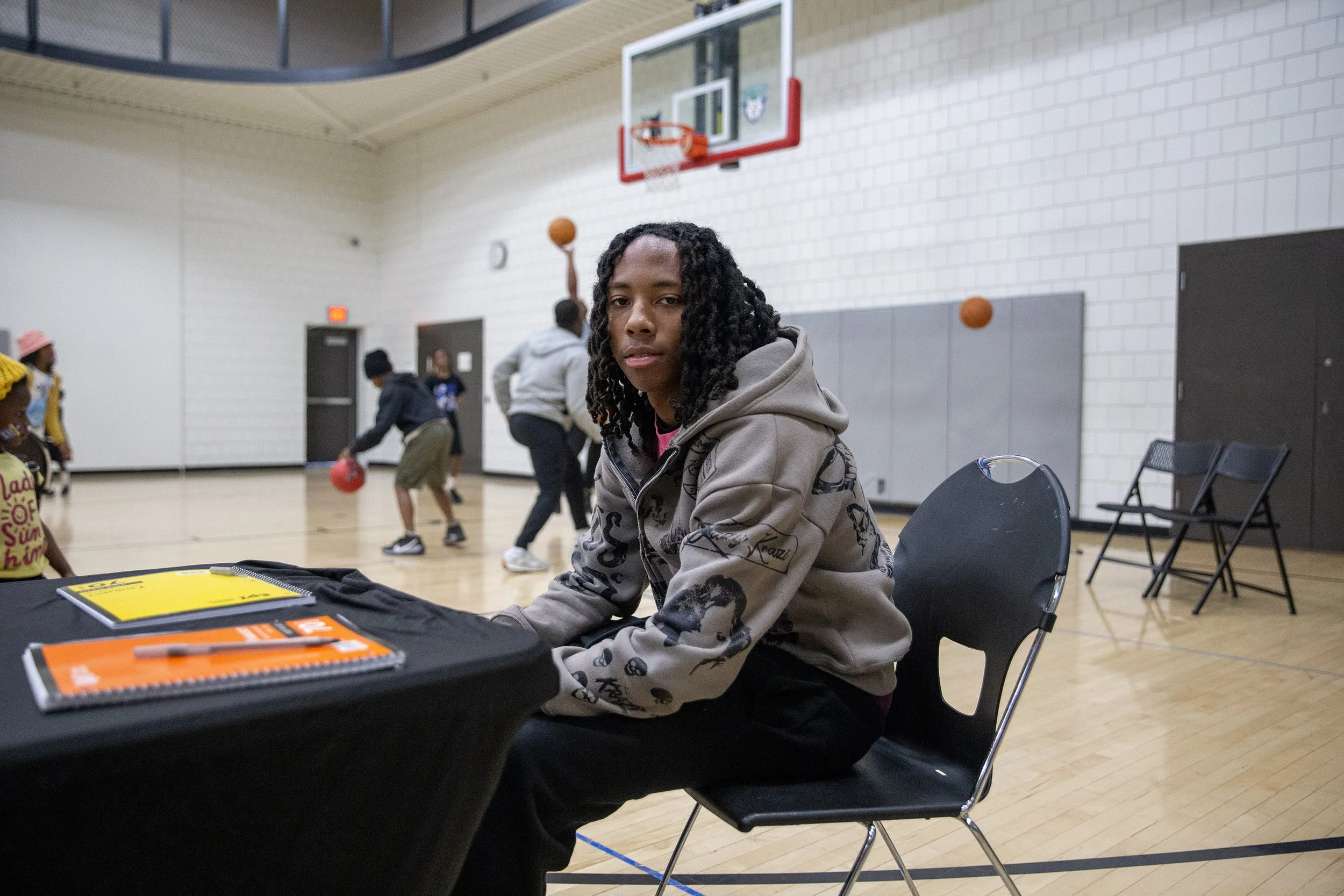
Cordae Williams attended a community discussion on youth gun violence at the YMCA in May. He spent the evening taking questions from attendees on solutions for gun violence. Photo by Azhae’la Hanson
By Clarence Ransom, North News Intern
Cervante Bell, 17, walked to North Commons Park in January and saw a group of people screaming at each other. Cervante and his friends watched the group walk into an alley. Soon after, gunshots followed.
“We genuinely didn’t care,” he said.
Cervante, a Northsider, said he’d grown desensitized to the sound of gunshots due to how frequently they occur.
According to the Minneapolis Crime Dashboard, in 2025, there were a total of 626 gunshots heard and reported to 911 and Precinct 4 in North Minneapolis.
That same year, the Northside was celebrated for having the lowest number of shootings reported in the community in the past decade. Even then, the Northside's low is still abnormally high compared to other communities.
In 2025, 448 shots were fired in Precinct 5, 255 were reported in Precinct 2, and 195 were reported in Precinct 1.
State Sen. Bobby Joe Champion has also acknowledged that the normalization of gunfire in North Minneapolis has been an ongoing problem for years.
“Sometimes we are desensitized to incidents, right?” Champion said. “Because there is so much that happens, and when it happens frequently, sometimes we think this should be a part of our lives.”
With the hundreds of shots-fired calls reported each year, many students say they are becoming used to hearing gunfire.
“I’m usually on the game or out with my friends for the majority of the time, so when I hear shots outside of my house or around the neighborhood, I don’t got time to care about them,” Cervante said.
Youth around North Minneapolis say it’s normal to ignore or brush off gunshots.
“I mean, it isn’t like we don’t hear it,” said 17-year-old Jaquice Lucas. “You just ignore it after a while. Like, you hear it and just go back to doing what you were doing.”
For some youth, the violence feels so common that reactions to it fade quickly.
“It honestly feels like a flash,” said Kenya Flowers. “In the moment we’re sad about it, especially if it’s someone close to us. But then after a while it just feels like another day living here.”
Flowers said a shooting once happened near her home, but people around her quickly returned to normal life.
“It was kind of just like, ‘Oh well, it happened. Just don’t go outside and everything will go back to normal,’” Flowers said.
Some youth said living around violence has changed the way they think and interact with others.
Kamari Thomas, 16, said he was shot in April after going to a party where he encountered someone he had been arguing with. Thomas said situations like that happen when youth are “being somewhere you’re not supposed to be.”
Thomas also said tension between youth has become common in the community.
Many youth at a Northside gun violence prevention forum on May 13 said the constant exposure to shootings, funerals, and violence has made young people emotionally numb.
“I think youth are desensitized,” said Lisa Clemons, a community violence prevention advocate. “I think they’ve lost enough of their friends that it has become a norm. They go to so many funerals, and they just pack away that pain and keep moving.”
Others say social media and everyday culture also play a role in normalizing violence.
“It starts mentally,” said Rev. Jerry McAfee. “Your music, your movies, everything is there that it has become the norm. Our youngsters aren’t good at conflict resolution, so they resort to what they see when that trigger is pulled.”
Youth at the forum also described how retaliation and fear continue the cycle.
“It just feels like a never-ending cycle,” one teen said during the discussion. “As long as somebody keeps dying, their friends are going to keep retaliating.”
Some said the motives behind shootings have changed over time.
“Back in the day, it was about money,” said Darnell Robinson. “Now it’s egos. You looked at me wrong, or somebody talked to somebody’s girlfriend.”
Other students said young people need more spaces and opportunities to stay away from violence.
“We need more community centers and programs for our kids,” an adult community member at the forum said. “Not just jobs.”
Some youth also said that adults continue to talk about solutions, but many teenagers feel disconnected from those conversations.
“I think more youth should show up to stuff like this,” said teen Cordae Williams. “Most of the people affected are kids, but most of the people talking are adults.”
Another student said youth voices are often missing when solutions are discussed.
“If more kids were talking in these meetings, more kids would come,” Williams said. “The kids need to be the ones trying to figure out the solution, and the adults need to listen.”
Some youth at the forum said the hardest part is not just the violence itself, but how normal it has started to feel in everyday life. As shootings, funerals, and retaliation become more common, many said they worry that younger kids are growing up believing fear and gunfire are simply part of their community.