
The Class of 2038 is a fresh start for schools still facing pandemic challenges
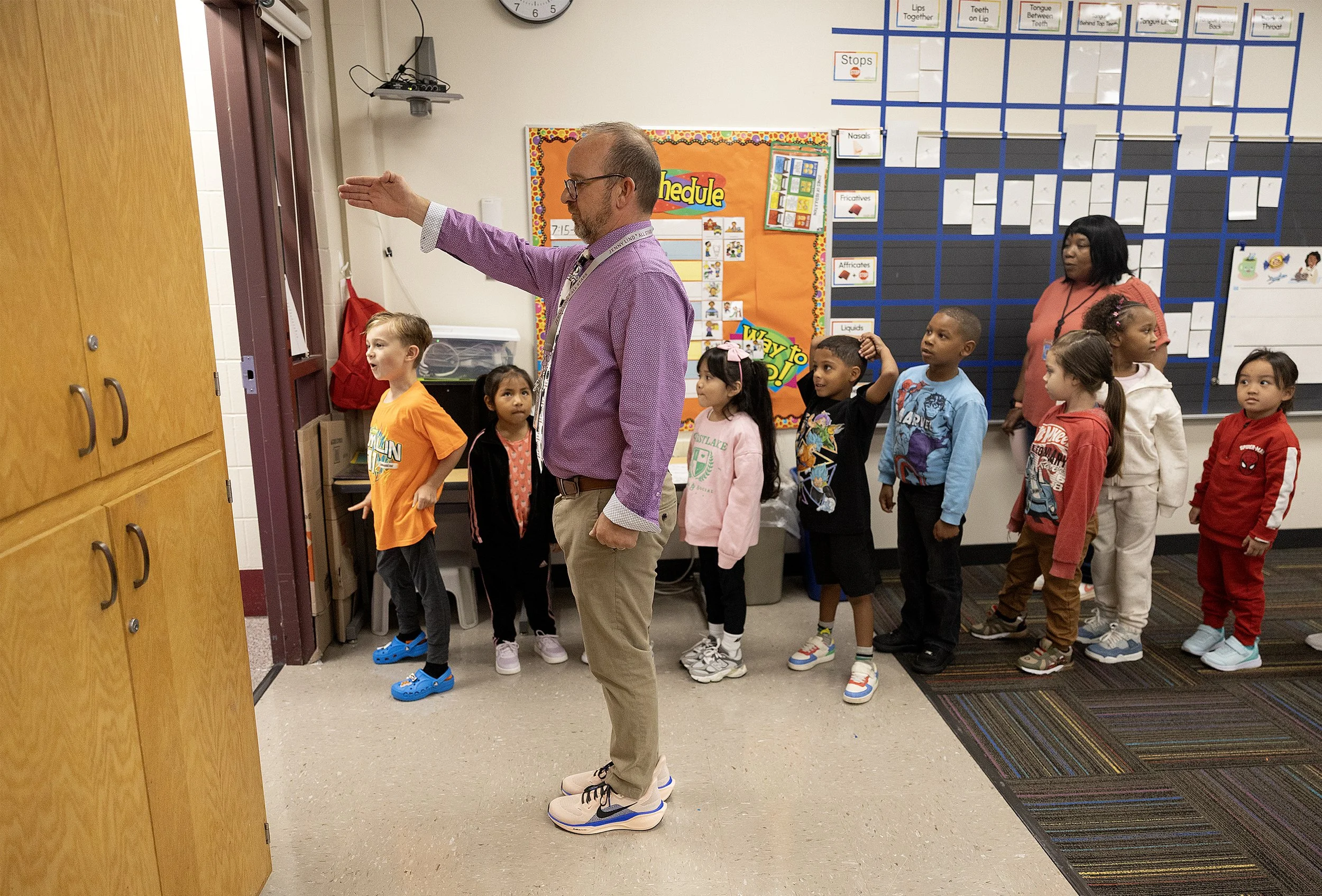
Ryan Nelson, a kindergarten teacher at Jenny Lind Elementary School, shows his class the ropes on the first day of school, including how to properly line up for a trip to the bathroom. Photo by David Pierini
Story and photos by David Pierini, Editor
Ryan Nelson does not waste a single minute teaching his kindergarteners at JennyLind Elementary School. Even a trip to the bathroom is precious time for them to learn the importance of following rules and working as part of a collective.
At a few minutes past 8 a.m., Nelson prepares them to line up for their first bathroom break of the school year.
He points to tables, asks children to push in their chairs, and line up quietly at the door.
Once the line is formed, he provides further instructions: heads facing forward, hands at their sides, voices turned off.
“And here’s the most important question…Who’s the best?” Nelson asks. The children respond, “You are!”
He abruptly says, “No! It’s not me. It’s not you. I’m only as good as you; you’re only as good as me. We’re a team. So, when I ask who’s the best, you say we are. Now who’s the best?” The students reply, “‘We are!”
The road for this group, scholars of the Class of 2038, began with a unique distinction the day they were born. This is the first group of students born during the COVID-19 pandemic, where life began in lockdown with masked adults, little socialization outside of home, and for many, amid anxiety and uncertainty.
Five years later, schools continue to grapple with the pandemic-era halt to in-person learning, a disruption that has followed some children through the grades. Minneapolis Public Schools educators see COVID-19’s residue in lower test scores, especially in reading and math. Teachers report anecdotally about gaps in socialization and emotional regulation.
Kindergarten teacher Phebe Carr, who has taught at Lucy Laney Craft Laney Community School for 15 years, has noticed some delays with her current class, especially with speech. She wondered whether masked adults are the culprit. Children learn how to speak by watching how mouths shape sound into words, she said.
“I can’t directly pinpoint it, but I know you’re not going to learn how to talk when people’s mouths are covered,” Carr said. “When faces are covered, you aren’t hearing as much vocabulary or seeing how words are pronounced.”
Seeing the whole face is especially critical for speech development with this age group. Even as many kids returned to school in 2021, everyone was wearing masks. An emotion, such as happiness, sadness, or anger, is best understood by unique facial expressions.
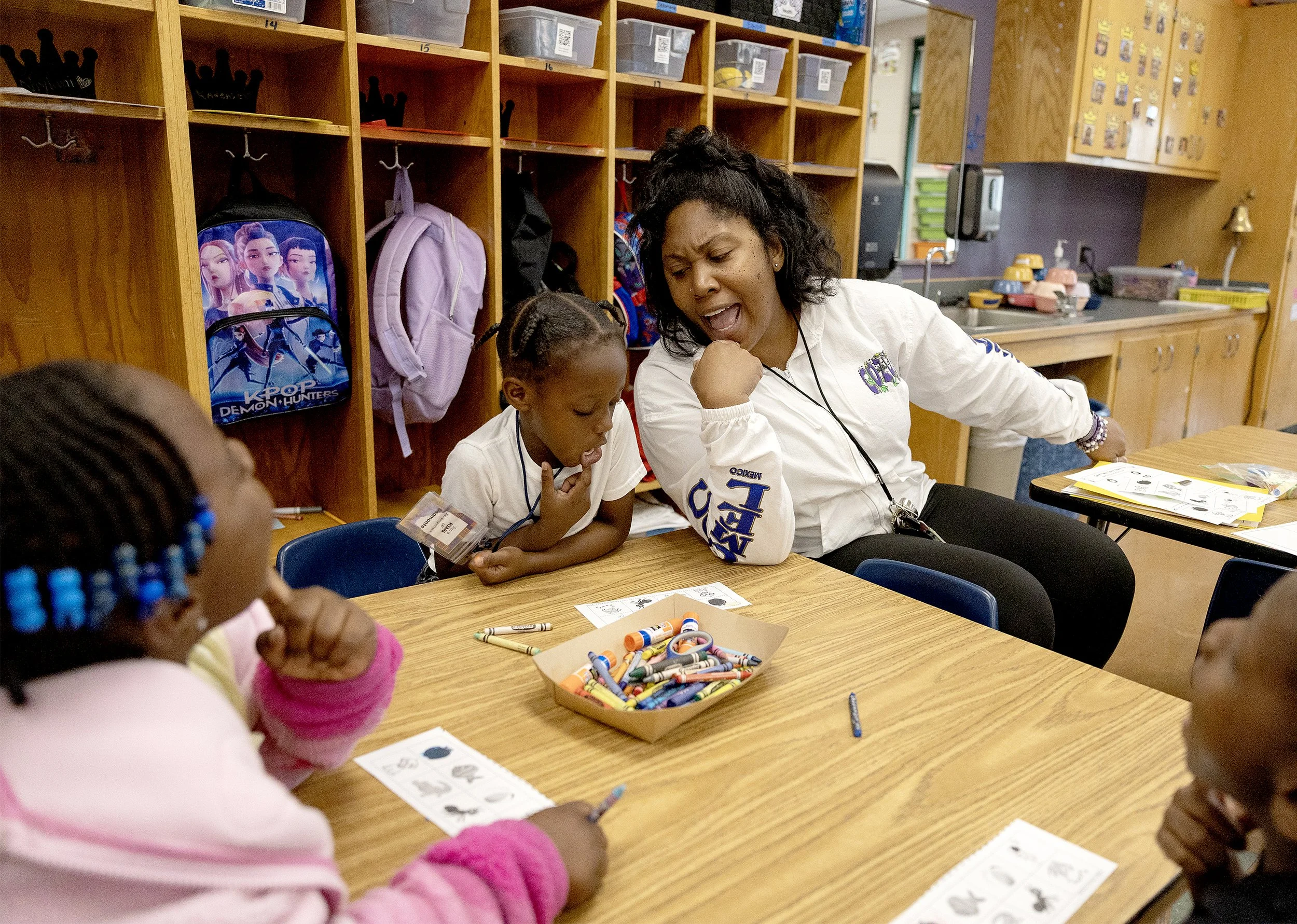
Lucy Laney kindergarten teacher Phebe Carr works with Demonte Edwards Brown on forming his mouth to make the proper sound for a short A.
Today, Carr works with flashcards showing photos of mouths in various shapes, based on how sounds are pronounced. During regular phonics sessions, Carr has a handful of classroom aides and volunteers working with kids. Some tables are ahead by a week or so, while others work to catch up.
“Kindergarten is foundational,” she said. “If you have a bad kindergarten experience, chances are you’re going to have a bad school experience.”
Basic training
Not long after their birth in 2020, the nation’s current kindergarteners caught the attention of researchers, who
wondered if there would be lingering effects of the coronavirus on their neurodevelopment.
A small study from the University of California, Merced, examined in utero COVID-19 exposures and pandemic related stresses, including job loss and housing instability.
Researchers found delays in gross and fine motor skills among children born in 2020. Stress appeared to be the main cause of these delays, the authors concluded.
The survey also found that these children caught up as they grew, but noted that the stress component warrants further investigation.
The stress on students in Minneapolis was compounded by the unrest after George Floyd’s murder in police custody, followed by a prolonged school strike in 2022 that disrupted the return to in-class learning.
Amid dwindling funding for public schools, educators continue to work through the impacts on students. Children with engaged adults at home tended to progress, while those on their own fell further behind, teachers say.
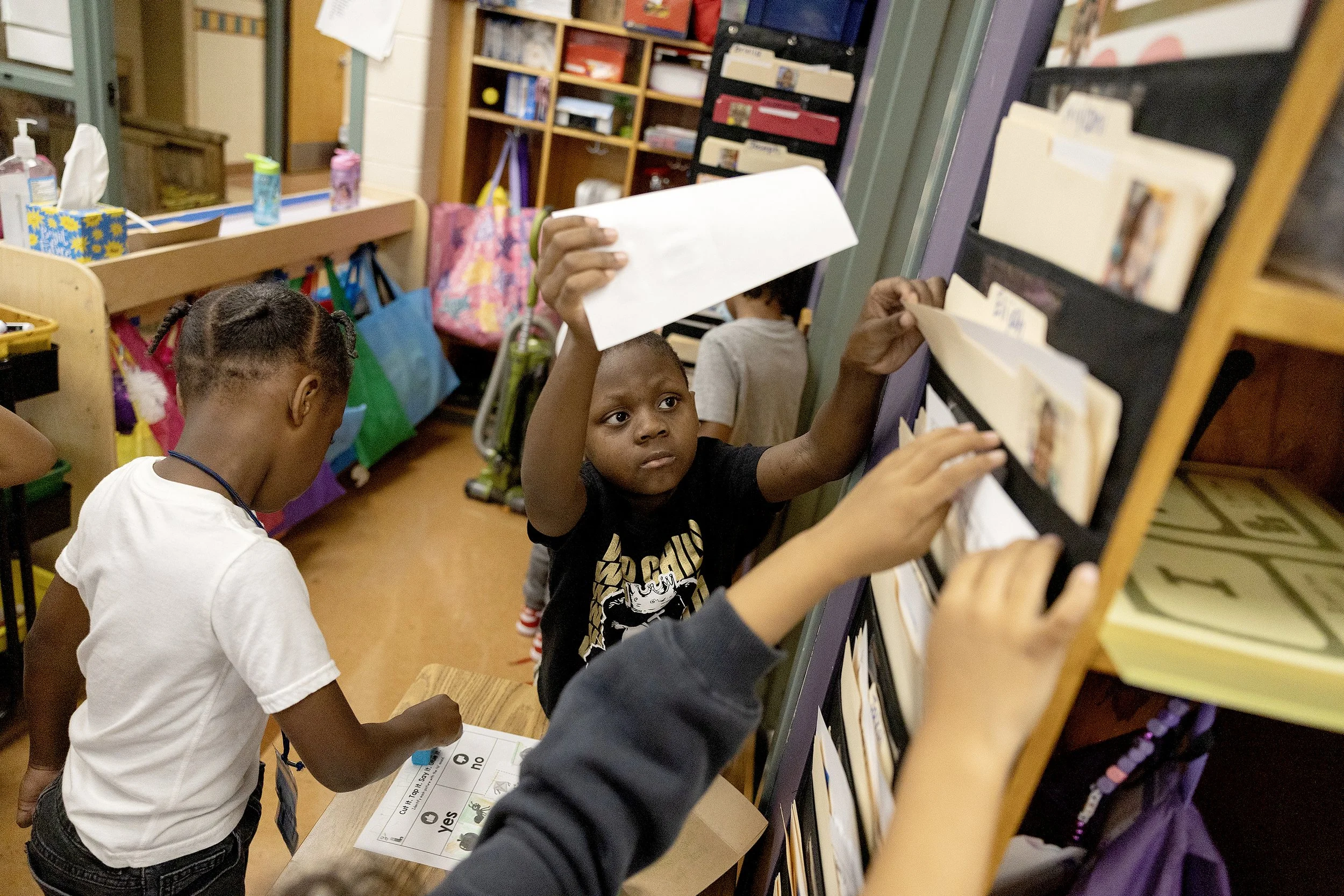
Lucy Laney kindergartener Elijah Wells reaches to turn in an assignment.
Kindergarten is to primary and secondary education what boot camp is to the military. It is basic training that conditions a child to be a student in the grades ahead.
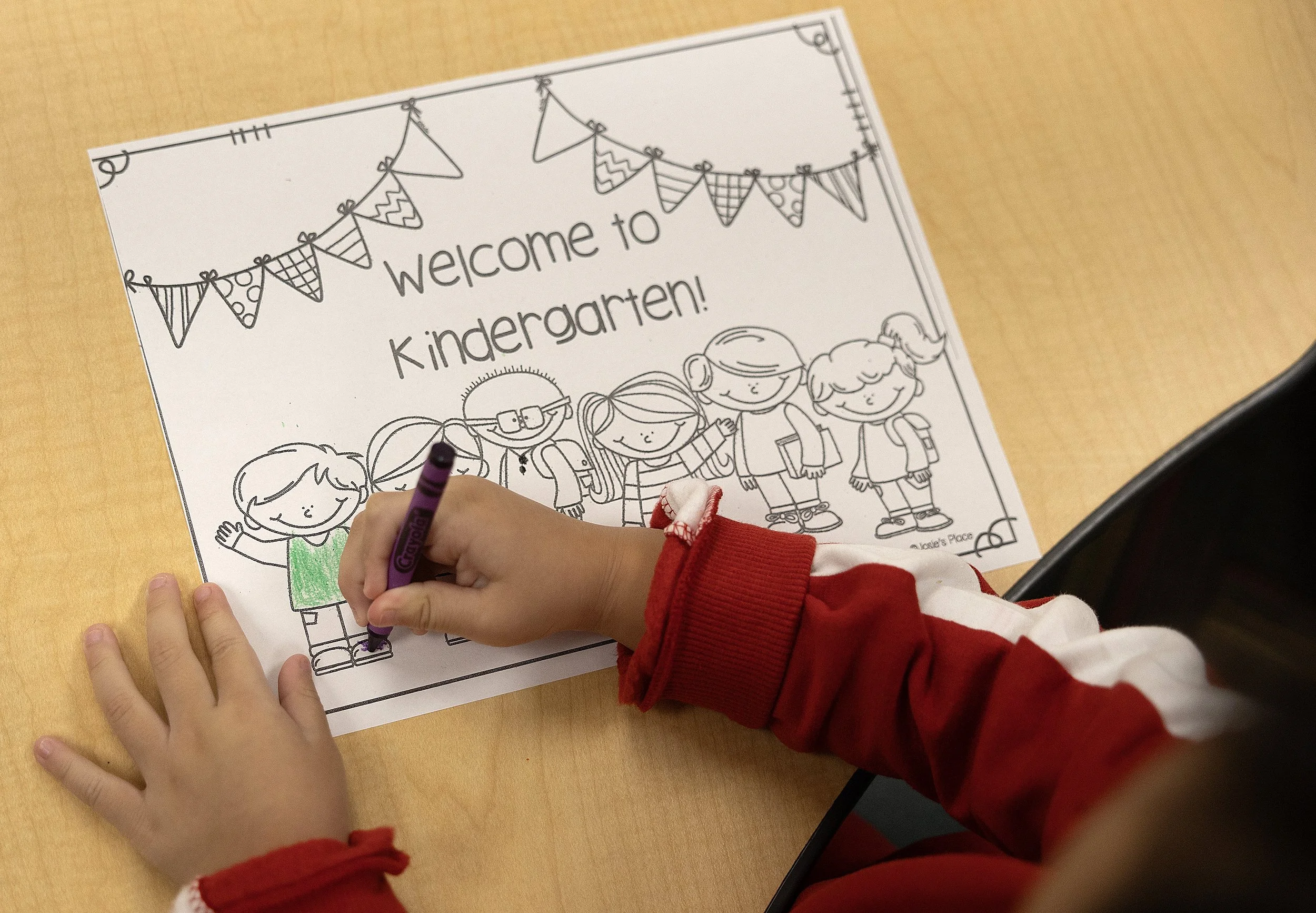
In kindergarten, a child learns how to hold a pencil, use scissors, share, socialize and understand how to follow instructions. A kindergartner learns to regulate the complex flash of emotions that, if managed at age 5, will set in motion healthy habits and responses to the deluge of stressors during each school year.
“Some children were able to manage that at home and with siblings, cousins or their parents, they could engage in activities,” said Wanda Felder, director of Early Childhood Special Education for Minneapolis Public Schools. “But with COVID, there were no group activities. Even if you have a family, there was not the type of social engagement you learn in the classroom.”
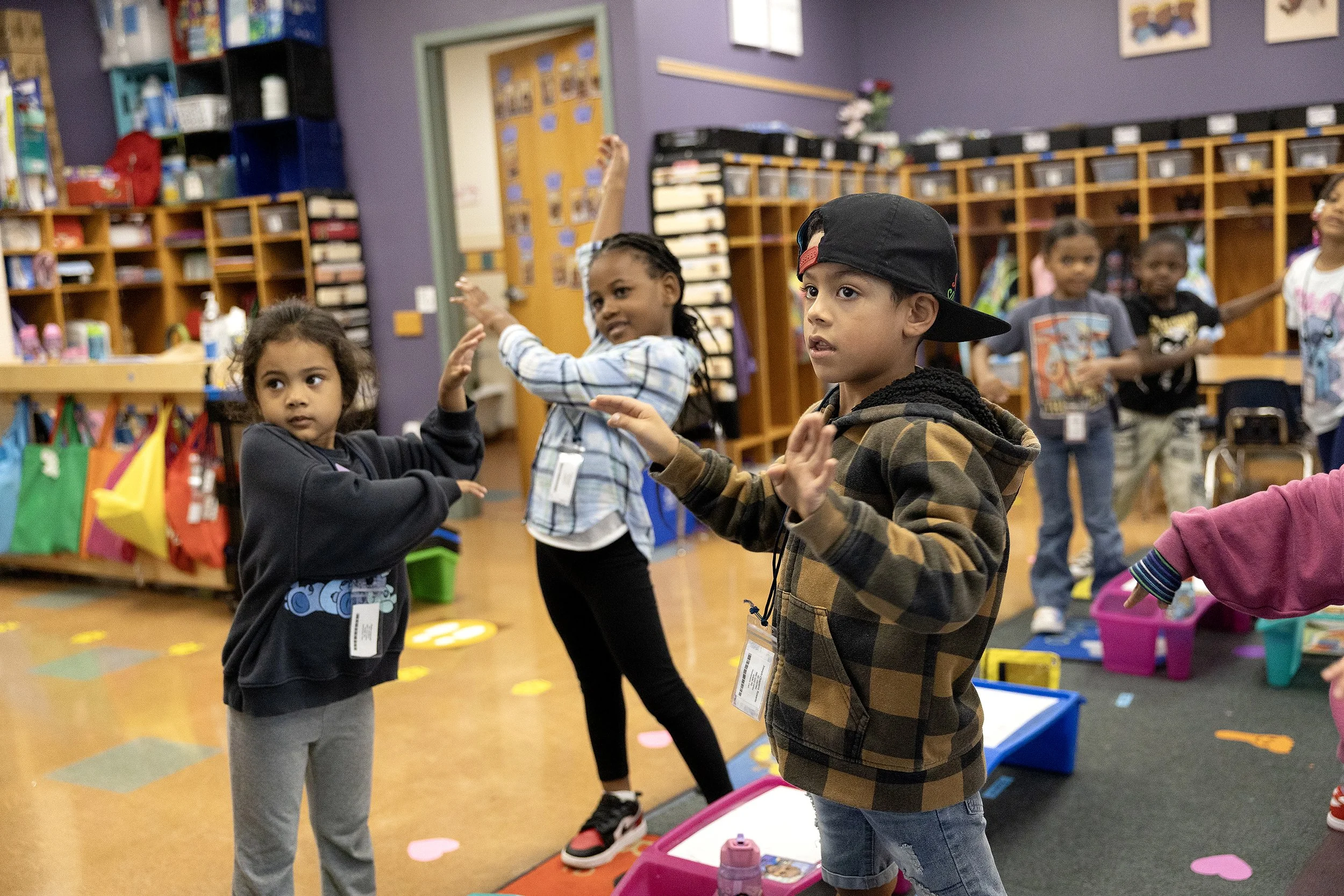
Malia Ingram, left, Briella Golston and Joseph Rosario Chaparro get exercise by watching a video that gets Carr’s class moving.
Felder said teachers have noticed a lack of social skills in children because they didn’t have the opportunities to engage with other children or learn and be in front of an adult other than a parent.
To understand what kindergartners lost in the spring of 2020 and at the start of the 2021 school year, a visit to Nelson’s or Carr’s classrooms five years on demonstrates the blend of academic and social preparation that will be critical for the Class of 2038 over the next 12 years.
Both teachers model time management to the minute. Nelson has timers on each wall of his classroom, believing focus is best in 15-minute increments. Students know when Nelson sets it, the time they must complete a task, and go to it. When the timer chimes, many of the students seem to stop what they’re doing and prepare for the next task and instruction.
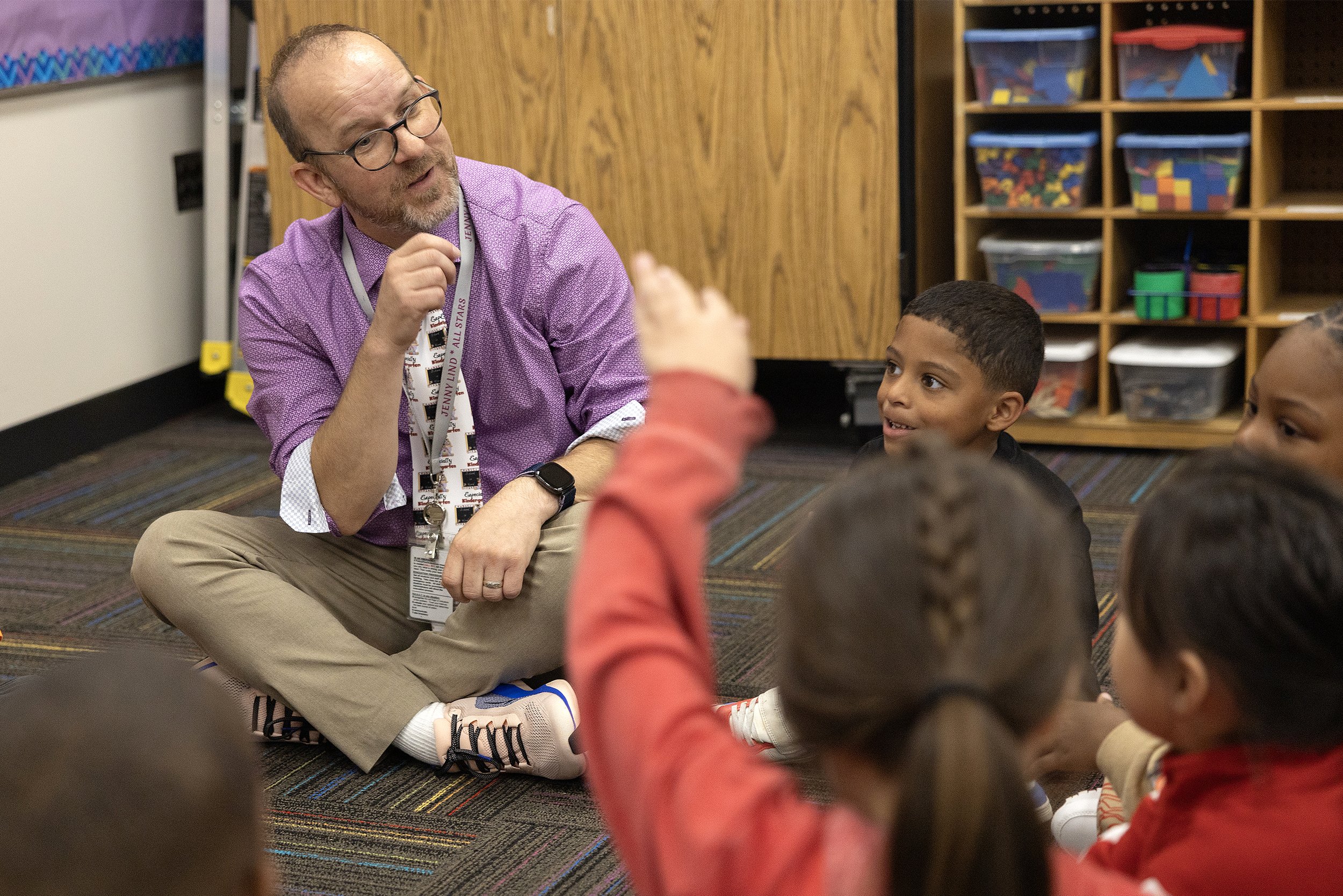
Jenny Lind kindergarten teacher Ryan Nelson had his class circled around him and gave students a chance to share something about themselves.
Carr’s timer is more internal with a firm voice that signals to her students when it is time to shift gears from practicing writing letters at their desks to moving to tables where they will practice the sounds they make in words.
In both classrooms, students work alongside their peers. Each focuses on work, but certain items like scissors are shared, and there are natural breaks for kids to chit chat.
One boy in Carr’s class tends to jump around. It will sometimes take her several prompts each day to redirect him back to the task, but he responds.
Likewise, Nelson is firm and will remind a student of their responsibility to their classmates.
When they learned on the go
When spring break in 2020 ended, the teacher and the student faced a screen and a new reality.
District staff compiled hundreds of Chromebooks and placed them on school buses for delivery. Teachers prepared lesson plans and activities for remote learning and taught themselves programs that allowed the class to meet as a virtual group.
Neither teacher nor student had experience with this type of school experience. Details would be worked out
on the go. From this moment, teachers borrowed a well-known expression from the business world: Build the plane while flying.
Not long after takeoff, Nelson and Carr noticed some kids would sign in and leave their cameras off. Or some did not sign in altogether. Those with at least one involved parent at home attended regularly, followed instructions, and completed tasks.
Teachers observed that family dynamics would make or break a student’s success during remote learning. Some families kept their kids on track by creating mini classrooms with other families. These became known as pods, where children kept up with math, reading, and the all important playtime with others.
“It was almost unfair to the families who had a lot going on during that time,” Nelson said. “The kids who were on track in the classroom stayed on track because they were getting extra help. Those in families that couldn’t provide the extra help were the ones that fell through the cracks and regressed.”
Students weren’t online the whole day. They would be asked to log in for group lessons, work on their own and then return to the virtual classroom. This didn’t work with 5-year-olds unless an adult was around to monitor the schedule, Nelson said.
Carr had just four students who reliably appeared virtually. The rest, she knew, were losing ground fast.
Kindergarten this way was not working. She got in her car on Mondays to visit each kid at home, bringing them boxes of food and school materials.
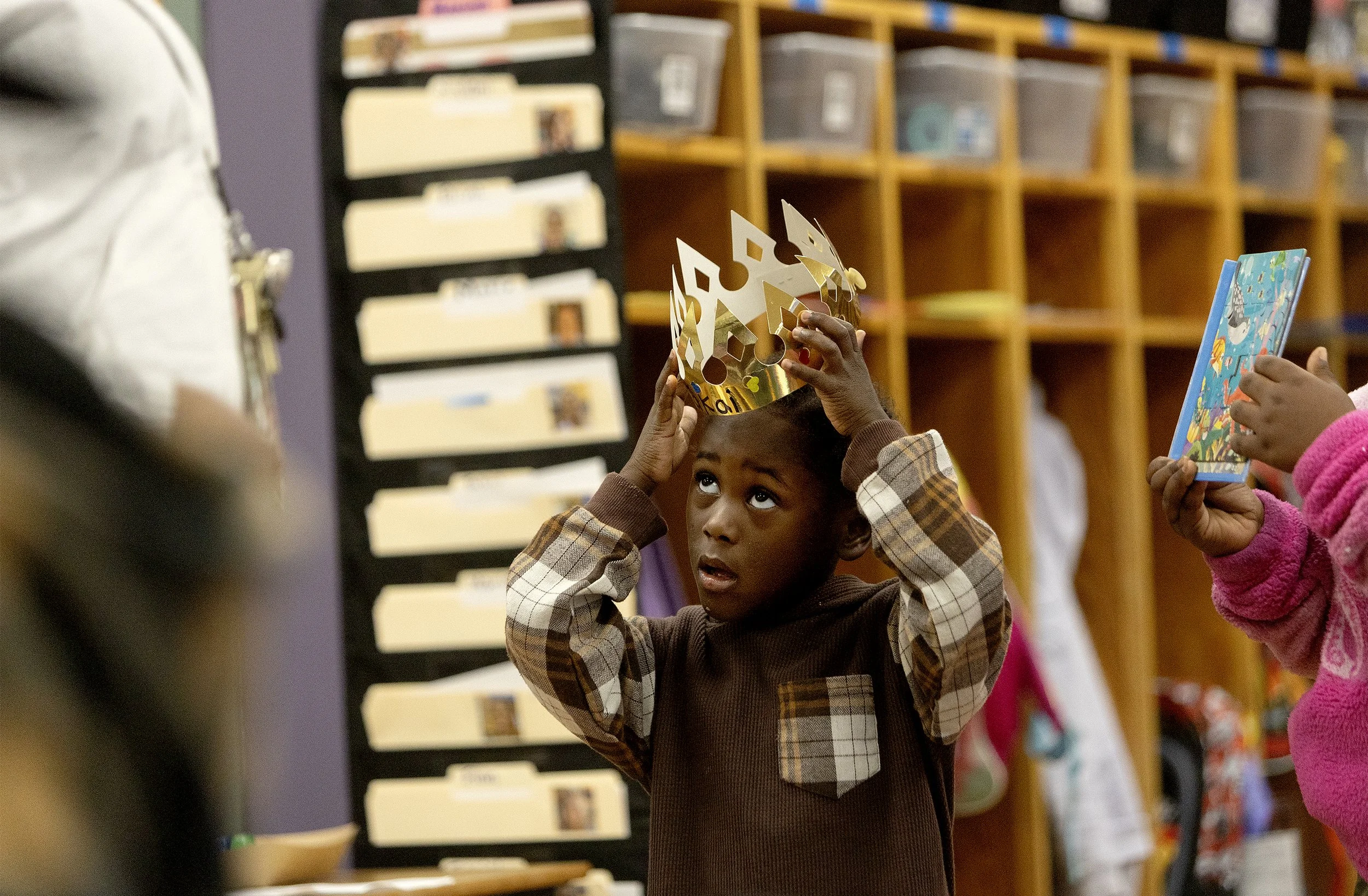
On the first day of kindergarten, Carr gives her students crowns and tells them they are kings and queens, and that they must act accordingly. Jakaki Hall periodically came to class wearing his crown.
On the days when students were online, they had all the necessary items in front of them to complete a lesson. Sometimes, Monday was the only day she would see a child.
“Before, it didn’t feel like I was managing anything,” said Carr, grateful for a team of volunteers that helped on those days. “I realized I needed to see my kids. We had a family set up their whole garage for us with a little desk, and they would come running out on Mondays.
“Other kids from the neighborhood who didn’t even go to Laney came to do lessons. We did a lot of sidewalk chalk for our lessons because they weren’t getting any fine motor skills.”
At graduation time, Carr brought a red carpet she rolled out so that the students could walk and feel celebrated.
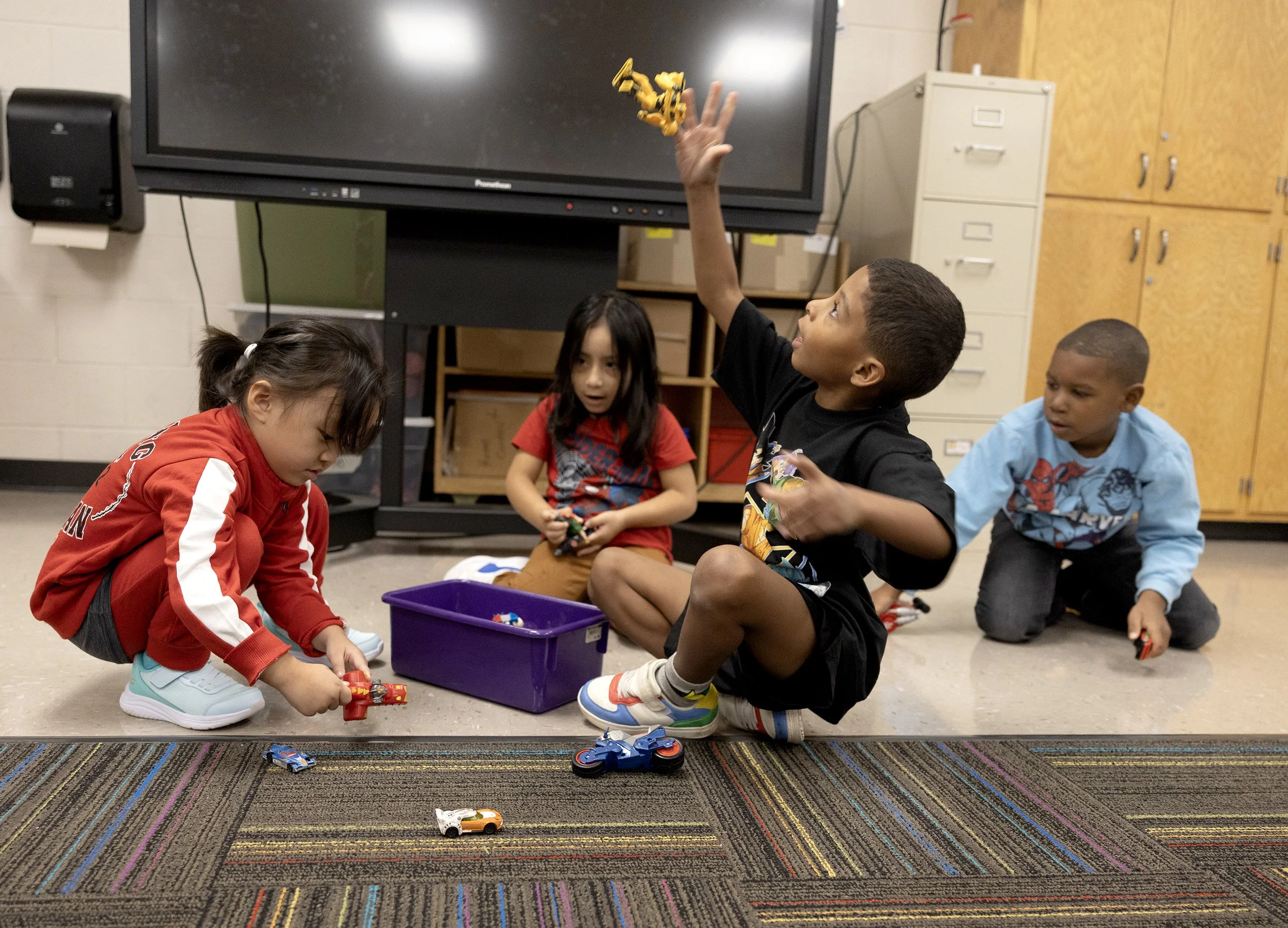
Nelson said his classes during the pandemic were isolated and lost valuable lessons in sharing and socializing that naturally occur during playtime.
Positive takeaways
Many students from all grades continue to catch up. Those students, on average, are about half a year behind in their learning, said Associate Superintendent for Minneapolis Public Schools Yusef Abdullah.
The impacts were especially difficult for students of color, Abdullah said, and so educational interventionists are deployed to provide strategies for students to overcome academic challenges and grow.
Abdullah said teachers, like Carr, worked with a sense of urgency to maintain relationships with their students during the lockdown. That urgency continues as teacher help close developmental and academic gaps created by isolation.
“Social-emotional learning was a big part of what we tried to do during COVID, and schools have continued to utilize this to make sure we’re seeing students and building relationships with them,” he said. “We have to see
the whole child and balance that with academic needs so that students are being seen and have a sense of belonging and connectedness.”
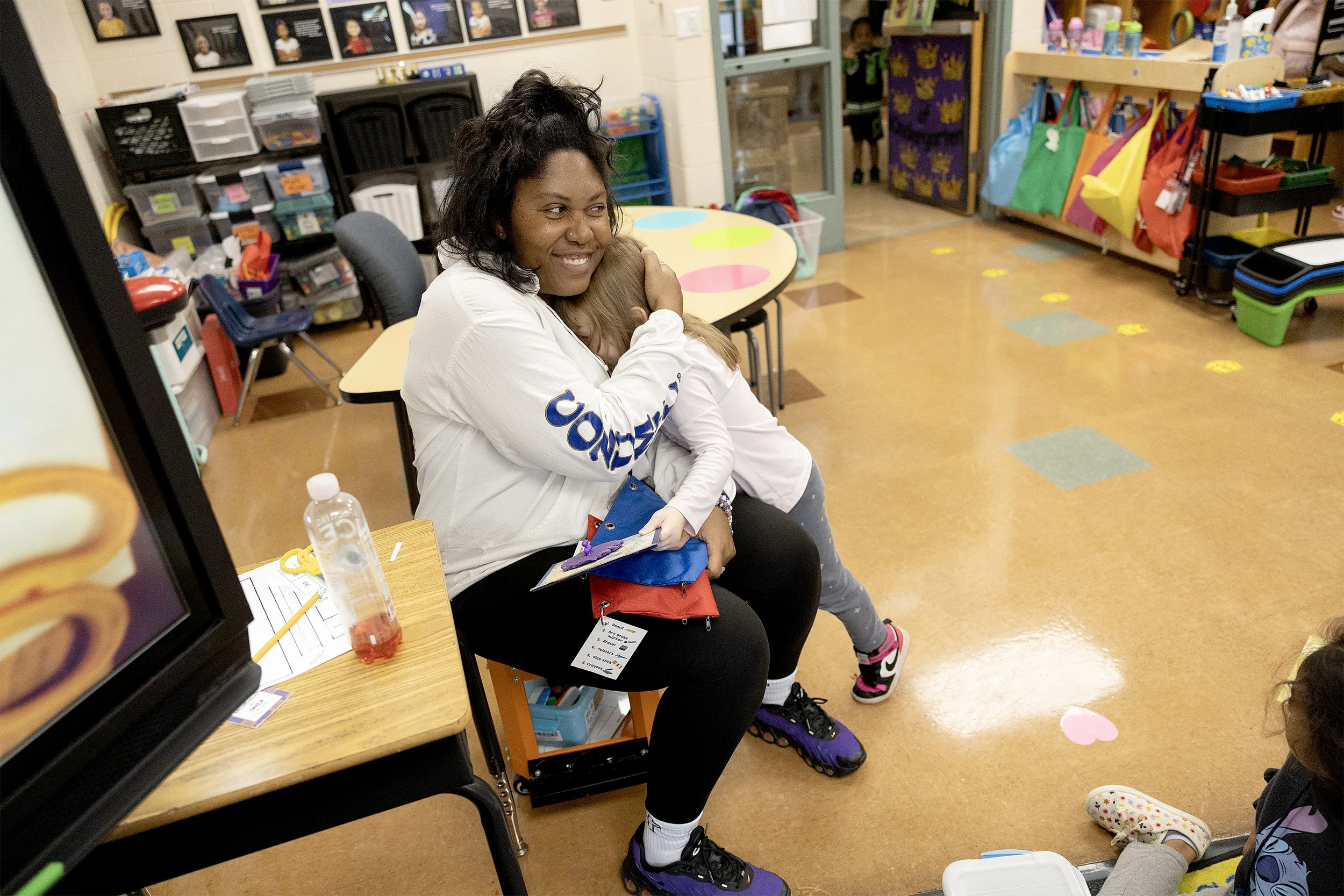
Students regularly reach out to Carr for hugs.
Administrators, principals, and teachers are still discovering lessons from the pandemic.
The school district has invested more energy in implementing best practices for the child’s mental wellbeing,
acknowledging the impact of the pandemic and other events. Some kindergarten classrooms, like Carr’s, have dedicated spaces for meditation.
Teachers, some of whom were nervous about technology in the move to remote learning, are more comfortable using it in the classroom. Abdullah said there is more to learn.
“What were those skills that kids were developing during the pandemic that we are not acknowledging?” Abdullah wondered. “I was a principal at the time, and we had students who had younger siblings who were working extra and doing different things to help care for them. Yes, that is stressful.
“But as far as time management, organization, and care and love while navigating a difficult time, there’s got to be some benefit to that. How do we as educators utilize that?”
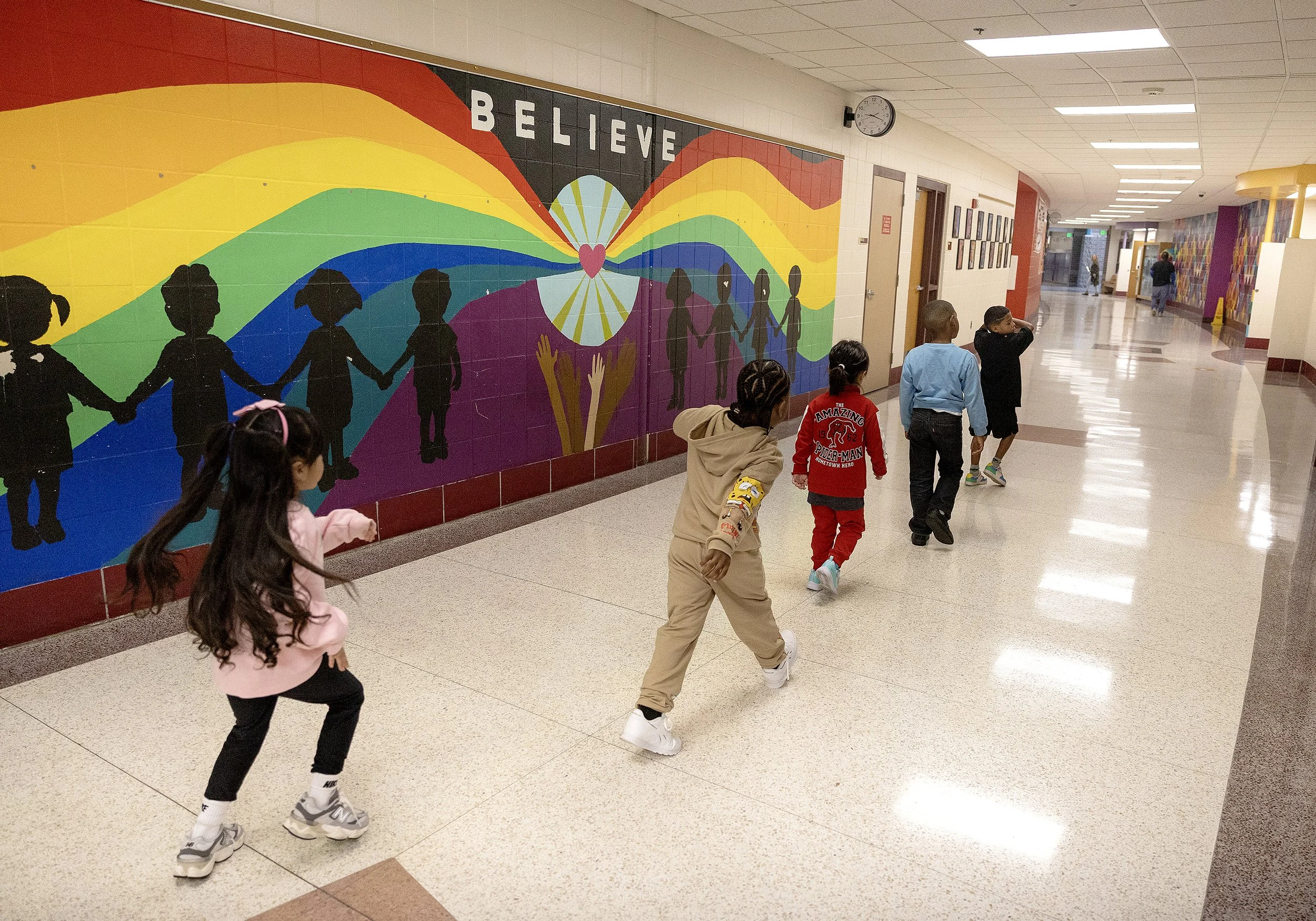
After a school tour that included a stop by the library and lunch room, Nelson’s class marches back to class.