
An incumbent on eve of election fields complaints about being hard to reach
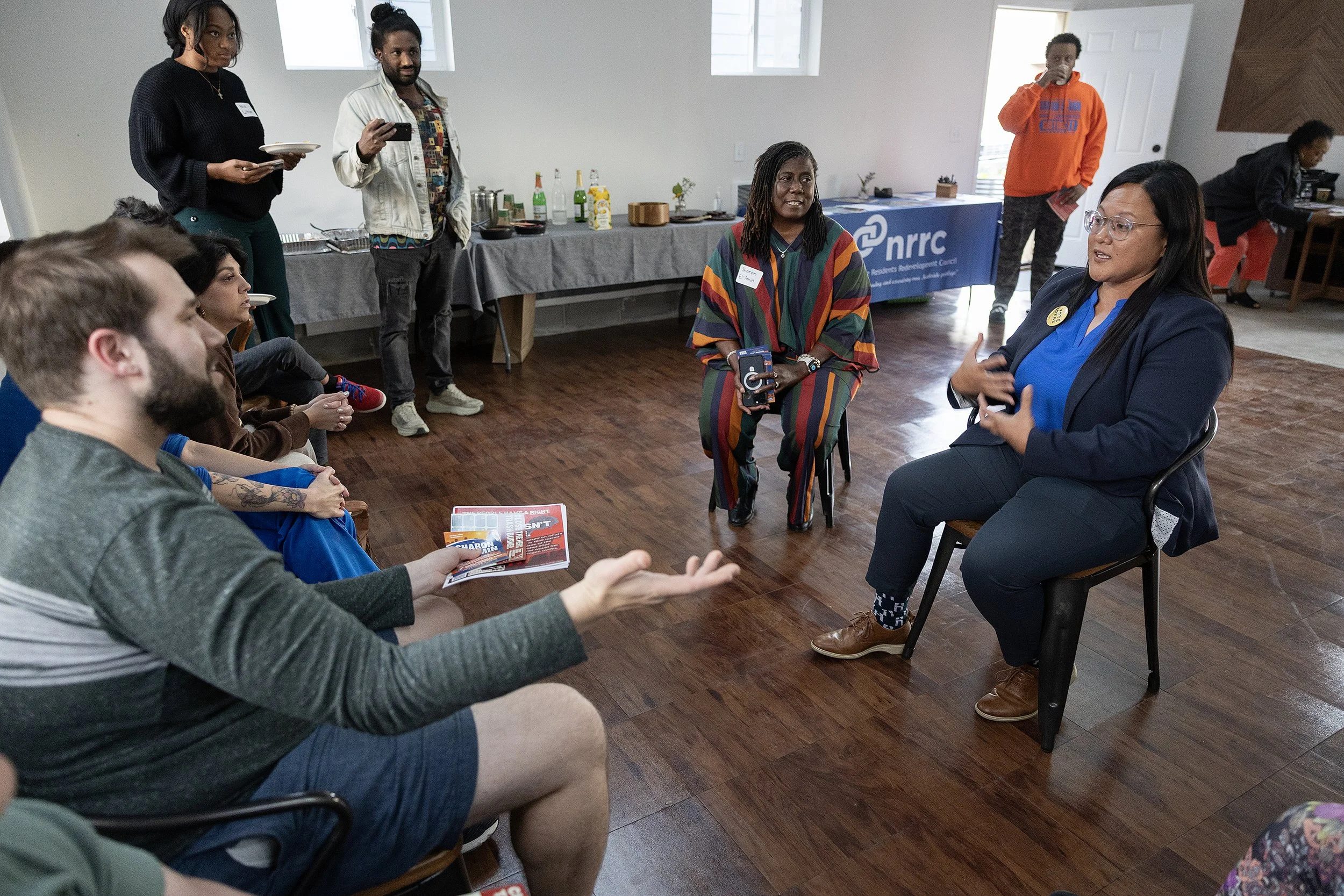
Hennepin County Commissioner Irene Fernando, right, took questions on her relationship with voters. Next to her is Sharon El-Amin, who is running to unseat Fernando in the Nov. 3 election. Photo by David Pierini
By David Pierini, Editor
As the board chair, Hennepin County Commissioner Irene Fernando sits in the center of a large dais that keeps the public at a distance.
On a warm October evening, Fernando walked into a Northside garage, sat a few feet from critics and spent the better part of two hours explaining why she limits her contact with constituents.
Also sitting near Fernando was challenger Sharon El-Amin, who easily riffed on the contentious discourse and promised voters greater availability.
“You come to us, you ask for our vote, and so we should be able to reach you,” El-Amin said to Fernando.
The candidate meet-and-greet, sponsored by the Northside Residents Redevelopment Council, took place less than two weeks before the Nov. 3 election and kept Fernando on the defensive as she vies for a third term.
This was not the usual stiff candidate forum. The dialogue was direct, sometimes uncomfortable, and flowed without a clock.
“Yeah, I’m glad that it happened that way,” NRRC Executive Director Martin Smaller said. “It needed to happen. It was a good opportunity for residents to get up close and personal.”
Fernando, whose district covers parts of Minneapolis, Golden Valley and Medicine Lake, has built a record of consequential policy decisions, including a financial rescue of Hennepin County Medical Center and making county resources accessible to residents during Operation Metro Surge. She also enjoys the endorsements of several colleagues and organizations, including the DFL.
But many said showing up in community matters.
Fernando acknowledged the criticism and admitted to being process-driven. She said she preferred receiving requests and questions by email so she could respond in writing and keep a record of the communication.
“I’m kind of formal,” Fernando said. “I’ve gotten that feedback and accept it. If I have met with a group multiple times and we don’t agree, from my perspective, it is not respectful to keep doing this back and forth. I want to be honest about that.”
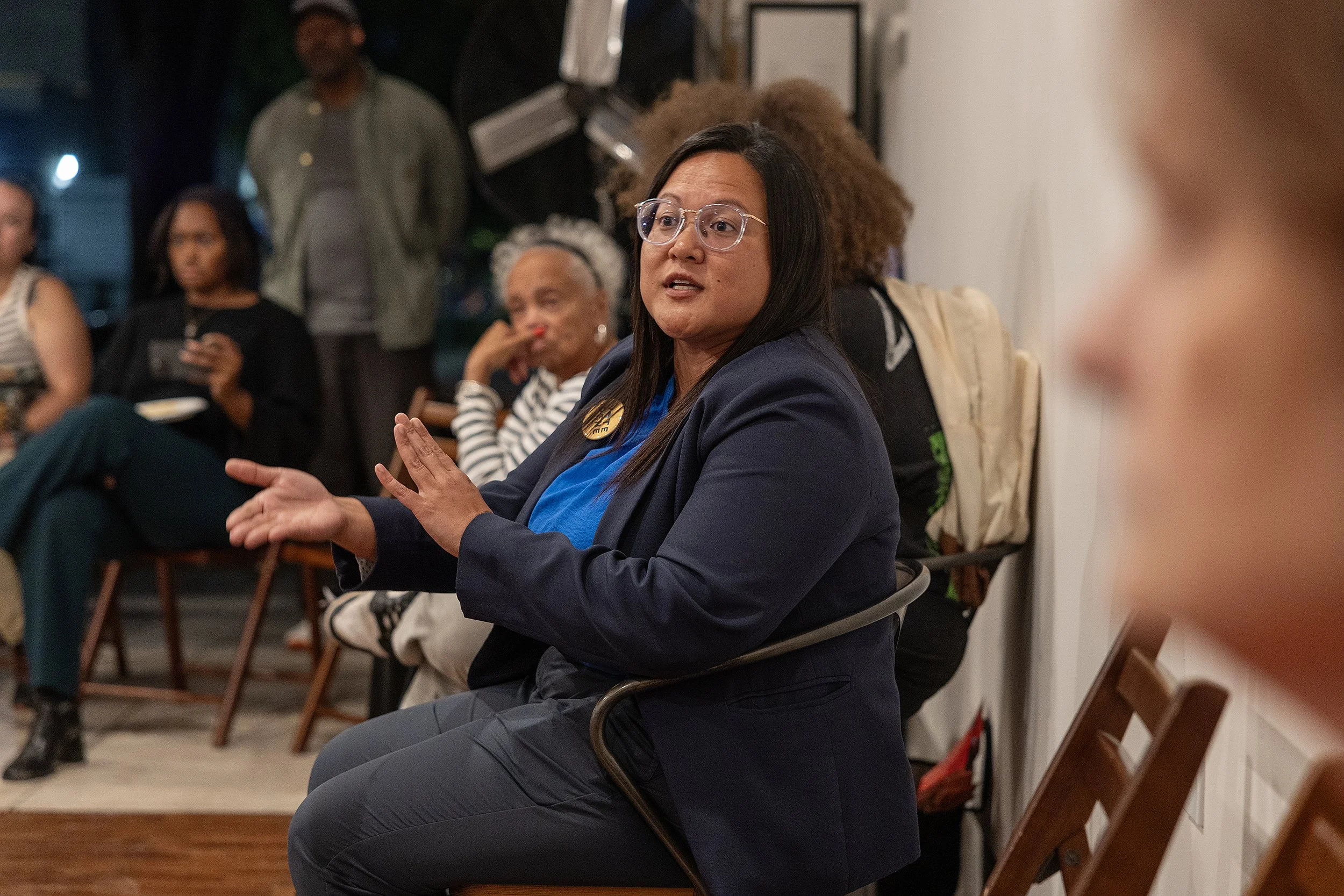
Fernando did not shy away from the feedback and said she would try to be more accessible to constituents. Photo by David Pierini
She is at odds with some in her district over two issues: the proposed Blue Line extension and an aging trash incinerator that some say is partially responsible for the Northside’s high rates of respiratory illnesses and deaths.
Fernando supports the light rail because of its potential to fuel further economic development in a historically underserved part of the city. Her opponents fear the route will ruin local businesses on West Broadway and displace low-income residents.
Her stance on the trash burner is more nuanced. She wants it shut down but not before other solutions are in place. She said municipalities need to provide those solutions; their slow response in expanding programs like composting and recycling continues to delay a closure date. The City of Minneapolis has another two years of trash disposal budgeted for the incinerator.
Critics want it shuttered immediately, even if trash disposal temporarily goes to landfills. Fernando sees this as the worst of two evils, but residents and activists from outside her district still want her to put the question to a vote.
Activists from the Zero Burn Coalition, which has singled out Fernando with outsized responsibility for the trash incinerator, attended the meet-and-greet, passing out literature and pointing their phone cameras to record her every word.
Coalition members rallied outside her residence earlier this year. Fernando referenced the rally and “some security issues,” suggesting some angst about public appearances.
Jacob Potter, who grew up on the Northside, noted how Fernando leans into governance, while El-Amin believes in working closely with community.
He said whoever is elected needs a blend of both.
“I think for you, Irene, the most impacted community doesn’t feel that you show up for them,” Potter said. “So, what are you going to do to change that community’s perspective?”