
Painting the pavement in Bryn Mawr
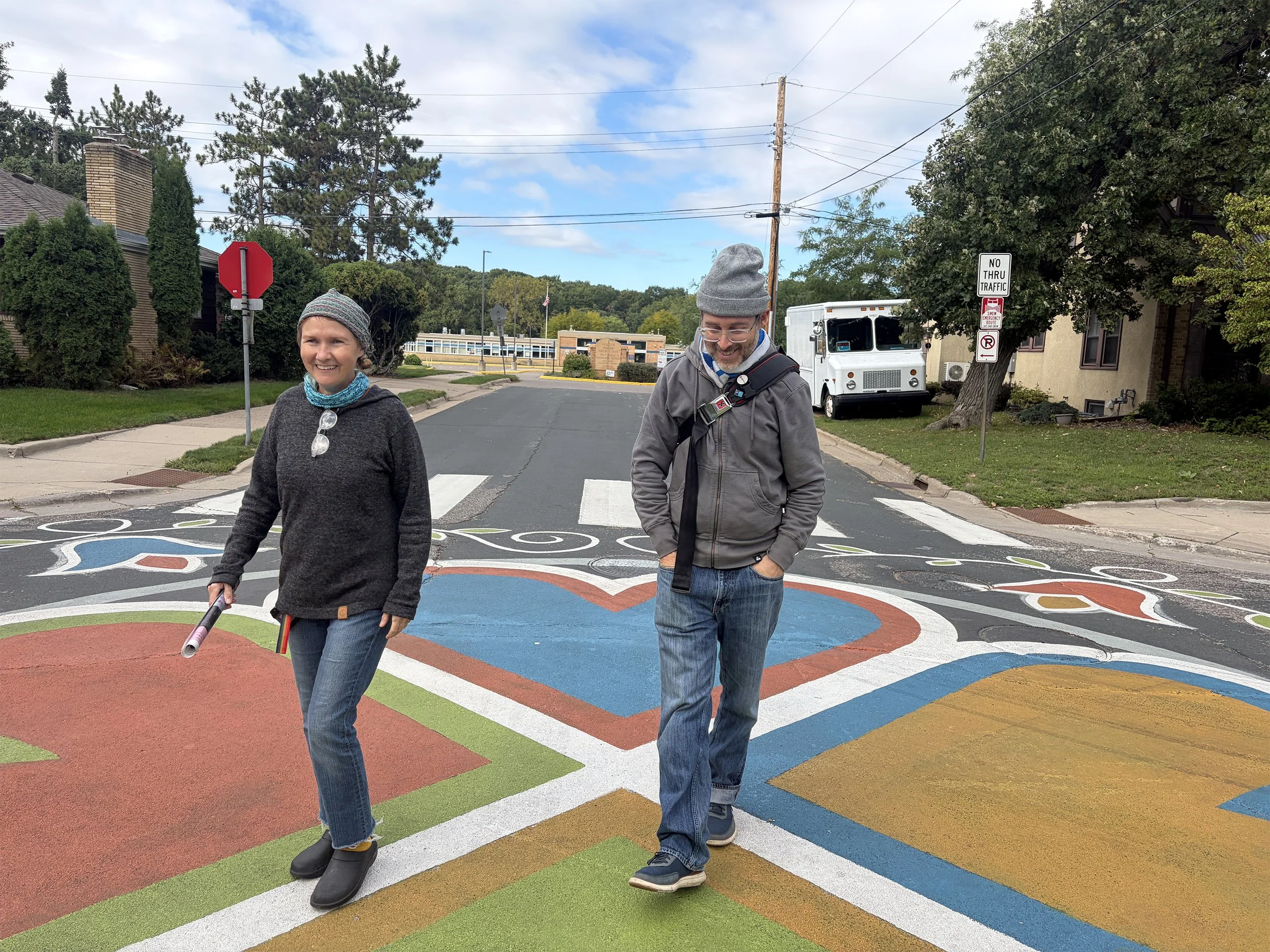
Seth Statmiller, right, helped paint the school entrance mural in July with Beth Turnbull and 30 other volunteers. Photo by Melody Hoffmann
By Melody Hoffmann, Reporter
It was the day after the 2024 election. Donald Trump had been reelected U.S. president and Beth Turnbull was in no mood to see clients.
But she showed up to her salon in Bryn Mawr and cut the hair of someone she had never met before.
It was a fateful meeting that sparked the Bryn Mawr Gathering Series, where people come together and talk.
“My goal for our first meetings was if I have four people show up that I don't know, I'm going to be thrilled,” Turnbull said of the initial meeting in March of that year. “We had 25 people show up.”
Three projects got off the ground that day, including painting intersections around Bryn Mawr to build community and calm traffic.
They painted the first two intersections this year. The first mural was painted in front of Anwatin Middle School, Bryn Mawr Elementary School, and Bryn Mawr Nature Preschool in July; the second at Laurel and Queen avenues in September.
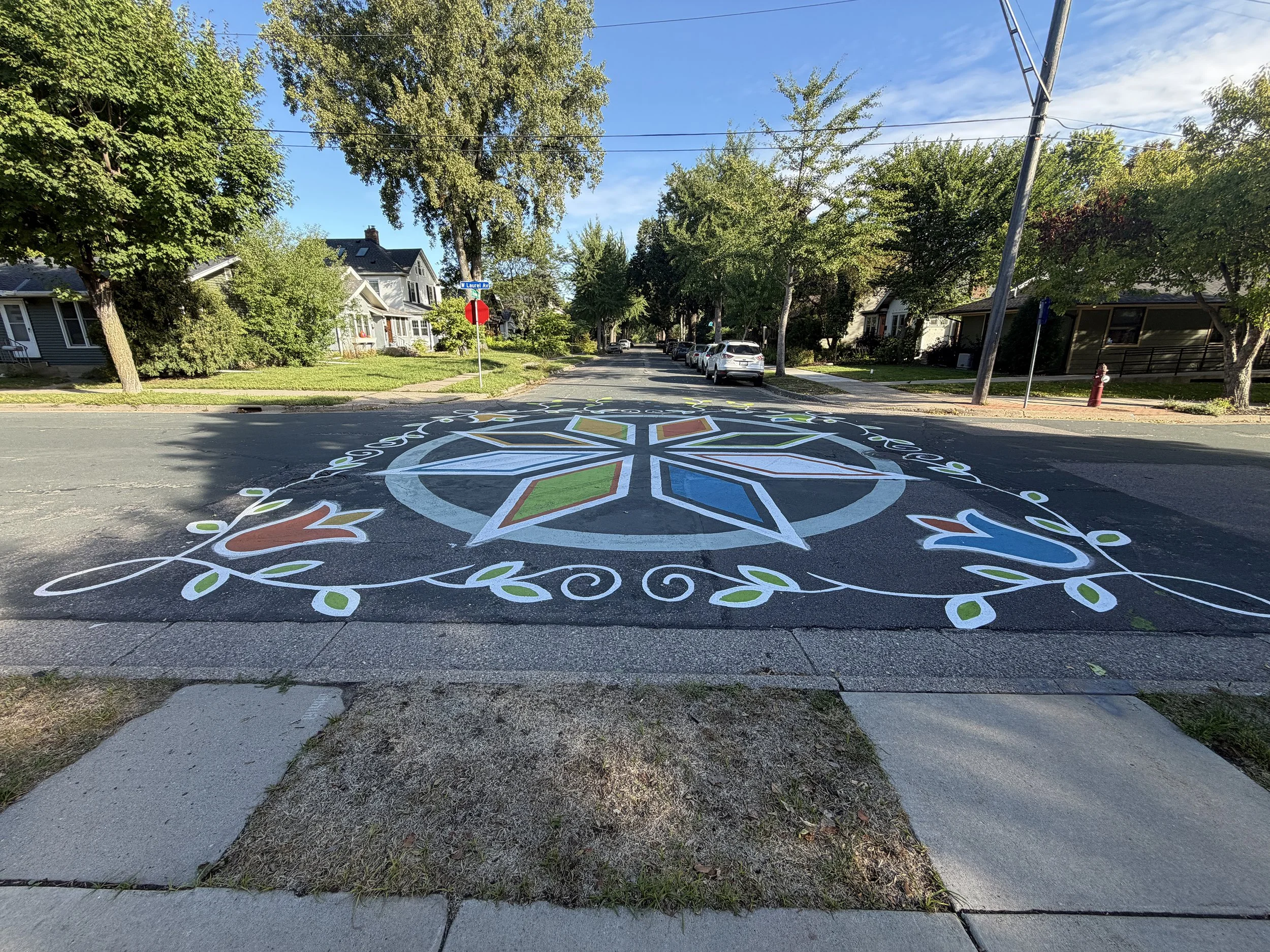
Anishinaabe artist Aza Ehrdrich-Abe designed the street mural at Queen and Laurel avenues, reminiscent of Ojibwe quiltmaking. Photo by Melody Hoffmann
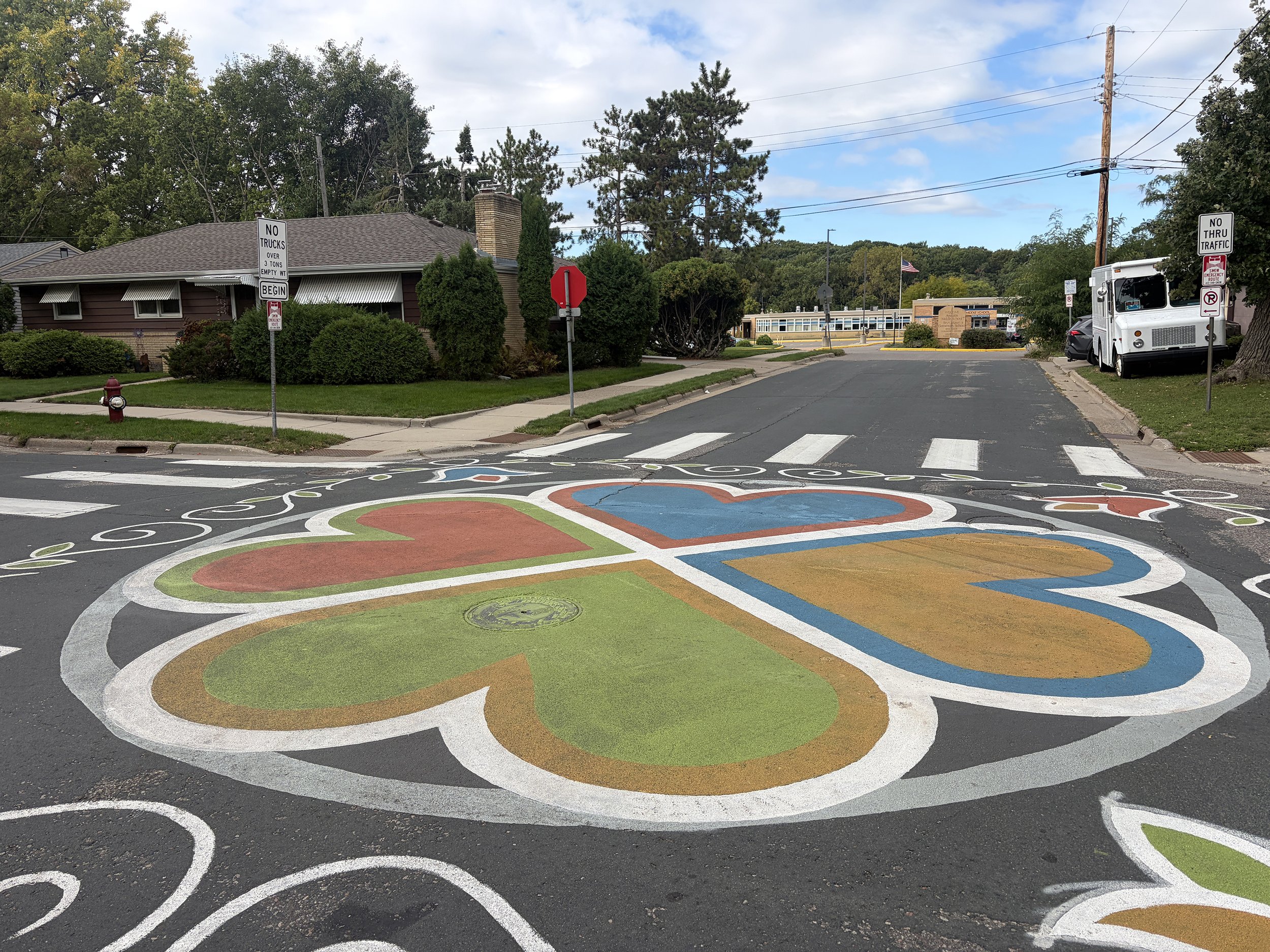
Neighborhood artist Aza Ehrdrich-Abe designed the street mural at the entrance of the Bryn Mawr public schools. Photo by Melody Hoffmann
“We get a huge amount of volunteers to come help paint, which is amazing,” Turnbull said. Kids were especially bountiful in their help and excitement, Turnbull said.
The pavement mural in front of the Bryn Mawr schools was designed to connect the education community to the neighborhood, since the buildings sit at the end of Laurel Avenue.
“They feel invisible,” Turnbull said.
Community members have identified four other intersections along Cedar Lake Road and Laurel Avenue to paint, and the City of Minneapolis has approved them.
Bryn Mawr artist Aza Ehrdrich-Abe designed the street murals with traditional Ojibwe artwork. The mural at Laurel and Queen is an eight-point star, a traditional design common among Dakota, Lakota, Ojibwe, and many other Native peoples.
“A confluence of hearts” was painted at the schools’ entrance.
“Our school is truly the heart of our neighborhood, so this felt just right,” Ehrdrich-Abe said.
Bryn Mawr resident Kathy Ripke helped paint the murals and proudly pointed out the grey paint she added to the Laurel and Queen avenues mural.
“Why wouldn’t (you get involved)?” Ripke said. “It was such a great idea, and I was just pleased as punch that it went through all the hoops and hurdles with the City.”
The City of Minneapolis Paint the Pavement program assists community members who want to do street murals in their neighborhoods.
Turnbull said the small group of neighbors who planned the street murals have learned so much that they are willing to help others do this in their neighborhoods.
“We want to help you navigate this system,” Turnbull said. “Our core group is dedicated to seeing this happen in other neighborhoods, and we will help. We will help write the proposal to the City. We will help with all this City paperwork.”
The core team who organized the Paint the Pavement in Bryn Mawr are Turnbull, Colleen Pulawski (Turnbull’s fateful client), Ben Gansky, Carol Ann Litster, Mike Tielman, Ben Taylor, and Peter Hannah.
Paint the Pavement projects do not happen without volunteers, including people to clean brushes and rollers.