
GAF’s announced shutdown brings a sigh of relief
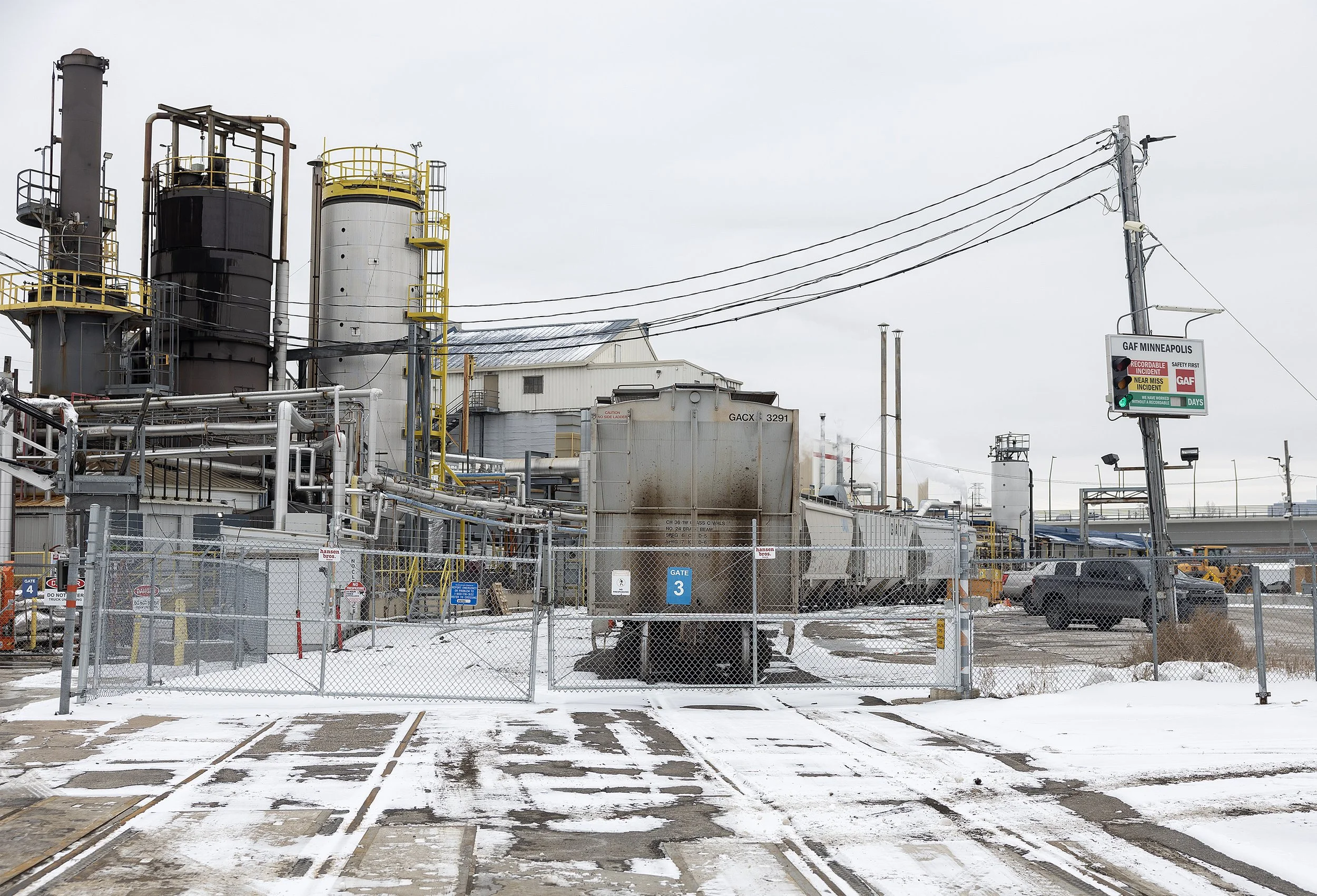
GAF has produced roofing materials at its Northside plant for nearly 60 years. Officials announced the plant will close in April and local residents are demanding from them a clean-up for the site. Photo by David Pierini
By David Pierini, Editor
A Northside plant notified its workers it would be closing at the end of April after 60 years of making shingles and other roofing materials. The shutdown of GAF will bring unemployment to 120.
But to many in surrounding neighborhoods, GAF’s departure was welcomed by residents who for three decades campaigned against the company for work practices they say spread toxic emissions that traveled through the air, settled in the ground, and flowed through the Mississippi River.
Neighborhood groups on both sides of the river met on Feb. 4 in front of GAF for a news conference to express relief over the closure and call for remediation of a site they believe remains contaminated. They were joined by activists from Texas who had similar complaints about a GAF plant in their community.
“They need to be held accountable,” said Mariam Slayhi, board chair of the Bottineau Neighborhood Association. “They need to pay for this mess. They shouldn’t just be able to walk out of here.”
In the mid-1990s, residents near GAF complained of a foul smell in the air associated with the production of asphalt shingles and other roofing materials. Residents began tracking cases of cancer in North and northeast Minneapolis, though GAF was just one of a handful of industrial polluters, including Northern Metals, on the riverbanks
The Minnesota Pollution Control Agency (MPCA) said traffic emissions from nearby I-94 remain the largest source of air pollution for Northside neighborhoods.
Researchers hired by the Bottineau Neighborhood Association in the city’s northeast found higher cancer and asthma mortality rates in census tracts near the GAF plant, compared to broader state and national averages.
GAF eventually placed scrubbers on its smokestacks after years of pressure from residents, who repeatedly complained to MPCA. Slayhi said the scrubbers reduced air emissions, but residents were still bothered by the smell, which she said came from the smelting of asphalt and the recycling of old shingles.
A GAF spokesperson said the plant has always operated in compliance with air and water safety regulations. The spokesperson said GAF was decommissioning the North Minneapolis factory to focus investment on other manufacturing sites in the U.S.
The MPCA did not answer requests for comment.

Audua Pugh, center, said she is convinced her cancer diagnosis originates from toxic emissions from industrial plants located on the Northside near the Mississippi River. Photo by David Pierini
Audua Pugh is the only member of her family to receive a cancer diagnosis. She said she is convinced her cancer originates from the Northside’s burden of industrial polluters.
“For me, environmental justice is not abstract – it’s personal,” she told the group of reporters and supporters outside GAF. “This is not just about one source of pollution. It’s not just about a factory, an incinerator, or vehicle emissions. It’s about the cumulative impact of being surrounded by multiple sources of harm for decades, and the way those harms stack up in some communities again and again.”
Roxxanne O’Brien, a Northsider and environmental justice organizer, said the nearby neighborhoods will request meetings with the city, state, and county to demand GAF pay for the cleanup of the site.
She said the neighborhoods should also lead any plans to redevelop the site, located at the end of Lowry Avenue, which meets the river.
O’Brien worries about land grabs and development that gentrifies and displaces nearby residents.
“We have carried this burden for decades,” she said. “We will lead what comes next.”