
Masjid An-Nur celebrates the ‘embrace’ of Ramadan
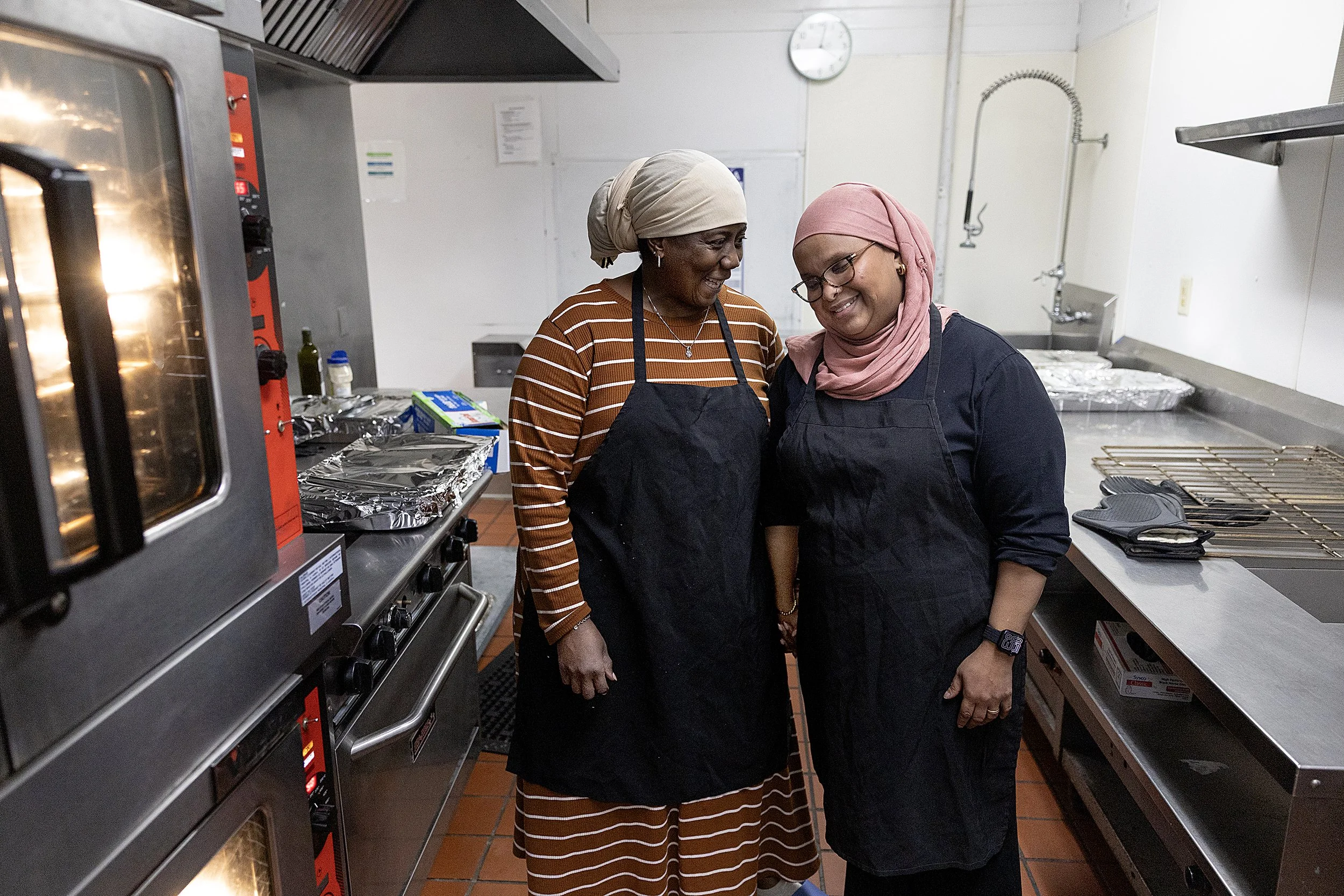
Sharon El-Amin, left, and Malika Dahir cooked together in the kitchen of Masjid An-Nur in preparation of an Iftar dinner, a meal served after sunset to break the fast during the Muslim holy month of Ramadan. Photo by David Pierini
Story and photos by David Pierini, Editor
Raqiya Mohamed was splattered with tomato sauce.
A dull can opener in the kitchen of Masjid An-Nur had failed to cleanly cut the lid away. When a little pressure freed the lid, sauce flew, landing on Mohamed’s arms, glasses and hijab.
Mohamed understood the saucing to be a kind of Ramadan blessing. She couldn’t stop laughing.
“It isn’t an Iftar without a mess,” Mohamed said, grateful to be with longtime friends, cooking and serving a meal of her favorite Somali dishes to more than 100 people.
Less than a month earlier, Mohamed wondered whether it would be safe to gather with fellow Muslims in local mosques to pray, celebrate and break the fast. Fear gripped the Twin Cities on the eve of Islam’s most sacred holiday.
More than 3,000 federal agents were ordered to Minnesota to carry out an aggressive immigration crackdown. Agents were emboldened by a president’s hateful rhetoric, especially toward the Minnesota Somali community. They made arrests regardless of status and rushed deportations.
Minnesotans resisted. Two gave their lives, and the call of justice pressured the federal government to end what it called Operation Metro Surge. Agents began leaving about a week before the start of Ramadan, which ran from Feb. 17 to March 19.
“As soon as they started to take ICE out of the city, I think that was God’s way of making us feel like we could practice our faith loudly and publicly without being afraid,” Mohamed said.
The ‘embrace’ of Masjid An-Nur
The diverse jamaah, or congregation, of Masjid An-Nur gathered at the mosque every day during the month of Ramadan.
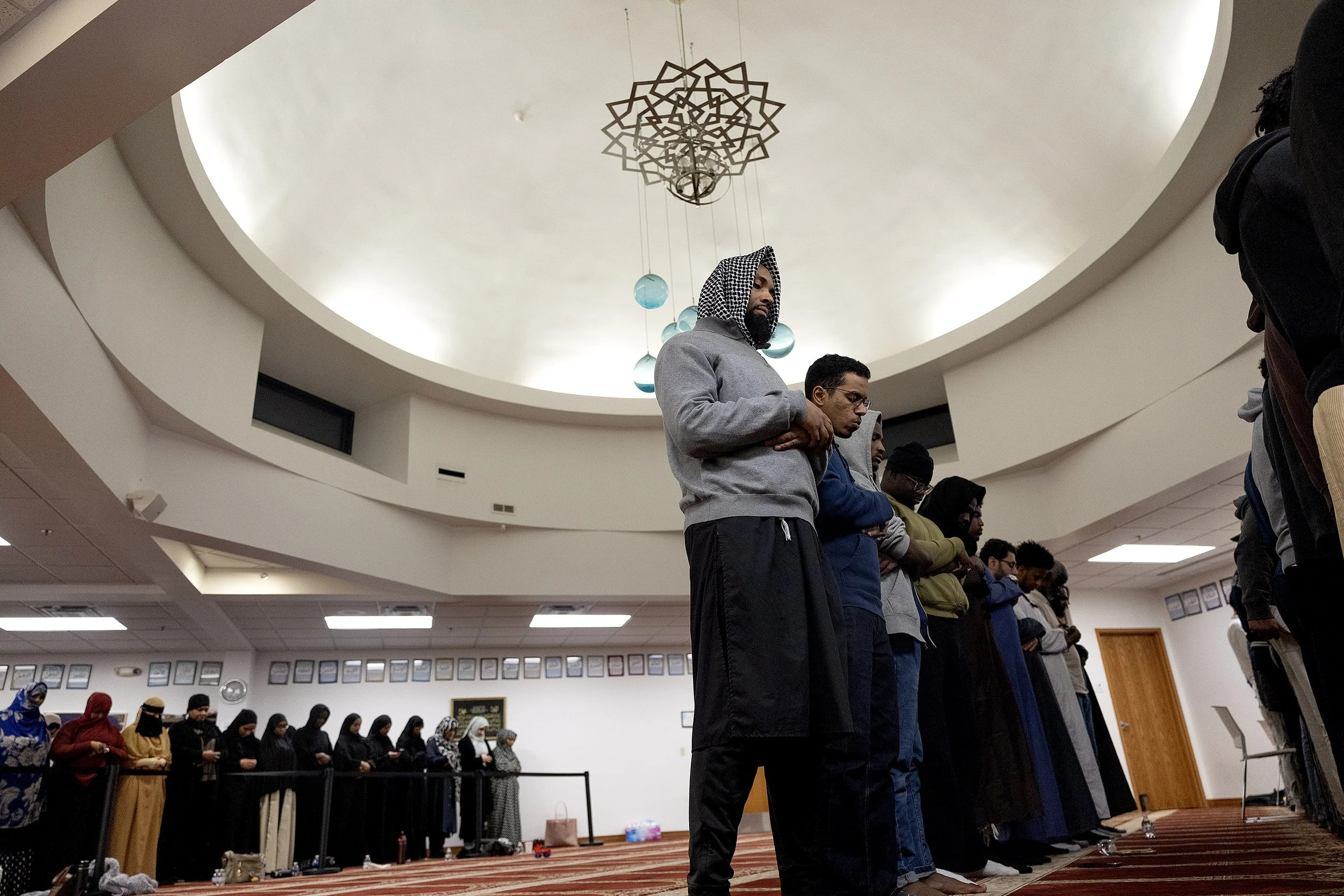
Men and women reflect on and recite the Quran during a special night-time prayer known as the Taraweeh.
The holy month changes from year to year according to the lunar calendar and is observed because it is the time in which the Prophet Muhammad received the first revelations that make up the Quran.
The holiday is seen as a spiritual reset through communal prayers and acts of charity. One of the five pillars of Islam is fasting during the 30 days of Ramadan, from sunrise to sunset, to strengthen faith and empathy for others who suffer.
It is also a joyous time of family and community gatherings that reinforces unity.
“Embrace, embrace, embrace,” said Patrick Ester, referring to his reception at Masjid An-Nur following his release from prison. “I still feel that love years later. During Ramadan, I reflect on building a closer relationship with Allah. It’s just a sense of peace. I am at peace.”
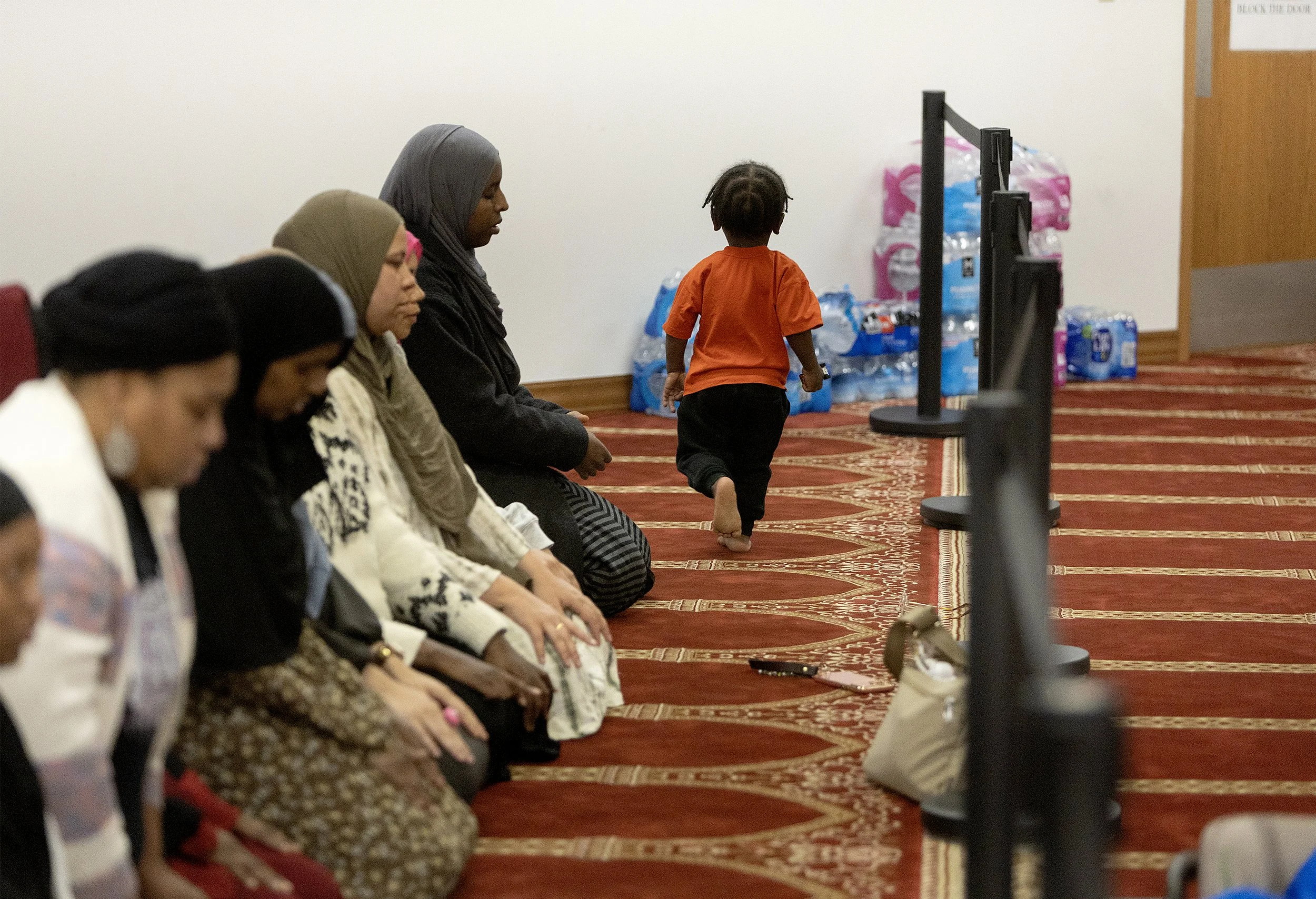
A child runs down a row of women praying during a Ramadan prayer.
Throughout Ramadan, the men and women of Masjid An-Nur, were in and out of the mosque’s spacious prayer room, known as a musallah, for the five moments of prayer each day.
The Iftar dinners, prepared by a rotating cast of volunteers, fed more than a hundred men, women and children Monday through Thursday evenings. Mohamed and her friends saw a callout for volunteers on TikTok.
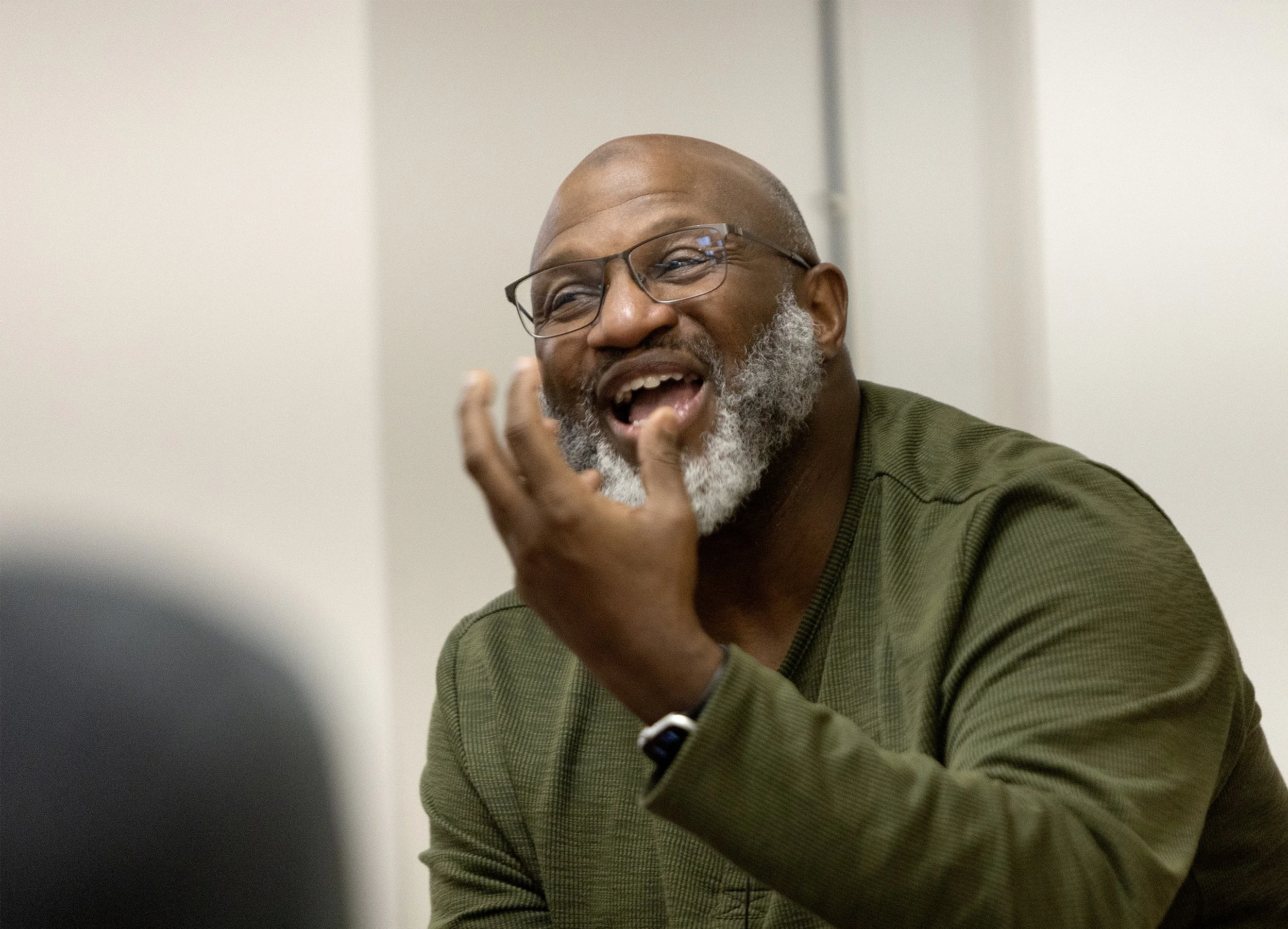
Imam Makram El-Amin delivers a message during the Taraweeh on the eve of the final 10 nights of Ramadan. “Do a little bit more and devote yourself fully in worship. These are not ordinary nights. These nights can change your life for the better.”
After the dinner, followers are invited to an additional prayer known as the Taraweeh. During this, people pray as they listen to a melodic reciting of the Quran. Afterward, Imam Makram El-Amin delivers a message, and some will stay the night in the musallah to pray and study Islam’s sacred text.
“Ramadan reminds us to give more,” El-Amin said during one Taraweeh. “It reminds us that our faith is not only one person, but also collective. I don’t want just forgiveness for myself. I want forgiveness for my brother. I want it for my mother. I want it for my sons. I want it for my brothers and sister that we share space together.”
The Ramadan kitchen
The kitchen at Masjid An-Nur is run by Sharon El-Amin, the wife of Imam Makram. She has been cooking Iftar meals for 25 years and oversees the groups of volunteer cooks who prepare the meals served in the mosque’s basement following the fifth prayer of the day.
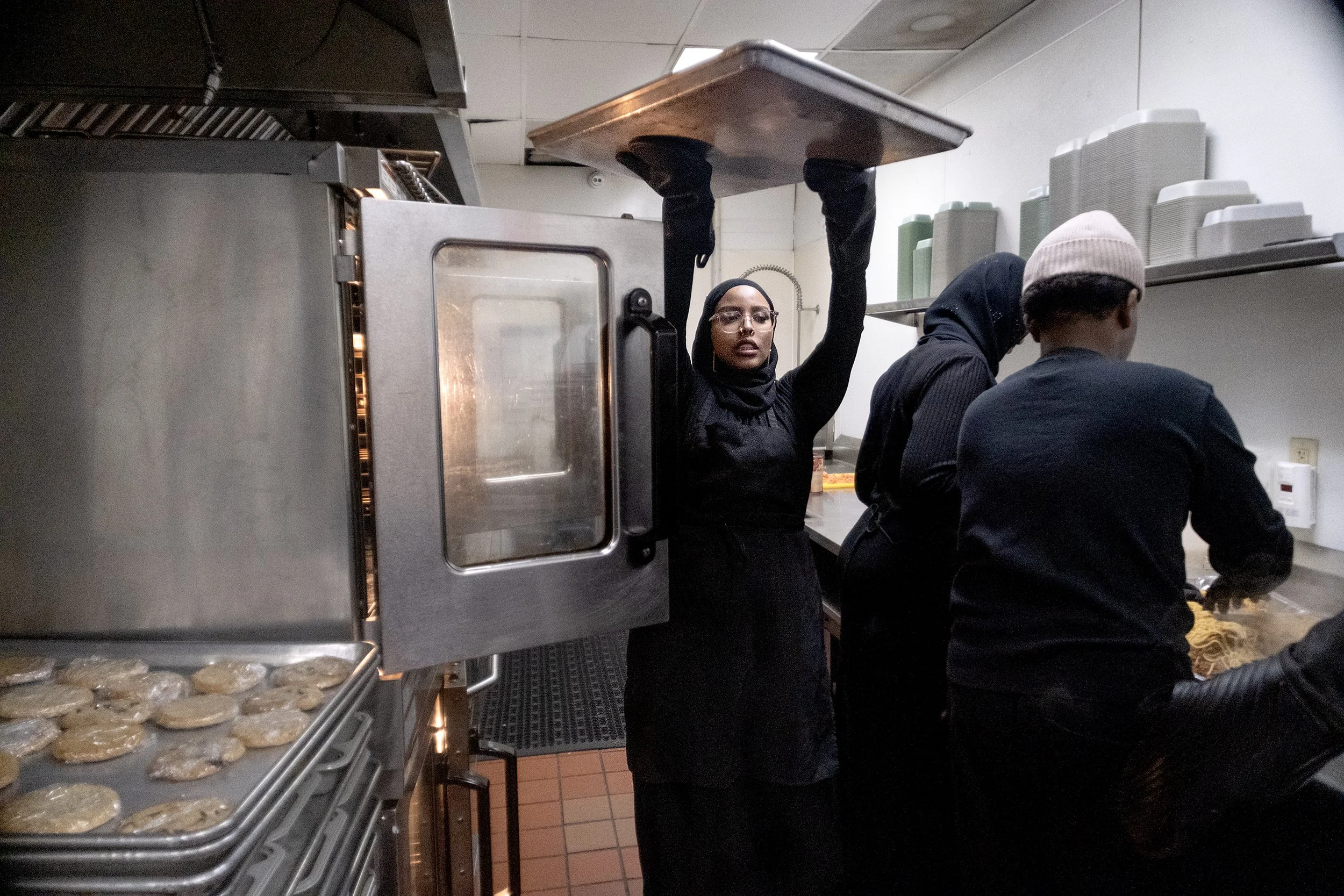
Masjid An-Nur put a call out for volunteers to help prepare nightly Iftar meals. One group of friends answered the call on a TikTok post and cooked one night in the final week of Ramadan.
“When you’re in the kitchen, you get to bond with people,” she said. And bond they do with laughter and lively chats as they work side-by-side cutting fruits and vegetables, seasoning meats and dishing cooked food into serving pans. “Our goal is to prepare the meal for our families to eat, laugh and enjoy each other.”
Kitchen staff are not allowed to taste what they are preparing during the fast. They will use cooking thermometers or their other senses to determine if something is done. One cook said she’s never had a dish not turn out.
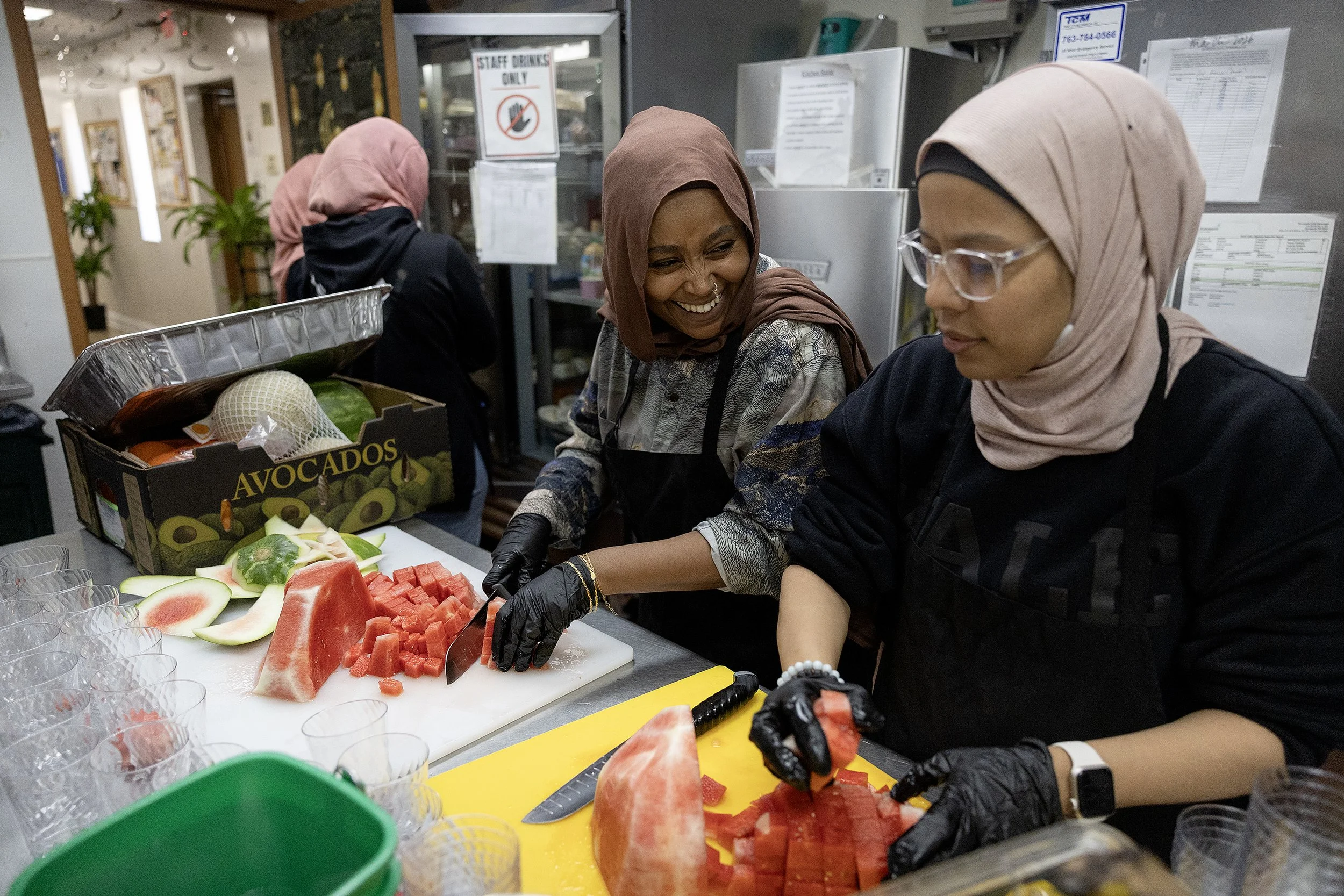
Rammy Mohmed, left, and Rose Youngmark chat about Mohmed’s upcoming wedding as they cut fruit for the breaking of the fast
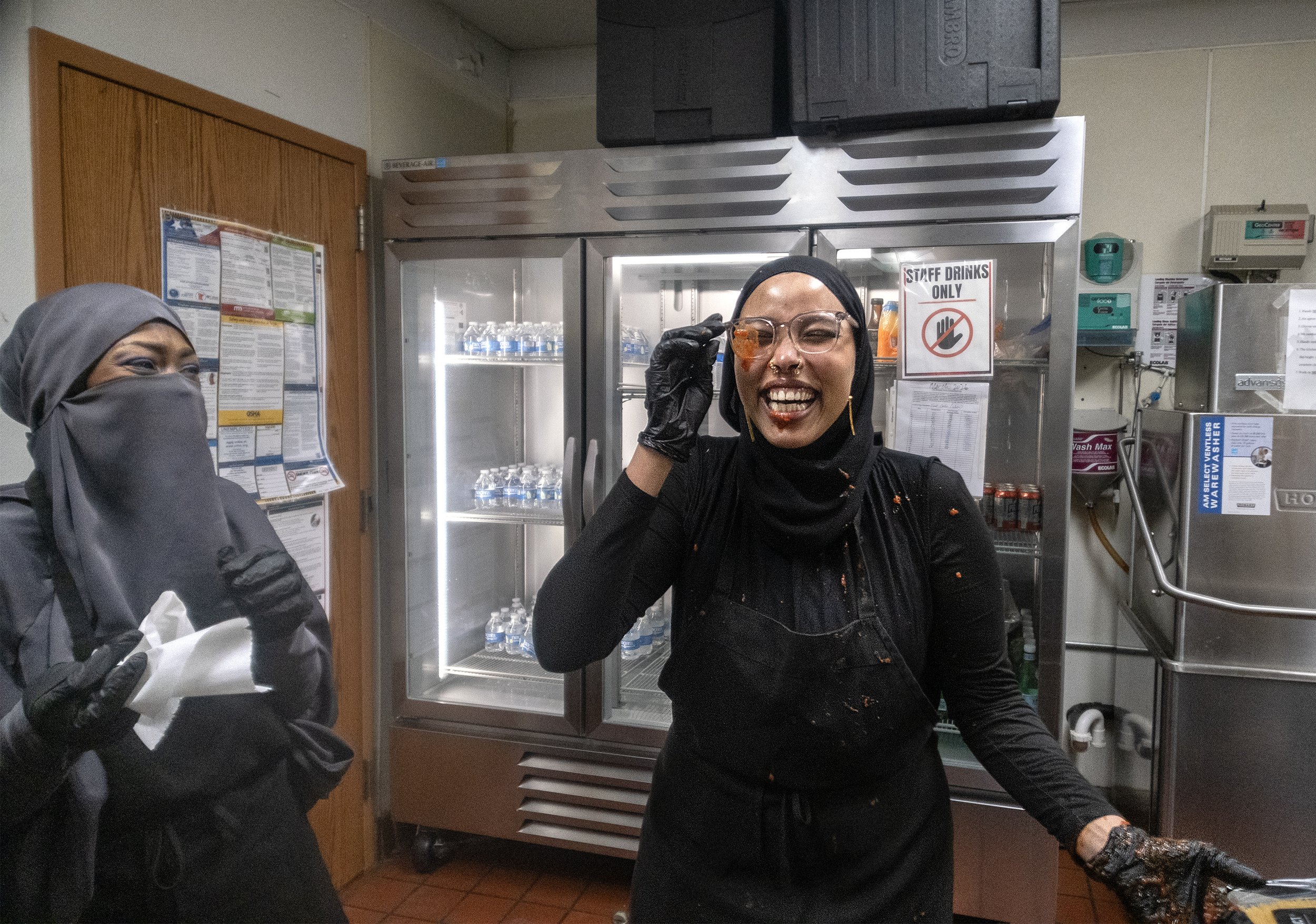
Raqiya Mohamed had a kitchen mishap involving a large can of tomato sauce. The It was the only hitch in a well-received Iftar meal prepared by Mohamed and her friends.
During one dinner early on, the faithful broke fast with El-Amin’s famous fried fish, meatloaf, the recipe of which is a secret passed down by her mother, and buttery mashed potatoes that likely coated empty stomachs well into the next day.
El-Amin directed women and children to go through the serving line first, while the men sat on one side of the room, chatting and waiting for their turn.
Except for a date and some water, El-Amin opted to eat at home. She stood to one side to watch tables full of satisfied diners. “I love to see happy faces and full tummies,” she said.
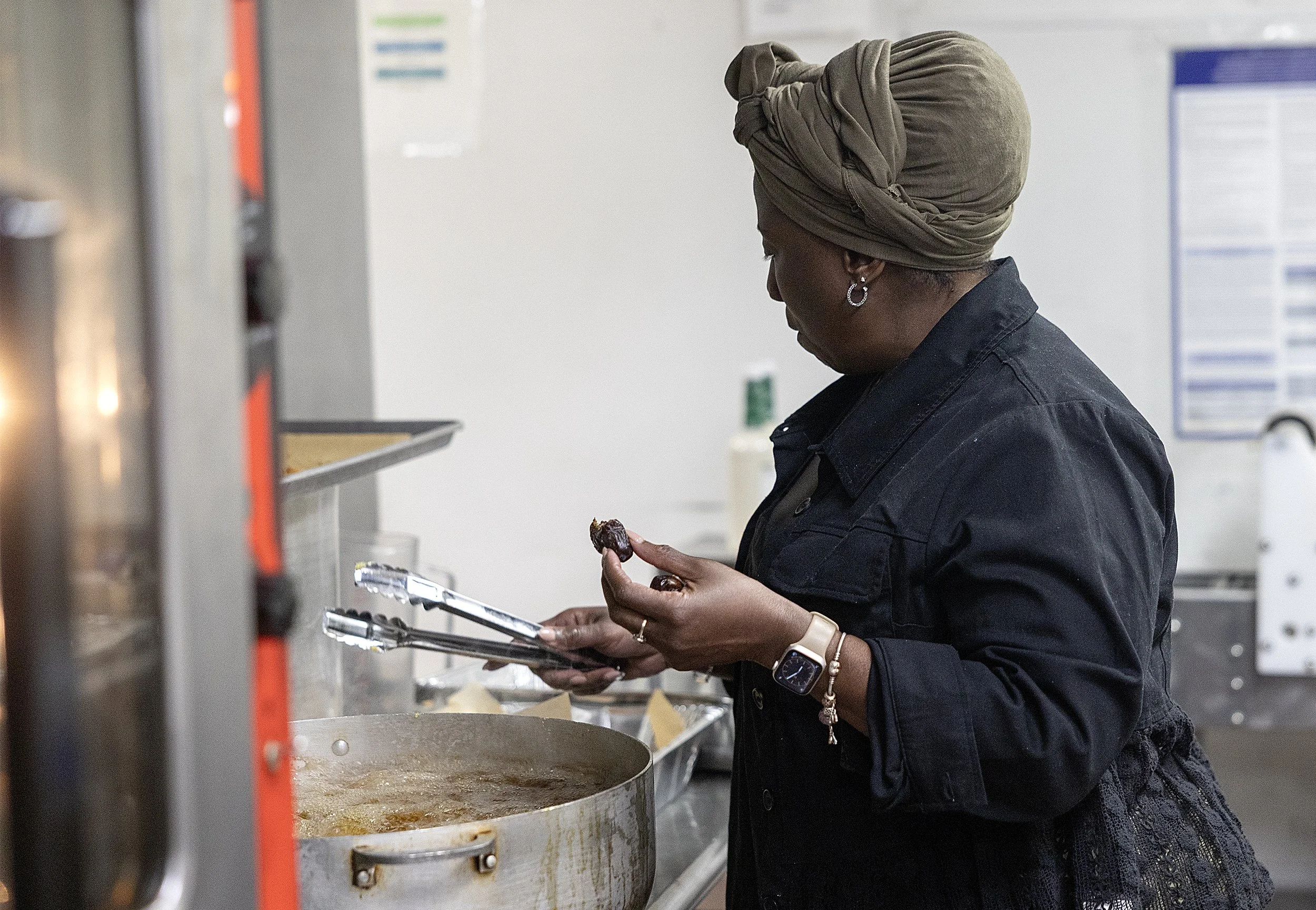
Sharon El-Amin has run the Ramadan kitchen for 25 years. As she fried fish one evening, she noted the time for sunset and broke fast by nibbling on a date.
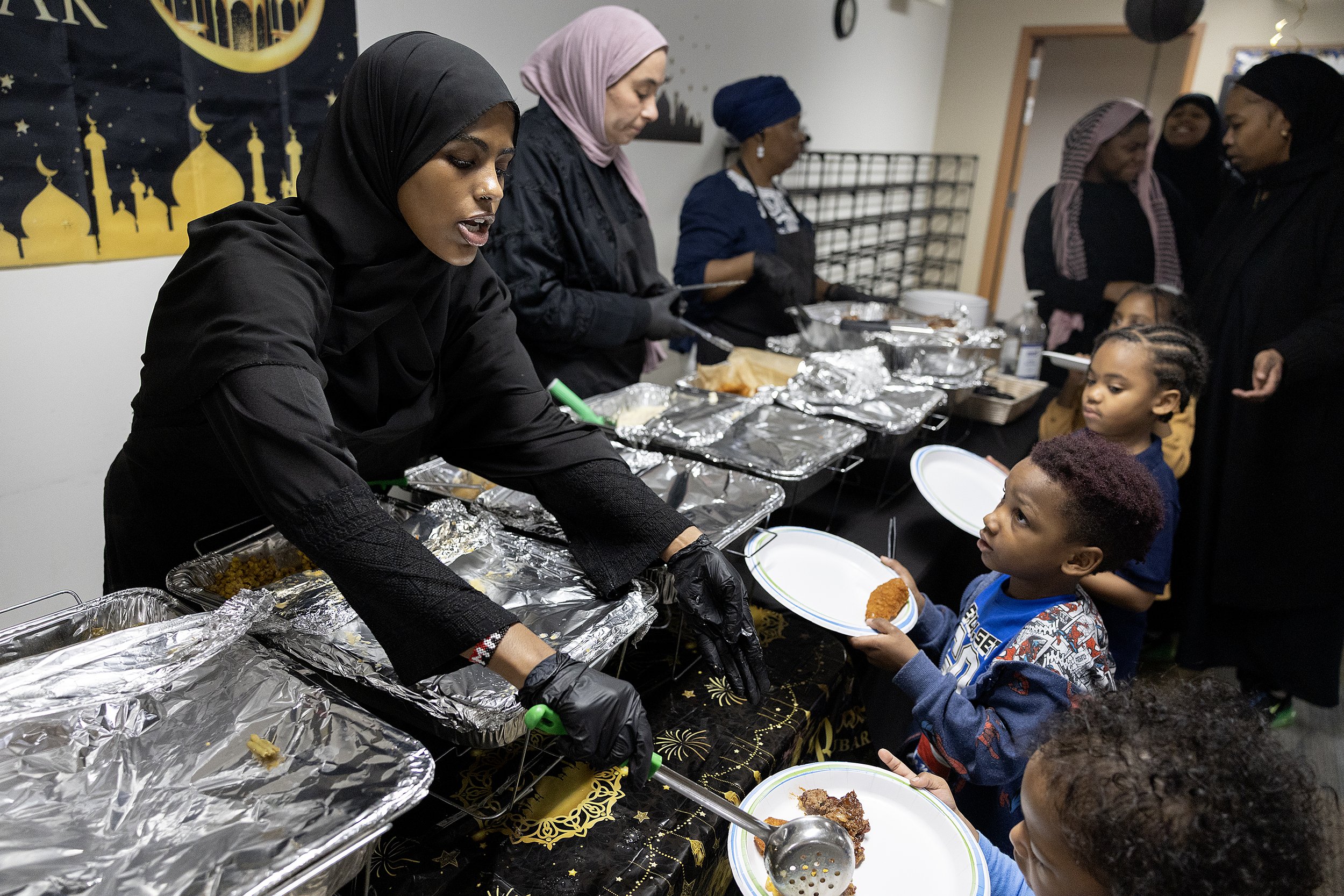
Women and children eat first during Iftar meals, which drew at least 100 people each night.
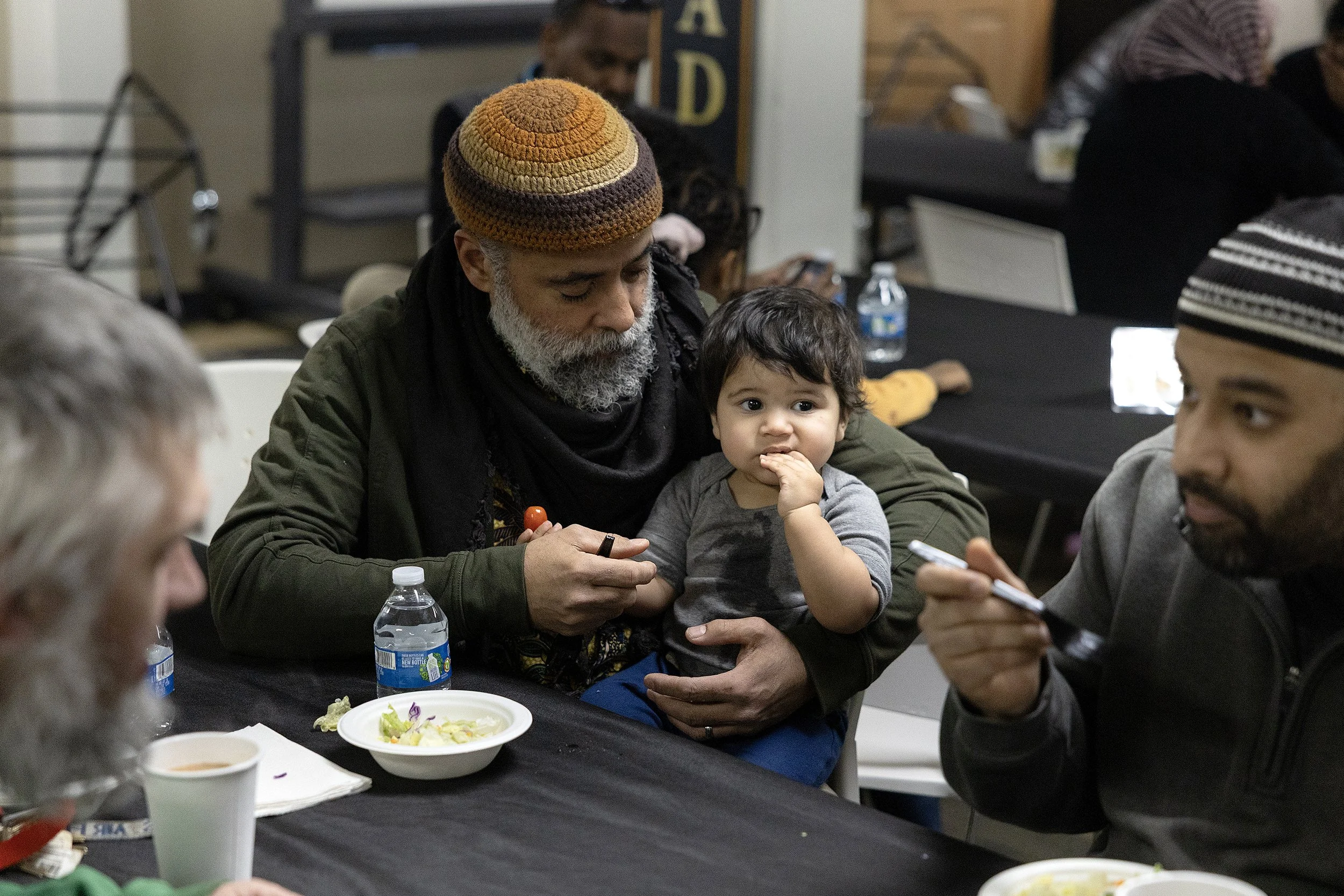
Jerome Youngmark holds his grandson, Mustafa, 1, as men awaited their turn to line up for the evening meal.
Thanking Allah
Three days of celebration known as Eid al-Fitr, or the Festival of Breaking the Fast, marked the end of Ramadan.
The celebration was established by Prophet Muhammad as a way to give thanks for any blessings, the fellowship with fellow Muslims, and the strength to practice self-control during the long days of fasting.
On the first day of Eid, there is no fasting or even a call to prayer. Muslims will instead offer prayers of thanks while they get ready and travel to a larger Eid service.
Because Masjid An-Nur is limited in size, its community joined others at a local school for a large service on March 20.
Over the three days, families gather, give gifts, and carry out various acts of charity.
Marshay Wyse is surrounded by family who are not Muslim, but they will celebrate with her during Eid.
The end of Ramadan is bittersweet for Wyse, who said it’s a month of peace hard to come by at other times of the year.
But she still finds ways to bring a little of that peace into whatever awaits her in the coming months. Ramadan reminds her she is on a solid spiritual foundation.
“Fear is real, but you have to find peace in the midst of that fear,” she said. “If you can feel that peace no matter what the storm, you can weather anything.”