
Crowd-sourced data shows a high number of ICE-involved incidents in North
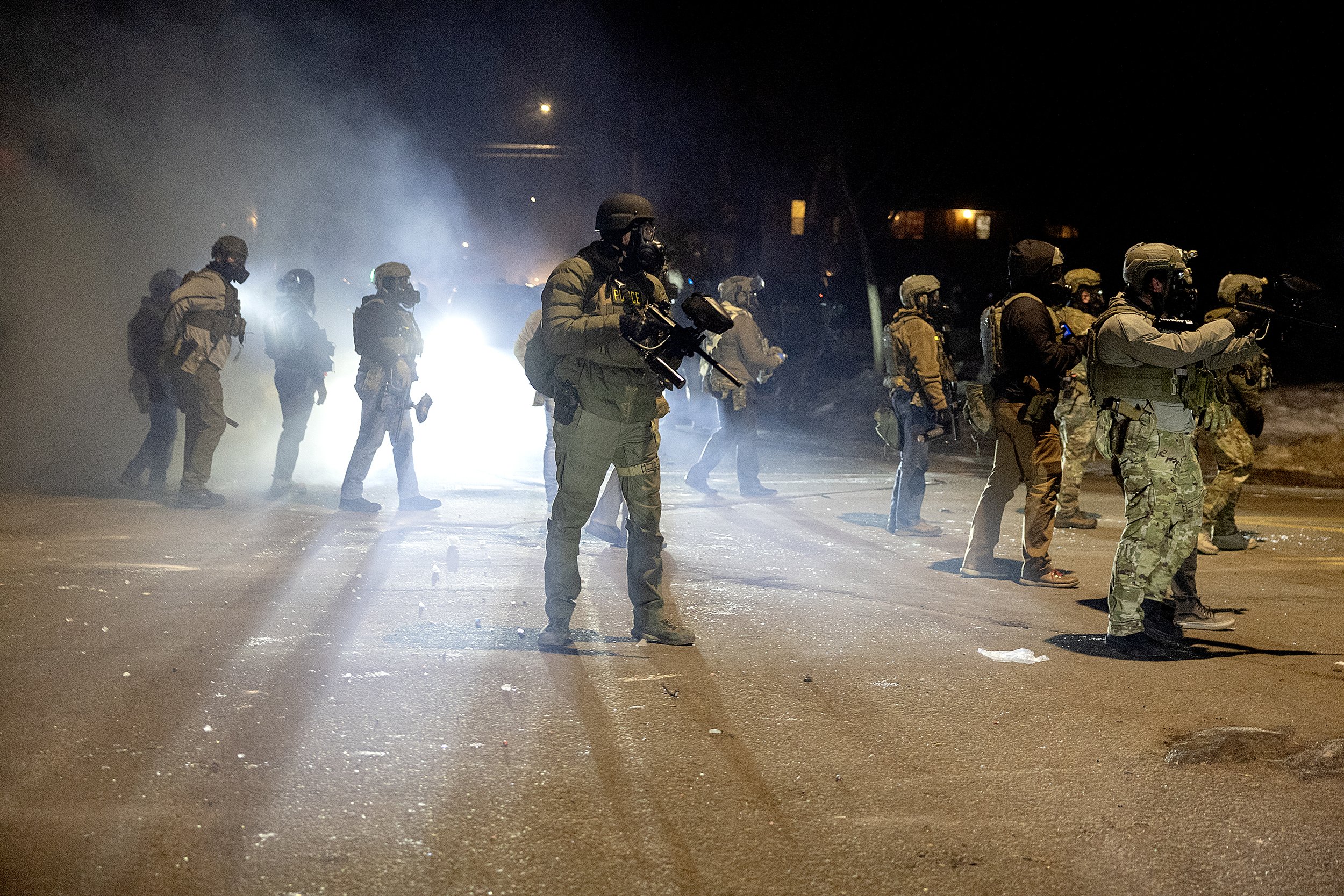
Federal agents walked on Lyndale Avenue near 25th Avenue in an effort to disperse protesters and observers. Photo by David Pierini
By Azhae’la Hanson, Reporter
North Minneapolis has the second-highest number of ICE-involved incidents, according to a crowdsourced data website.
With no official way to track ICE data in Minneapolis, people have to rely on crowdsourced data to see what they’re facing. While the data can’t fully reflect the number of ICE incidents, it gives a snapshot of how Northside residents are as vulnerable as anyone else in the city.
The website Defrostmn.net shows North Minneapolis with dozens of dots representing different encounters with ICE.
39 people were reported to have been arrested or detained in North Minneapolis as of Feb 17.. There were nine attempted arrests and at least 90 other ICE sightings.
The data also shows that the Cleveland and Folwell neighborhoods are the most targeted neighborhoods, followed by West Broadway Avenue.
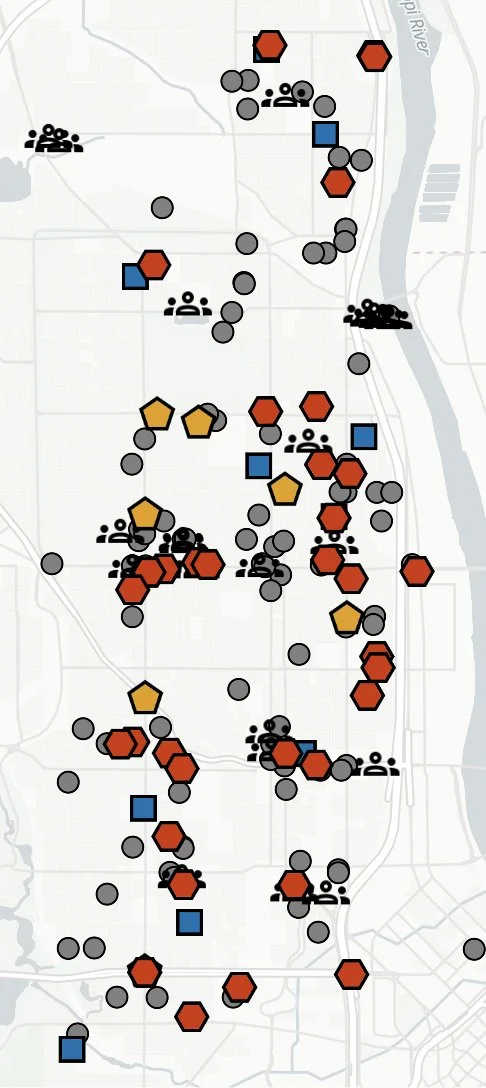
This screenshot taken from Defrostmn.net shows crowdsourced ICE activity in North Minneapolis up until Feb. 17. The red hexagon indicates each time ICE detained arrested someone, the blue square indicates each time ICE attempted detainments or arrests, the gray circle indicates each time ICE was observed in an area, and the icon of people indicates areas where ICE was seen gathering or staging.
Benjamin Glover, vice chair of the Folwell Neighborhood Association, said the numbers are a conservative estimate of ICE's presence in his area.
“Based on what I’m hearing directly from trusted community members and those who are actively present on the ground, this appears to be a conservative estimate of what’s currently being experienced in parts of North Minneapolis,” he said. “What we are hearing is not just concern — it’s fear, uncertainty, and emotional impact on families and individuals who already carry so much.”
A Willard-Hay resident who did not want to use his name also said ICE’s presence continues heavily in North Minneapolis, despite news of a drawdown. And while crowdsourcing is the current method of tracking ICE, it can’t track it all.
“I would definitely say that the data is conservative,” he said. “They do say that just because an area looks like nothing is happening there, that does not mean nothing is happening there. Usually, that would mean that there's just an under-reporting of the data.”
The Northside hasn’t garnered as much attention as other communities, outside of the shooting of Julio Cesar Sosa-Celis on Jan.14.
Local business owner and resident Markella Smith said North Minneapolis has to show up differently for survival. As a result, community members feel they’re left to quietly fend for themselves.
“The Northside isn't getting the same light,” Smith said. “As far as ICE activity, we're also not getting the same level of support, and we're having to do that all on our own, without a network of bigger things supporting us.”
Community hubs have popped up, Northsiders are leading rapid-response efforts, and intricate networks have formed and are kept secret because survival right now is more important than publicity. Historically, for Black and minority communities, this has always been the case.
“Let's face it, right? Black and brown people in general have a lot more to lose right now,” Smith said. “And for our majority local Black and brown spaces in North Minneapolis, if those places are targeted, it's a lot different than if another place with more visibility and resources gets targeted.
“How the Northside cares for each other is just different.“