
SNAP cuts leave Minnesota families with less food as lawmakers weigh response
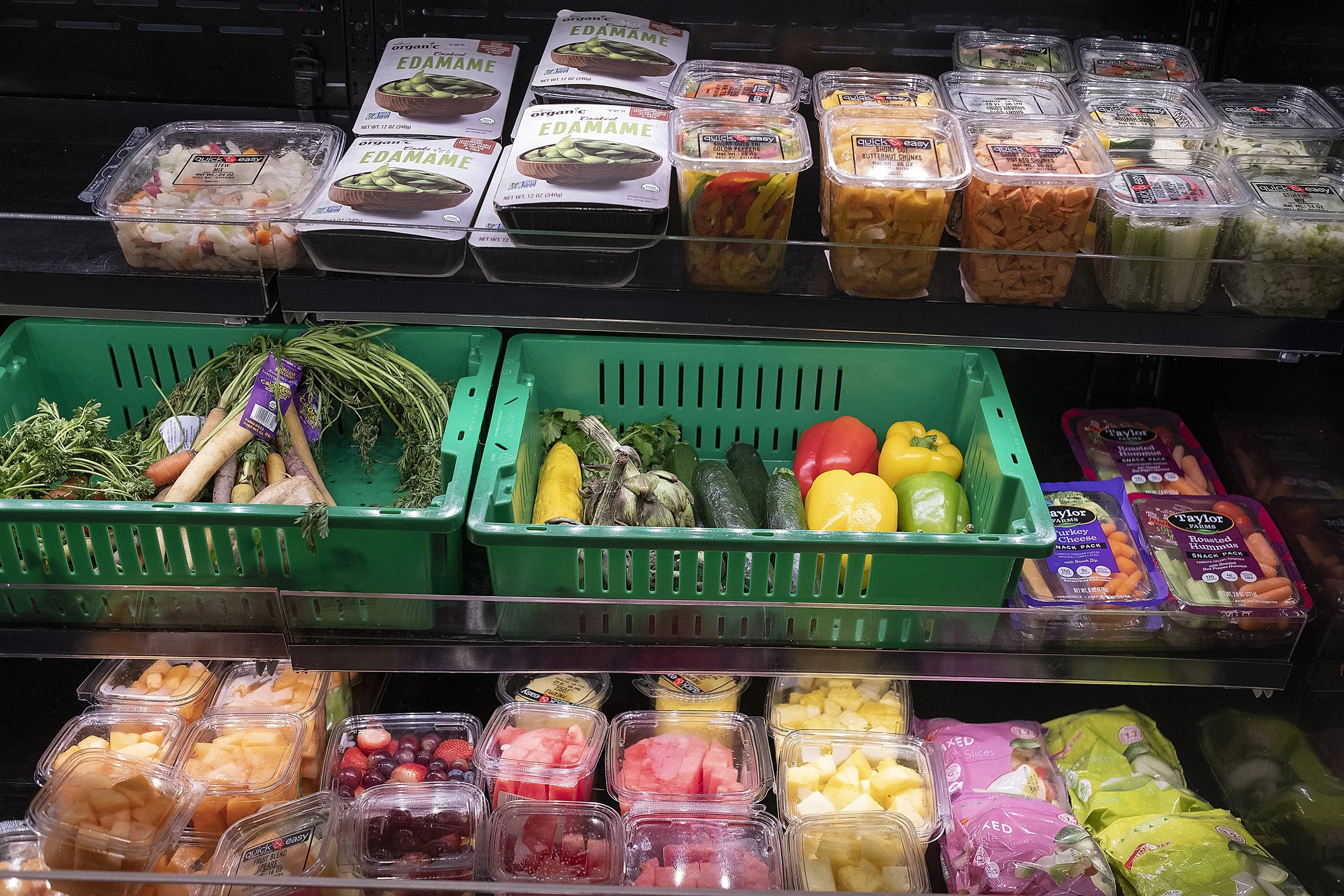
With funding cuts to SNAP, food shelves, like this one at NorthPoint Health and Wellness Center, have seen a spike in requests for food. North News file photo
By Ella Barbosa, Manal Bare, Violet Ditlevson and Mya Bell-Jones, ThreeSixty Journalism
Seventeen-year-old Central High School student M.O. remembers grocery shopping trips when her family would routinely fill the cart with food.
But since the federal government drastically cut funding for the Supplemental Nutrition Assistance Program (SNAP), M.O.’s family now relies more on local food shelves. M.O asked to only be referred by her initials because of sensitivity around receiving SNAP benefits in the current political climate.
“With the full SNAP back then, I would get all the vegetables I need, all frozen food, all snacks, the fridge would be full, and we would put a lot of snacks in the cabinets,” she said. “But now, we don't even go grocery shopping a lot anymore.”
Last July, President Trump signed the One Big Beautiful Bill Act into law, which includes changes to SNAP such as significant cuts and stricter eligibility requirements. An estimated $186 billion will be cut over the next decade, affecting about 440,000 Minnesotans who rely on SNAP, according to the Minnesota Department of Children, Youth, and Families.
State lawmakers say the changes push massive costs onto the state, counties, and tribal nations.
DFL Senate Majority Leader Erin Murphy said that although Minnesota currently has a balanced budget with a surplus, lawmakers must be careful not to turn the surplus into a deficit.
She said Minnesota doesn’t have enough money to match the dollar-for-dollar cuts to the SNAP program.
“We’re going to have to make sure our budget meets our values, especially when we think about things like food support and childcare,” Murphy said.
The federal changes include new eligibility requirements for recipients. Work requirements now apply to adults aged 18-64, up from the previous age limit of 54. Recipients must complete 80 hours of work or qualifying activities each month or risk losing their benefits after three months. The law also reduces certain exemptions, restricts eligibility to only permanent residents for immigrants and introduces new income requirements.
Community members say changes have not been clearly communicated, particularly in immigrant families in their language.
Tonny Pham, a Saint Paul resident, said he has struggled translating the new requirements for his grandmother because of his limited Vietnamese vocabulary. Each week, he helps her shop for groceries, often translates the receipts and tracks her SNAP benefits.
“It's like a long game of telephone at this point,” Pham said. “There's no direct translation of these government materials in Vietnamese, so people don't really know the exact changes to that, and I often hear things that contradict what the actual news says.”
Pham said language accessibility has been a long-standing issue of SNAP and EBT recipients, particularly in the Vietnamese community, who rely on translated materials.
State agencies such as the Minnesota Department of Children, Youth, and Families, DCYF and The Food Group say they have heard similar concerns from SNAP recipients. Many worry about meeting the new work requirements and being pushed to ration food.
Minnesota previously offered waivers to those who struggled to meet the work requirements in areas with high unemployment rates. But with reduced SNAP exemptions, only four tribal nations and one county in Minnesota now qualify for those waivers.
“That is going to have a huge impact on the folks that we serve,” said Shaneen Moore, Assistant Commissioner for the Family Well-Being Administration at the Minnesota Department of Children, Youth, and Families.
With reduced benefits, food shelves are already seeing increased demand. Minnesota food shelves have recorded about 9 million visits as of early March.
Sophia Lenarz-Coy, executive director of The Food Group, said they are struggling to keep up, citing the rise in food prices, even for these food shelves, and their high demand has affected inventory.
“It's really a system that already is at capacity,” Lenarz-Coy said.
Food shelves are also facing additional challenges related to the federal immigration crackdown. Lenarz-Coy said some immigrant families and people of color are afraid to leave their homes or visit food pantries to get the food they need, because of ICE activities in Minnesota.
She said ICE vehicles have waited in food shelf parking lots, intimidating residents and have followed volunteers delivering food. As a result, some food shelves have developed alternative ways to ensure immigrant families and people who face SNAP benefits cuts are getting the food that they need. They have to balance the effects of reduced benefits as well as their safety.
Senate President Bobby Joe Champion said Minnesotans have been burdened by Trump policies, including the recent Operation Metro Surge. He said that these policies stem from conflicts between the current federal administration and the states.
“It's almost predictable,” Champion said, “that they would treat us badly and cut off SNAP benefits and Medicaid and not care about whether you're going to have any food.”
Lawmakers remain doubtful that there is enough political support to replace federal SNAP cuts with state funding.
That leaves families, like M.O.’s, struggling to afford the cost of feeding their household.
“They just noticed that the money they were getting on the card was way less,” M.O. said of her family’s SNAP benefits. “One trip would use one food stamp, and then half of her out-of-pocket money.
This story was produced as part of ThreeSixty Journalism’s 2026 Capitol Reporting Workshop for Minnesota youth, with financial support from the Saint Paul & Minnesota Foundation. Ella Barbosa attends Central High School; Manal Bare, Cooper High School, Violet Ditlevson, St. Michael-Albertville High School, and Mya Bell-Jones, Columbia Heights High School.