
A North High beacon became a Northside lifeline during Metro Surge
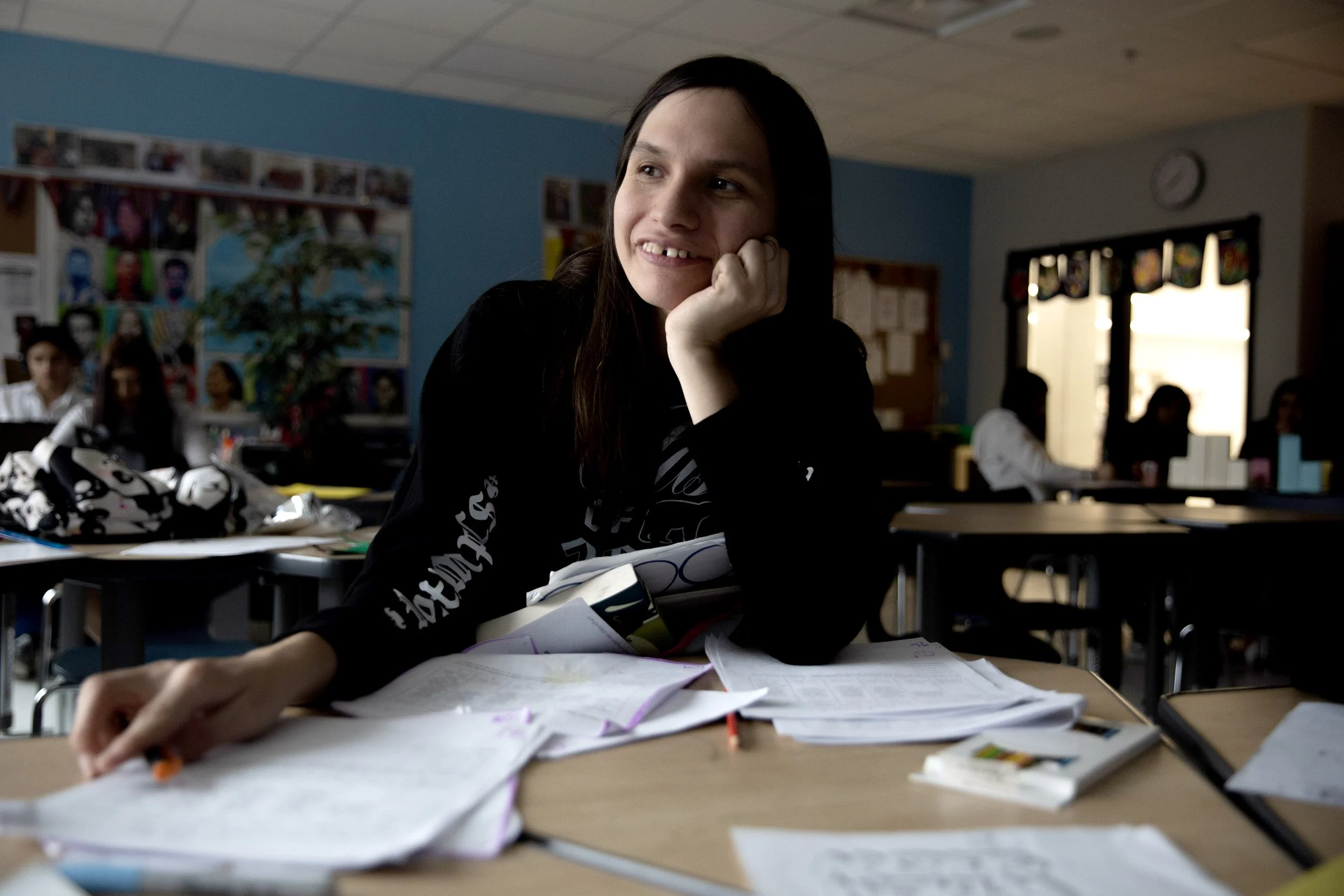
Gabby Benavente Hobart sits with students at the end of the third quarter to help catch up on work. Students came back from sheltering in place a week before the quarter ended. Photo by Azhae’la Hanson
By Azhae’la Hanson, Reporter
A mother had laid out dinner for her family, expecting her son and husband to enter the home shortly from work. As time passed, she realized that her biggest fear may have come true. They were not coming home.
The phone rang. It was her son, Jairo Pitalasig, confirming that he and his father were detained by ICE and separated.
Not knowing what to do, she called Gabby Benavente Hobart, an associate educator at her son's school, North High.
Benavente Hobart arrived at a dimly lit apartment and was quickly motioned inside. She helped console Pitalasig’s mother and young siblings in their apartment. They had abruptly lost Pitalasig and his father, the family's two breadwinners, and had no way of going out to get groceries or pay rent.
She grabbed Pitalasig’s mother's hands and squeezed them tight, carefully and reassuringly explaining what support she could offer. She reminded her of a grocery delivery later that week, and discussed a GoFundMe to support Pitalasig’s deportation to Ecuador. His mother tearfully thanked her.
Benavente Hobart flashed a smile, the same smile that had welcomed Pitalasig into North High years ago.
It was one of several similar stops Benavente Hobart made for her students that week in January. Operation Metro Surge, President Trump’s immigration crackdown that terrorized Minneapolis, left the city’s immigrant community with unprecedented need.
Benavente Hobart was abruptly drawn into a scramble for legal resources, food, education, and mutual aid, and was at the center of one of the largest crowdfunding campaigns for the Northside.
She often worked 16-hour days and remained on call for emergencies. At first, rapid response and mutual aid in North Minneapolis took longer to build than in other areas, Benavente Hobart said. So when ICE began patrolling the community, no one knew where to look.
“There was very heavy ICE activity down in the Southside, and there were established networks there,” she said. “The immigrant community has been a part of the South community for years. Whereas on the Northside, we had many newcomers. People who just came to this country a few years ago, so those supports were not in place.”
The perfect person for the job
Her job was difficult from the start.
Benavente Hobart began teaching at North High School in 2023 to support the school's rapidly growing immigrant and Spanish-speaking population. That year, the United States saw an influx of immigrants from South and Central America seeking asylum.
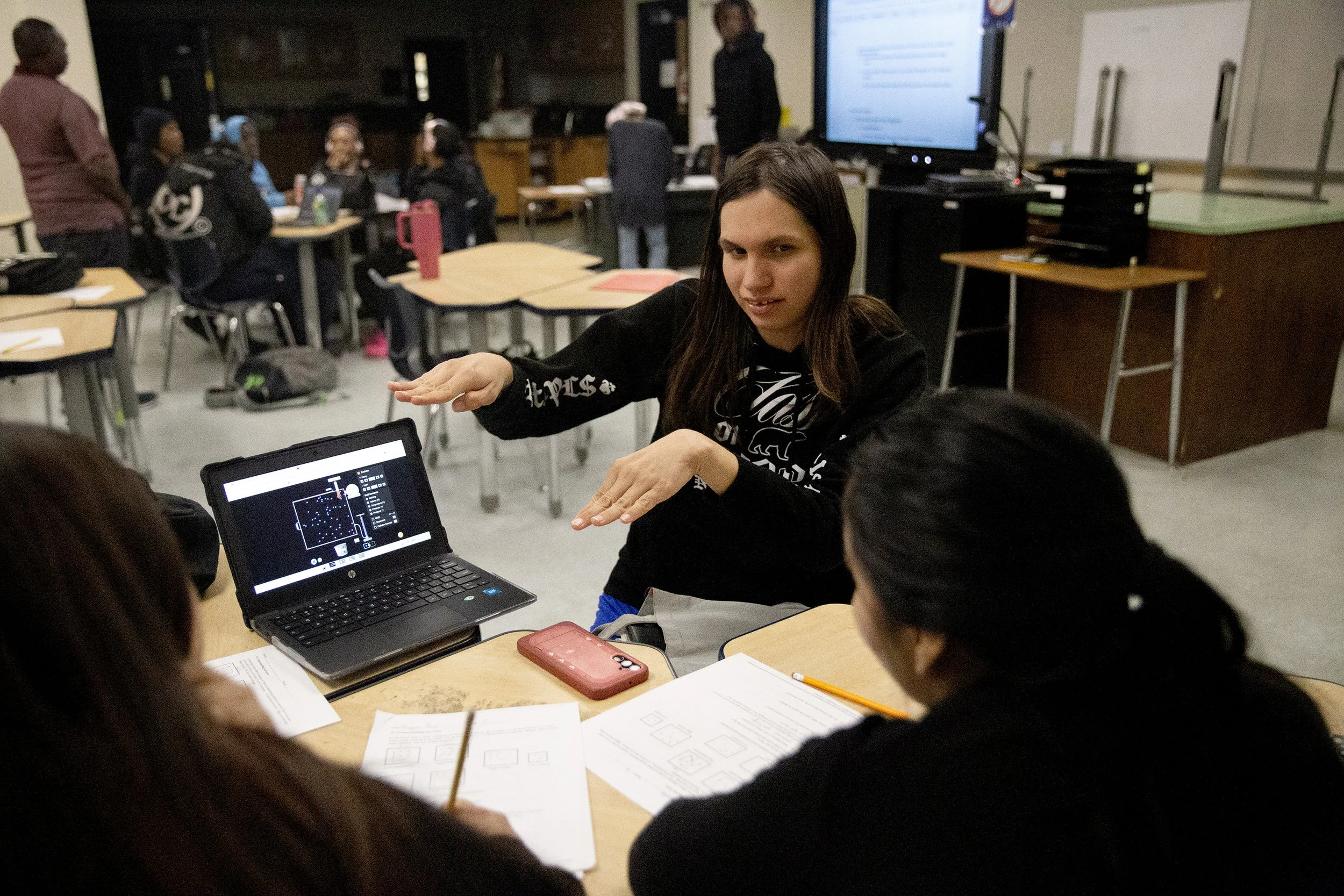
Benavente Hobart helps translate a science lesson to her students in a mixed classroom that is taught in English. Photo by Azhae’la Hanson
A friendly “Hola,” accompanied by a bright smile, would welcome newcomers to the building. Her office quickly became a hub for those who needed a reminder of home.
Over the three years that followed, North High’s immigrant and Spanish-speaking population grew from sparse to roughly one quarter of the school's population, teachers estimate, with little infrastructure to support their education. Benavente Hobart was the only option for communicating with students aside from translating technologies.
It happened again when students were staying home in fear of ICE. Crowdfunding leaders had a plan to help, but they needed a voice. Eyes turned to Benavente Hobart because of her connection with the school’s Spanish-speaking and immigrant population. She became a lifeline and the crucial link for families, helping them communicate needs and connect with resources.
Benavente Hobart was the front line, said Danielle Tietjen, a local organizer.
“We were trying to help families, but we didn’t speak the language,” Tietjen said. “ These families were experiencing something so scary, the confusion, the unknown, and so they didn’t want to talk to us. She was the central connector and force of receiving the requests.”
Websites to request aid were built, committees with specific responsibilities were formed, and other measures were taken to support Benavente Hobart and allow her to remain a trusted contact for families.
Tietjen could see the stress Benavente Hobart was carrying.
“She was still always striving, trying to stay positive, I think, for herself, for her students, for everybody,” Tietjen said. “But also held the pain, fear and confusion while being a vulnerable community member herself.”
The Impact
With federal agents in full force, North High was missing the buzz of full classrooms. It also missed Benavente Hobart’s laughter.
The smile, cherished by many staff and students, was diminished. She didn’t sleep and took little time to pay attention to her looks.
She was constantly monitoring her notifications in a 24-hour cycle. While being in school that was devoid of her students, she was glued to her computer staring at a spreadsheet that tracked their needs. Her phone would ring and take priority over whatever she was doing.
In the midst of coordinating resources, she also dealt with her own fears as an immigrant and trans woman from Peru.
Although she is married to a U.S. citizen and holds a Green Card, Benavente Hobart knew ICE agents were quickly deporting people regardless of status. She worried that she could be placed with men if detained. Deportation back to Peru could mean death.
She said her co-workers occasionally drove her to and from school.
Still, concern for her students took a bigger priority.
“Growing up, it was so hard to be me and to carve out a space for me, I had to figure out so many things on my own and it gave me a lot of tools,” she said. “It was not easy to ask for help. But it also instilled in me a profound belief that nobody should ever have to fight so hard to be treated human. Nobody’s life should have to depend on what administration is in the office.”
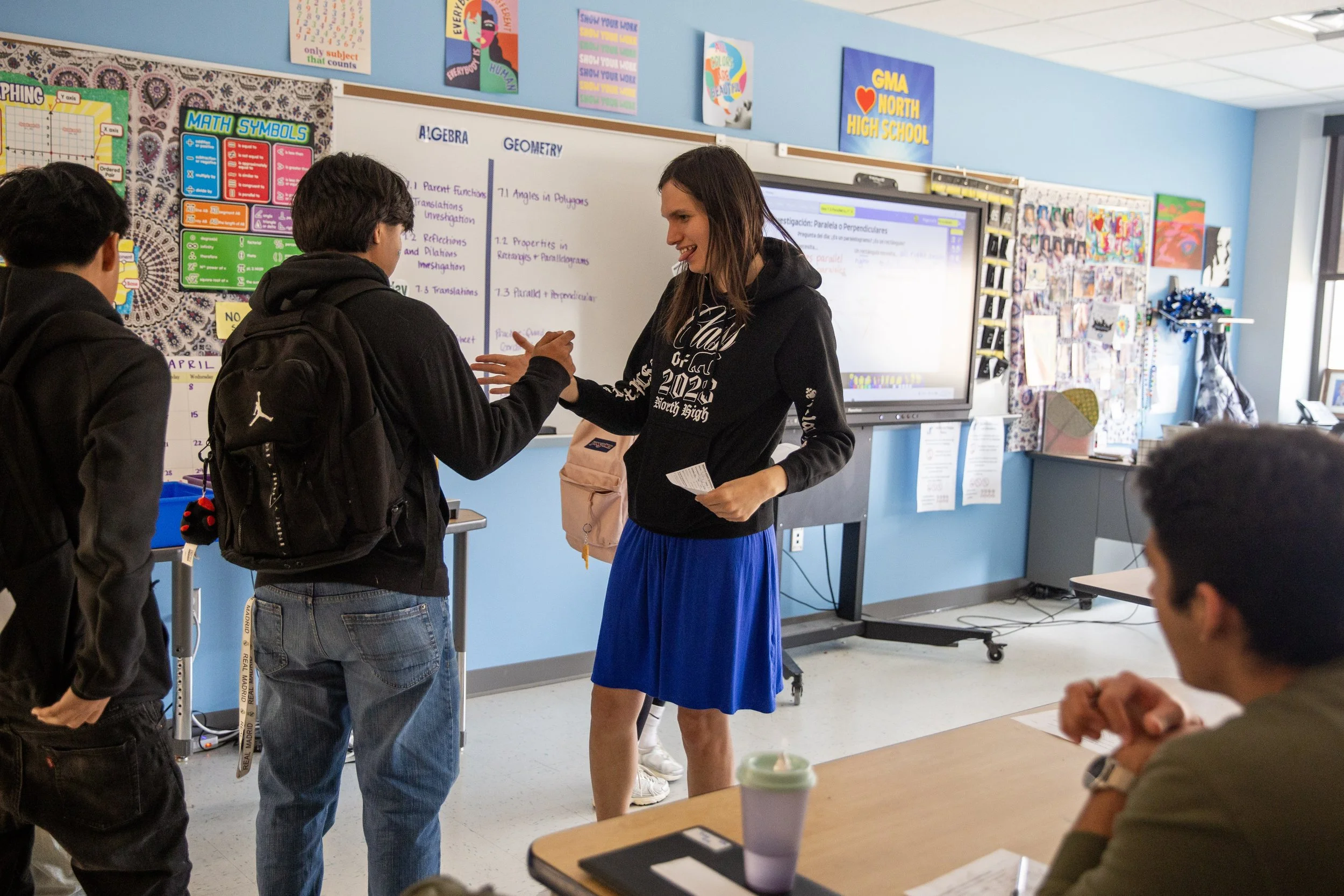
Benavente Hobart welcomes a student into the classroom with a handshake after spring break. Photo by Azhae’la Hanson
Her smile is genuine but it is also a way for her to safely tuck away her vulnerability.
She takes pride in being an immigrant and trans woman but says she’s always struggled with feeling completely comfortable and safe as herself.
Taking the job at North High was a defining moment in her life.
“I was lost in what was exactly my place,” she said. At North, I found community and I found purpose, and it's shaped a lot of who I am today. Here, I am Ms. Gabby. People show love here in so many ways. It's come full circle for me. All the loneliness I felt when I was a kid, is being healed through the work that I'm doing, because I get to be the person that I wish I had when I was a kid.”
Kids are back
In March, her students began slowly returning to in-person learning. Hobart was there to greet students with a cheerful smile. They, in turn, extended their special handshakes when entering the classroom.
A teacher whispered "thank you" as Benavente Hobart moved from student to student.
“It was almost like a huge weight was lifted, even though there are still a lot of unknowns,” Benavente Hobart said.
The return of students did not ease her workload. Students rushed to catch up, and Benavente Hobart was in high demand with teachers and students.
She is on her feet constantly, being the school’s lone bilingual associate educator. She spends her days rushing between classrooms to translate for non-Spanish speaking teachers in mixed classrooms and being an associate educator in sheltered classrooms. The school also doesn’t have any Spanish-speaking counselors or psychiatrists.
Morelia, who preferred not to use her full name, sat with Benavente Hobart to work through a science lesson after spending two months at home.
“I feel very fortunate she has helped in many ways, giving us what we need and having someone who understands us as Latino people,” Morelia said through a translator. “She was the teacher who helped us the most with what we needed during everything with ICE. She was always checking in on everyone, and she lifted our spirits when we were very sad.”
As classrooms filled up, most didn’t want to talk openly about what they experienced, or know how to. Benavent Hobart saves those conversations for where it feels safe. She’s also trying to adjust from survival mode to processing the recent months.
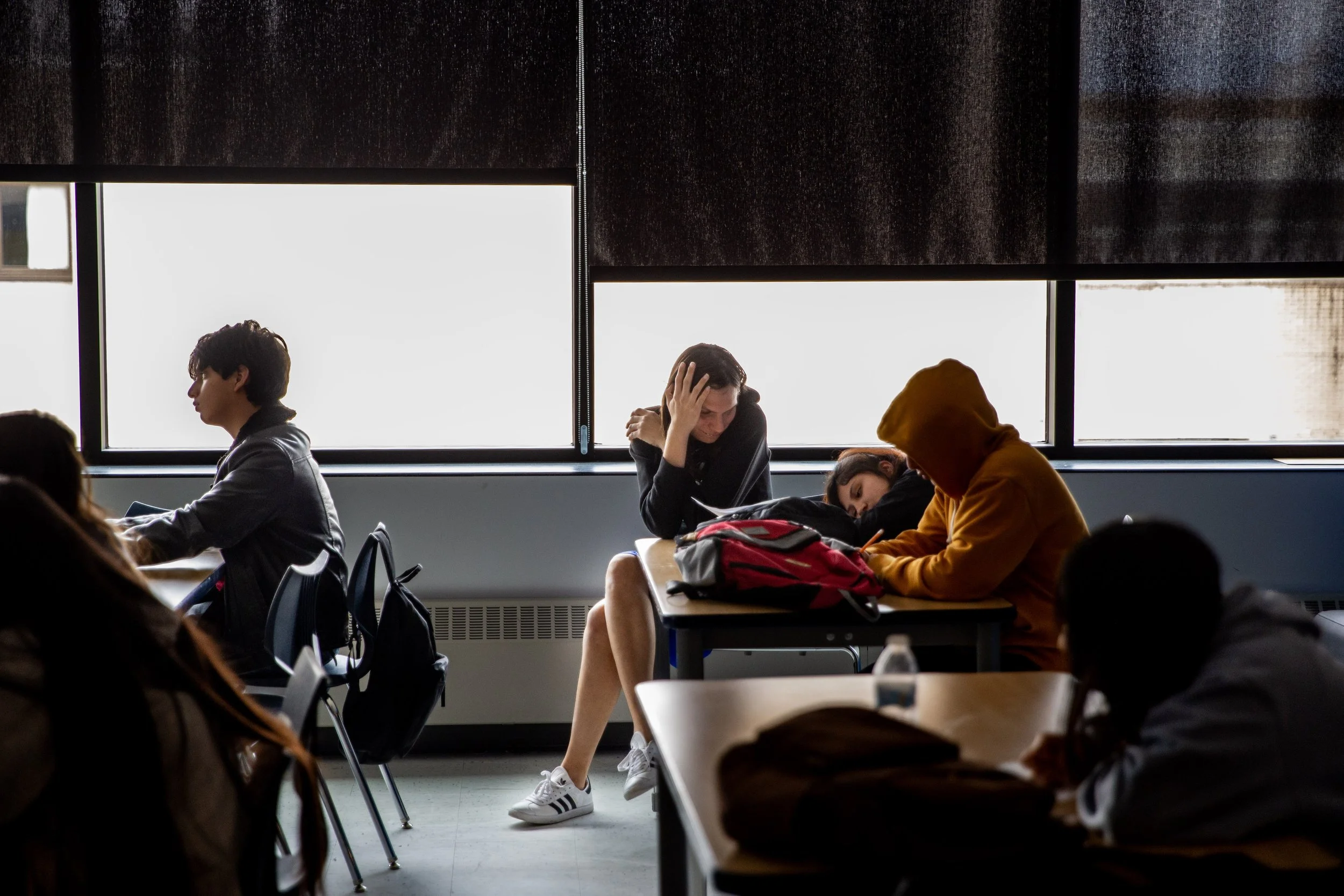
Towards the end of the day, Benavente Hobart sits with students one-on-one to help them with assignments. Help comes slowly, as she’s the only bilingual educator in a room full of ELL students. Photo By Azhae’la Hanson
With students getting some normalcy back, Benavente Hobart has also found time for herself. She goes on walks and plays board games with loved ones.
She shook her head no when asked how she’s been processing the work. She hasn’t. She still takes calls from families who are in need. When asked what is best for her and her students, she said.
“I think like, just giving us space, to let us process it,” she said. “Like try not to pretend it didn't happen, but acknowledge it and still find purpose.”
In the chaos of the day, she says she wouldn't change it. When asked if she’s found peace, she said she’s still looking.
With additional reporting from North High students Julieth Mendoza Rangel and Lizeth Ortiz Alvarracin.