
Graffiti is more than spray paint during political moments
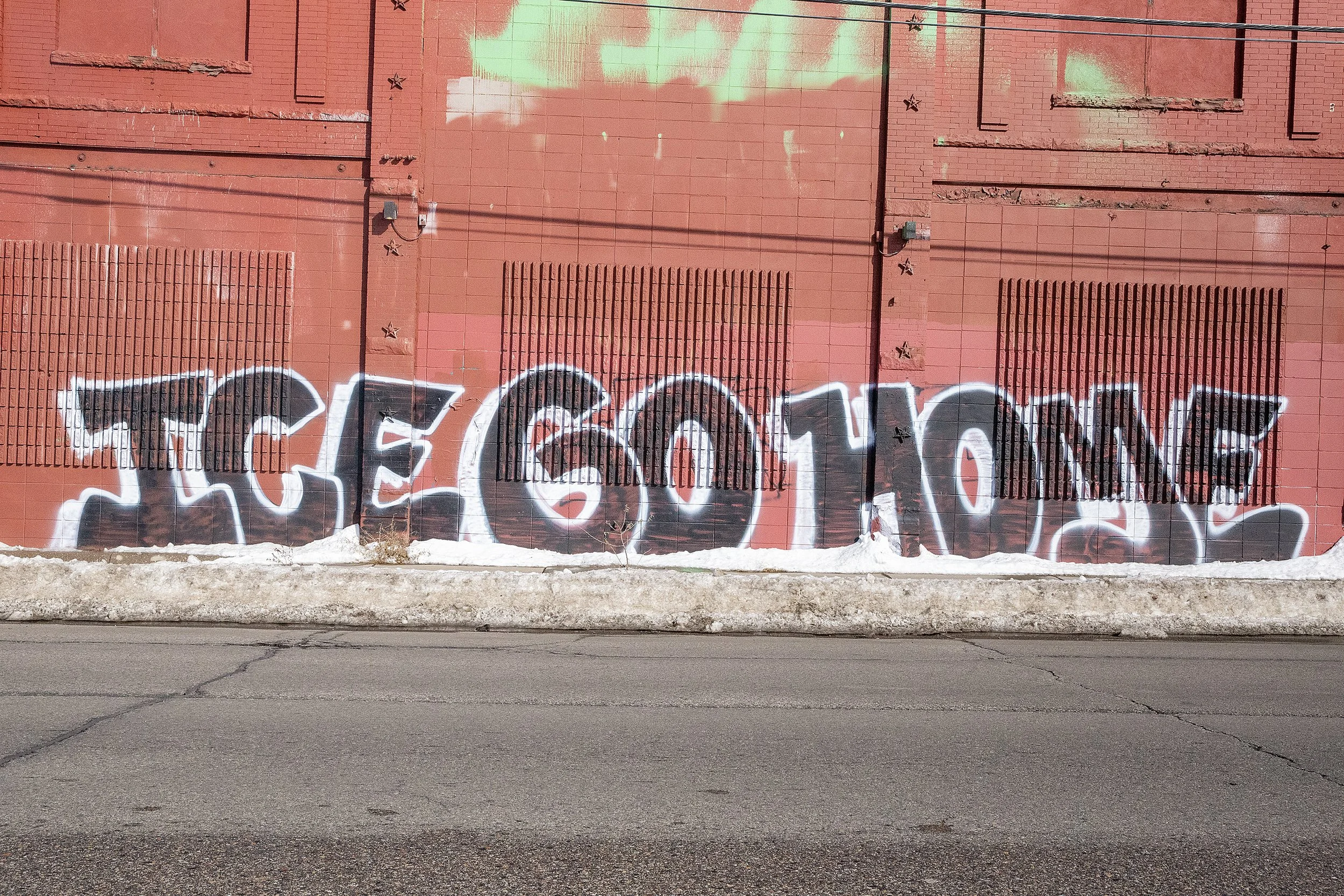
A bold “ICE GO HOME” message stretches across a Minneapolis wall on Washington Avenue, reflecting rising resistance and community frustration toward immigration enforcement policies. Photo by Aiyana Kirk
By Aiyana Kirk, North News Intern
When traveling through Minneapolis, it’s easy to spot graffiti. Consider the images and messages, and a traveler may get a sense of the city’s history.
In the summer of 2020, George Floyd’s likeness popped up all around the city after his murder by a police officer. Since January, graffiti protesting President Trump, his immigration policy, and the murder of two protesters by ICE agents brought color and protest to city streets.
A large piece of graffiti that reads “ICE GO HOME” is currently painted on a building along Washington Avenue in North Minneapolis.
“Getting your message across, that's what graffiti is about,” said Ezra Wilson-Nausner, a local graffiti artist.
ICE committed unconstitutional acts during its Operation Metro Surge, and people wanted to send a message and get their point across in a way they wouldn't ignore.
“Many people feel they are alone in how they are feeling. Art helps people understand that they are not alone, that they are not imagining things,” pop artist Edel Rodriguez said in an interview with FastCompany. Rodriguez is nationally known for his political artwork.
Using various kinds of art to fight politics has been around for decades.
“Graffiti is a political movement as much as rap originally was,” said local graffiti artist Harmonee Harrison. “A lot of art forms, even biographies, have started out as political movements, especially from black culture. A lot of our stuff has roots in political statements at the end.”
Producing public art as a political tool can also come with consequences. Minneapolis police arrested a man spray painting anti-ICE messages during a protest on Jan. 10.
Graffiti is often painted over when not sanctioned through planned projects, but at Juxtaposition Arts, Harrison and Wilson-Nausner teach young artists graffiti.
“My writing is really just like a reflection of me, in my experience, through the world and my experience, as a writer,” said Harrison. Wilson-Nausner said graffiti helped him learn who he was.
Although anyone can pick up a spray can, put something on a wall, and call it graffiti, it takes real dedication.
“There was a level of passion coming that takes you so far in determination, motivation, and hard work that’s going to take you far,” Harrison said.