
City Council delays decision on safety and training center
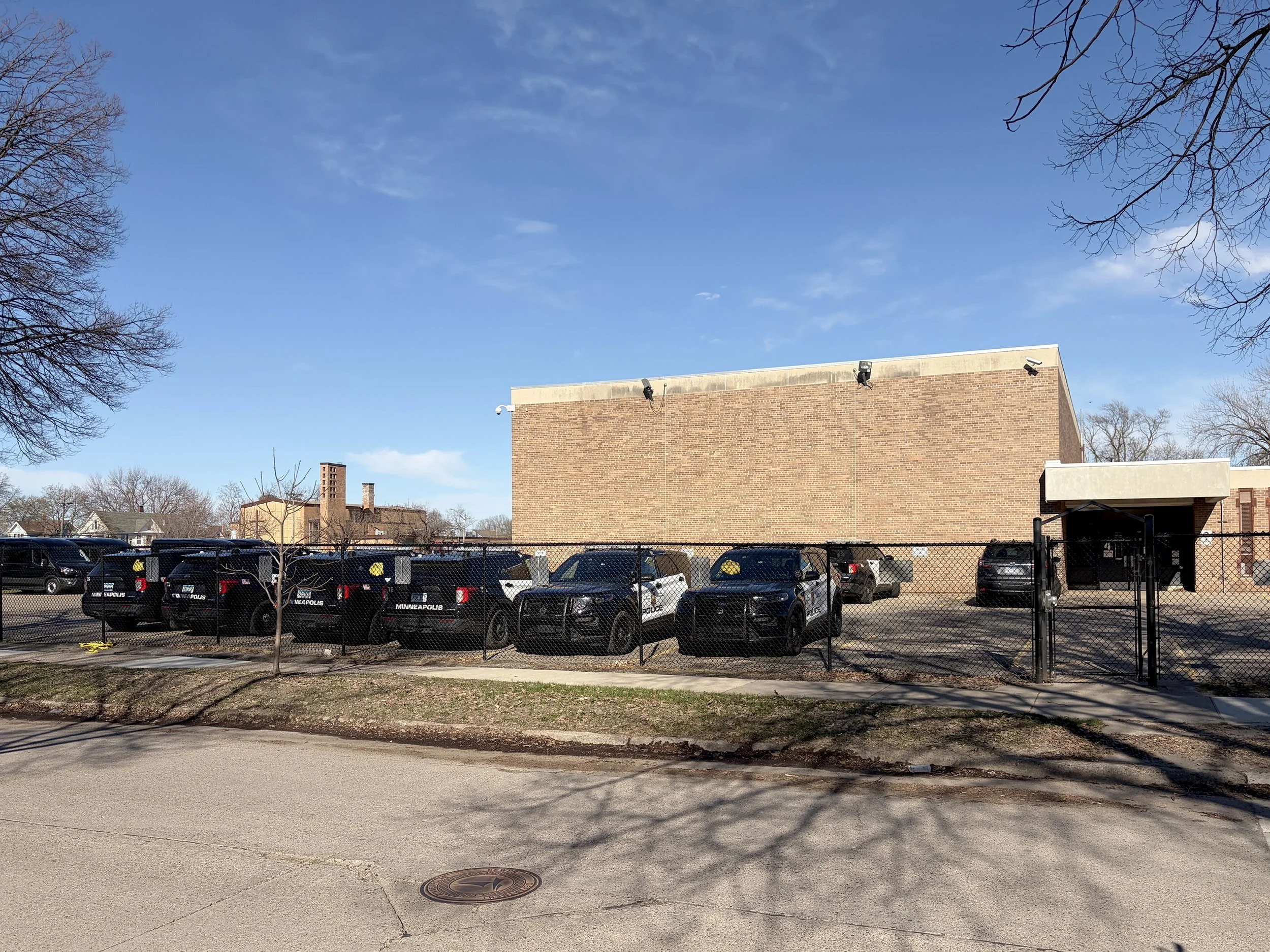
The current training facility for the Minneapolis Police Department is located at 42nd Street and Dupont Avenue in the Webber-Camden neighborhood. Photo by Melody Hoffmann
By Melody Hoffmann, Reporter
A shared building for police and fire department staff has been called many things – a one-stop shop, cop city, cop university, cop corner store – and it’s on hold, for now.
The City Council voted 7-6 on March 26 to refer two resolutions back to City staff regarding its proposed Community Safety Training and Wellness Center at 60th Street and Pleasant Avenue in the Windom neighborhood.
The training and wellness center would bring together police, fire, 911, behavioral crisis response, emergency management, and neighborhood safety staff under one roof. Invested parties argue that the building would elevate training and wellness resources for emergency staff — resources that are currently piecemeal across the city.
City staff, Minneapolis Fire Department and Police Department leadership lobbied the City Council during the last week of March to approve $6 million in funding to purchase industrial land bordered by a residential street in the Windom neighborhood.
There is a limited window of time to buy the “unique site,” according to City Operations Officer Margaret Anderson Kelliher.
The City Council was split on supporting a new facility, specifically for the Minneapolis Police Department. Updating police facilities is one aspect of its shared settlement agreement with the City.
Vetaw argues for change
Council Member LaTrisha Vetaw raised concerns about the inequity in Northside having to shoulder a police training center and shooting range. The MPD currently trains out of the former Hamilton Elementary School, 4119 Dupont Ave. N., in North Minneapolis. The shooting range is in the basement of the 4th Precinct in Ward 5, represented by Council Member Pearll Warren.
“We stood on the sidelines and watched the Southside get so much support around what they need and this is the one opportunity where the Northside could get the same,” Vetaw said, referencing the recent community support during Operation Metro Surge.
Vetaw, who represents the area where the MPD’s Special Operations Center is located, spoke in strong support of the new training and wellness center and asked her colleagues to support her in kind.
“I am kind of growing tired of us as a body talking about how underserved North Minneapolis is, yet we’re doing nothing to help change that,” Vetaw said at a council meeting on March 24. “A vote against this is really a vote against the Northside.”
But many council members are not in agreement with approving the start of an estimated $38 million building project, especially on the heels of the MPD self-reporting in early March that it spent $5 million on overtime during Operation Metro Surge.
The council also approved $18 million for a new 3rd precinct and community safety center at 2633 Minnehaha Ave. on March 26.
Not ideal timing for more police funding
“We should recognize that this is not the ideal timing for this,” Ward 11 Council Member Jamison Whiting said. It’s “a frustration that I hold, I think a lot of my colleagues hold, I think a lot of my constituents also hold.”
Whiting represents the area where the proposed building would be developed, and proposed two resolutions to refer it back to staff.
Many council members expressed disapproval of spending any money on the land purchase or proposed building.
“When money is so tight and the city’s needs so large, it is shocking to be presented with this massive and relatively unproductive spending,” Ward 8 Council Member Soren Stevenson said at the council’s Committee of the Whole meeting on March 24.
The initial $6 million to purchase the land was to be taken primarily from existing Animal Care and Control renovation ($3.7 million) and traffic safety improvement ($1.8 million) funds.
Funding for the training and wellness building would include a bonding bill involving State legislators.
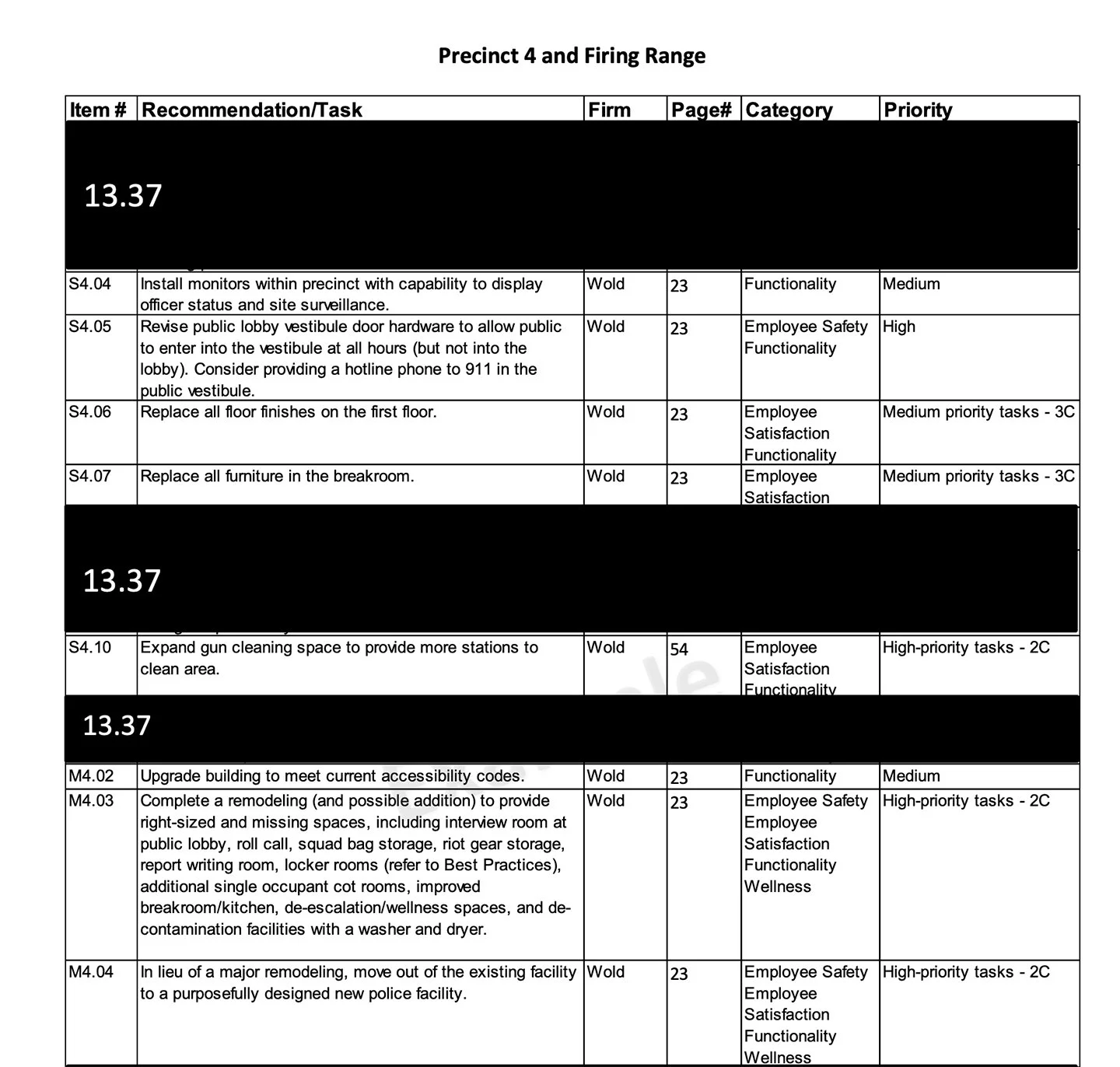
A list of recommendations and tasks for each Minneapolis Police Department precinct are laid out in the City and MPD-produced “Equipment, Technology, and Facilities Response Plan” report, produced in June 2025. The report was mandated by the Minnesota Department of Human Rights.
“We need to just decide that this is not our priority and move on to things that are, in fact, our priority,” Stevenson said, citing livability as a top priority his constituents talk to him about.
Council Member Linea Palmisano has been advocating for a shared training and wellness center for emergency staff since 2018. Palmisano said her advocacy stems from the killing of Justine Damond by former MPD Officer Mohamed Noor in 2017.
“These are long-term priorities,” Palmisano said. “This training center is an important and central function of city government. It deserves continued focus.”
The need for training and wellness building
The City and MPD issued a facilities report in June 2025, as mandated in the settlement agreement, that an estimated $60 million worth of projects were already underway at the 1st, 2nd, and (former) 3rd Precincts. A half million dollars for a temporary training and wellness space at the 1st precinct was approved by the City Council and mayor in February 2026.
The “Equipment, Technology, and Facilities Response Plan” report also details each police precinct’s facilities needs, as mandated in the settlement agreement (“determine what facility repairs and what additional facilities are required”).
Every precinct except Precinct 5 lists “move out of the existing facility to a purposefully designed new police facility,” as a high priority on its suggested repair list.
The list of recommended repairs suggests the MPD’s facilities are generally rundown. There is 35-year-old carpeting in the 4th Precinct, leaking roofs at multiple locations, and the existing MPD training building has only one working water fountain.
Councilmembers voting in favor of sending the resolutions back to staff were: Vetaw, Whiting, Council Vice President Jamal Osman, Pearll Warren, Jamison Whiting, Michael Rainville, Elizabeth Shaffer and Linea Palmisano.
Voting against sending the resolutions back to staff were: Council President Elliott Payne, Aisha Chughtai, Robin Wonsley, Soren Stevenson, Jason Chavez, and Aurin Chowdhury.