
Controversial drone pilot program dies after deadlocked city council vote.
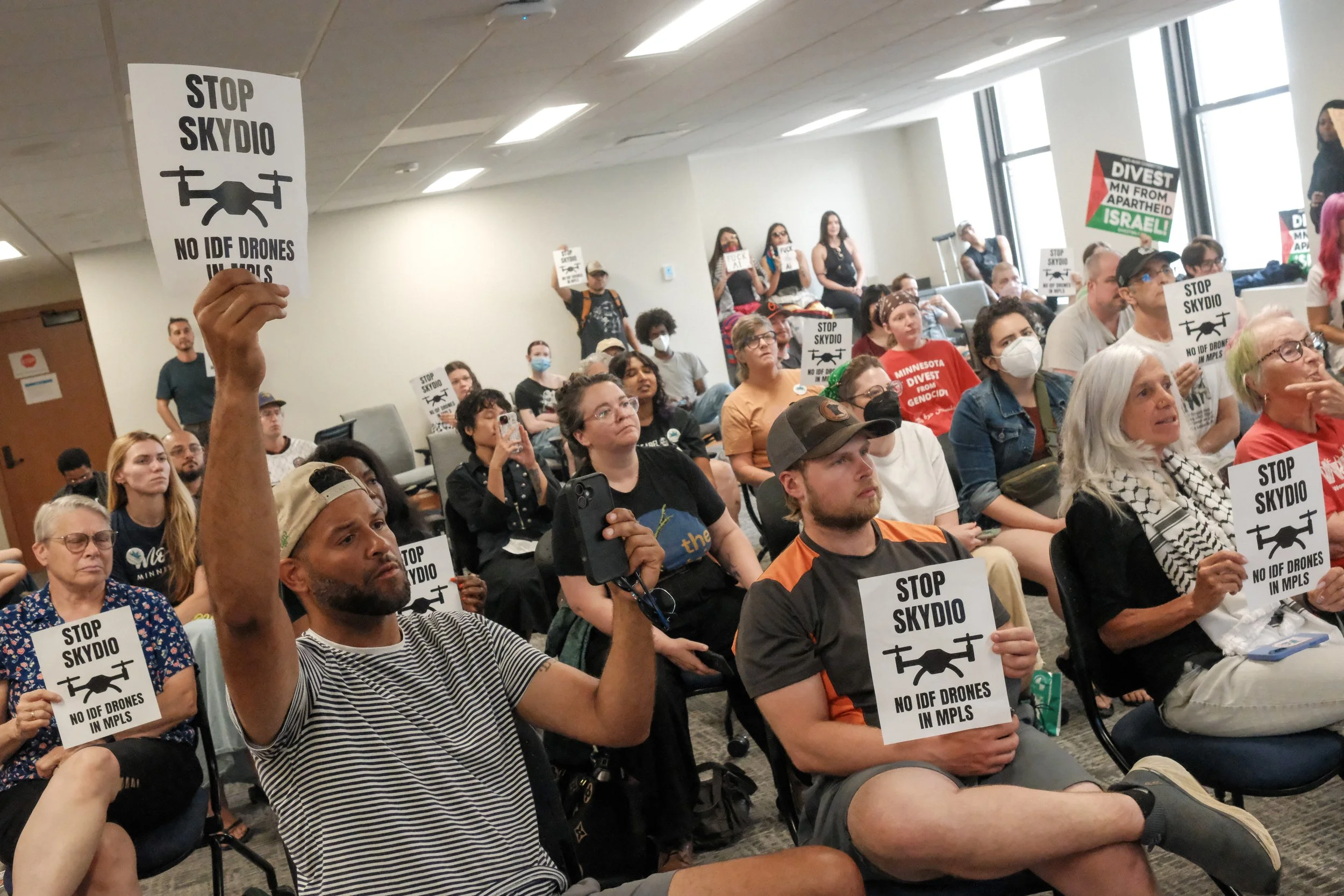
A crowd gathers in the overflow room at City Hall to watch the Minneapolis City Council vote on a proposed drone pilot program on July 16. Photo by Azhae’la Hanson
By North News Interns
The Minneapolis City Council voted down a pilot program for drones as first responders on July 16 with a tie vote.
People against the drone program filled an overflow room, watching the City Council meeting. Shouts, boos, and claps filled the room as a live feed of the City Council meeting relayed council members’ differing views on the drone program.
Previously, critics of the proposed program dominated a public hearing on July 8. If it had been approved by the City Council, drones would have operated from the Minneapolis Fire Station 14 in North Minneapolis.
Drone manufacturer Skydio offered a free 75-day trial to the City of Minneapolis, which Ward 4 Council Member LaTrisha Vetaw brought forward to the council this summer.
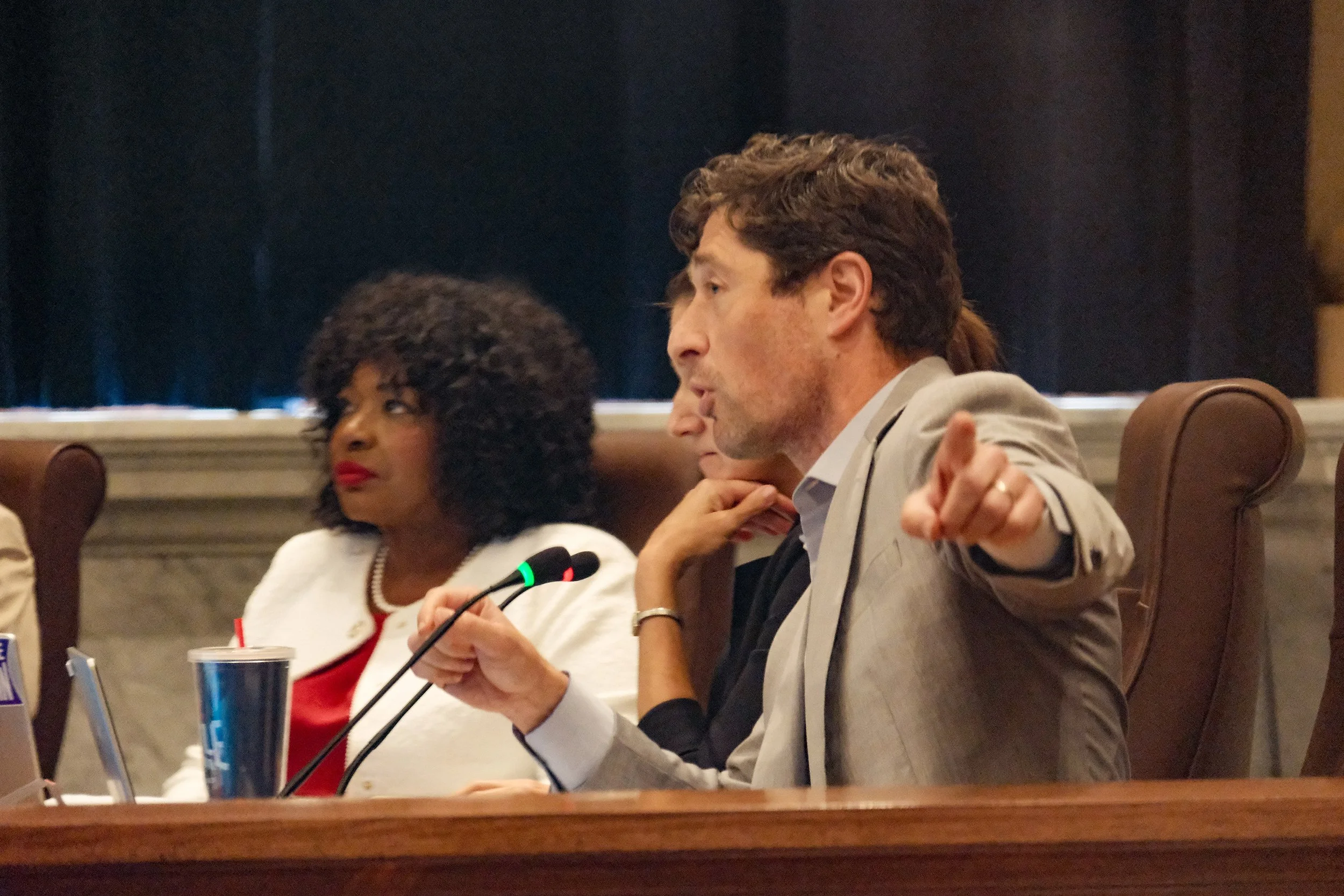
Mayor Jacob Frey makes his case to the Minneapolis City Council in support of the Skydio drones as first responders pilot program. The program would have had a 75 day trial run in North Minneapolis. Photo by Azhae’la Hanson
Ward 4 resident Will Reely said he attended the July 16 City Council meeting on behalf of his neighbors and expressed dismay over the drone program.
“Neighborhoods are already so over-surveilled,” Reely said.
Reely said he is uneasy over a Flock camera on his block. Flock cameras are vehicle identifiers, also used by law enforcement, that have been critiqued for their mass surveillance ability. A website, deflockmpls.com, shows a map of where all Flock cameras are in Minneapolis.
“I'm out mowing my lawn, and I see the camera just half a block away,” Reely said.
Reely said he knows neighbors who are more on board with the program but are starting to realize the potential downsides it can bring.
Many protesting the drone program advocate that police drones are a waste of public funds.
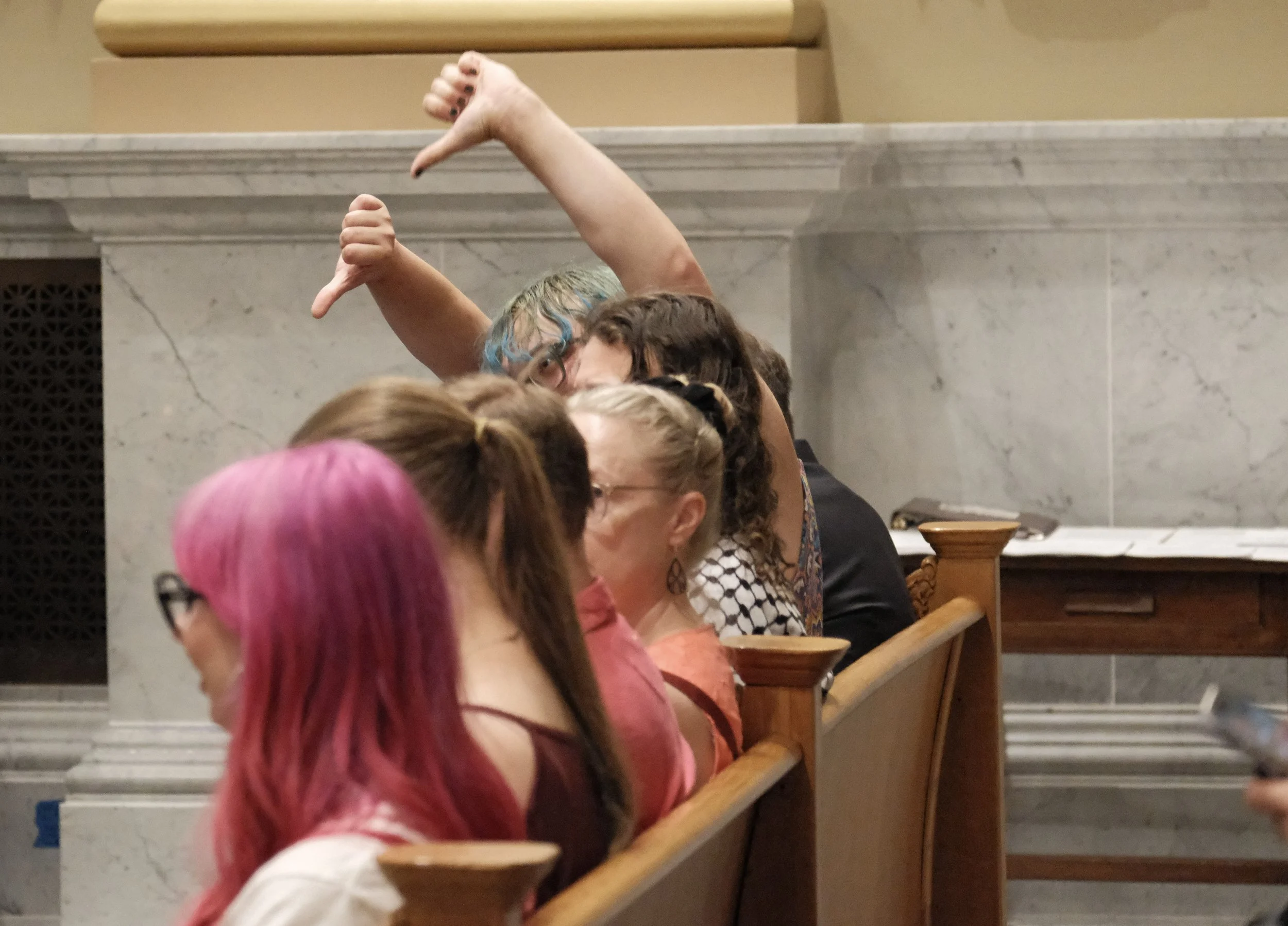
People were thumbs down in response to remarks by Council Member Pearll Warren when she voiced her support for the drone pilot program on July 18 at City Hall. Photo by Azhae’la Hanson
“It is actually a bandage solution because we're not actually addressing the underlying root of why crime continues to happen,” head of the Free Palestine Coalition, Sana Wazwaz, said. “We are only going to continue to breed the situations in which crime continues to happen, and then we're just wasting public resources.”
She said a more proactive way to address crime would be to fund more public health initiatives that focus on robust mental health care solutions.
Prior to the July 16 vote, a public hearing on July 8 had 30 residents signed up to testify against the drone pilot program.
North Minneapolis residents at the public hearing expressed distrust of the Minneapolis Police Department, including its use of additional surveillance tools.
“We should not be rewarding them with shiny new toys after they continue to rack up nebulous overtime,” Caitlin Metsal said. MPD went over budget in 2025 by $21 million dollars and is projected to go $23 million over budget in 2026.
“The solution is not drones,” Ward 4 resident Gabe Heller said. “It’s for the police to get off their duffs and do their jobs.”
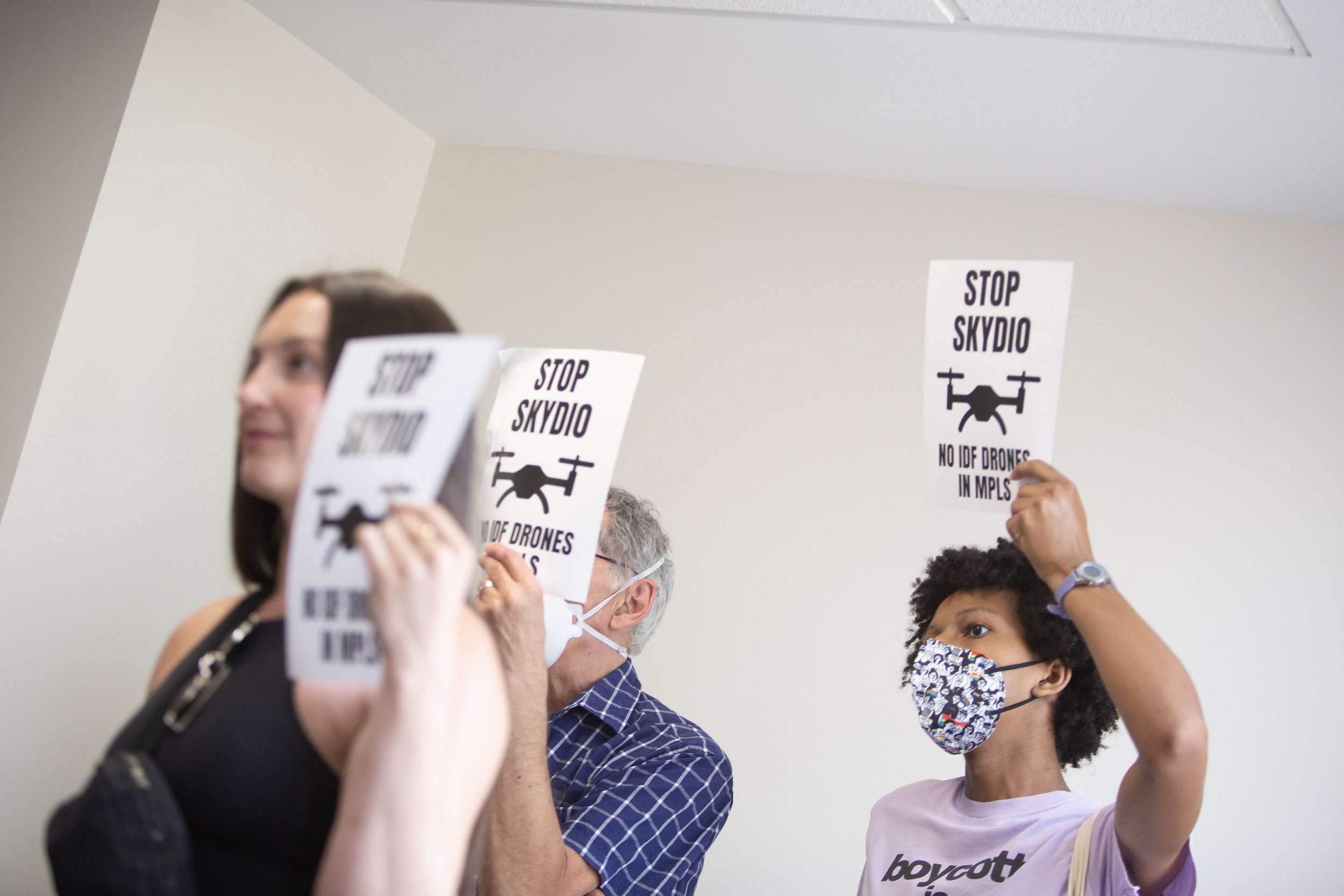
People in opposition of a drone pilot program made their opinions know through signs. Photo by Arie Gatlin
Other residents shared concerns about drone surveillance, especially around large events like protests.
Ward 5 resident Heather Michaelson testified that people at protests “will be put under a microscope” due to a Minnesota state law that allows government agencies, including law enforcement, to gain access to drone footage by request.
Minnesota law states all drone footage needs to be deleted in seven days but any footage deemed to be evidence would be retained indefinitely.
The pilot program did not include usage at large events. An earlier presentation to the City Council's Public Health, Safety & Equity Committee in May included remarks by the City’s Traffic Control unit that drones could assist in observing multiple intersections during large events.
Skydio has sent 100 short-range drones to the Israeli military, according to a 2023 article by Politico. The drones produce 3-D scans of buildings in “complex urban environments."
Skydio also supplies drones to the U.S. military and global allies.
Skydio’s dealings with ICE were also brought up by residents. The drone company has been selling its X10 model to ICE since at least 2021, according to Forbes. This is the same model MPD would be utilizing in its pilot program.
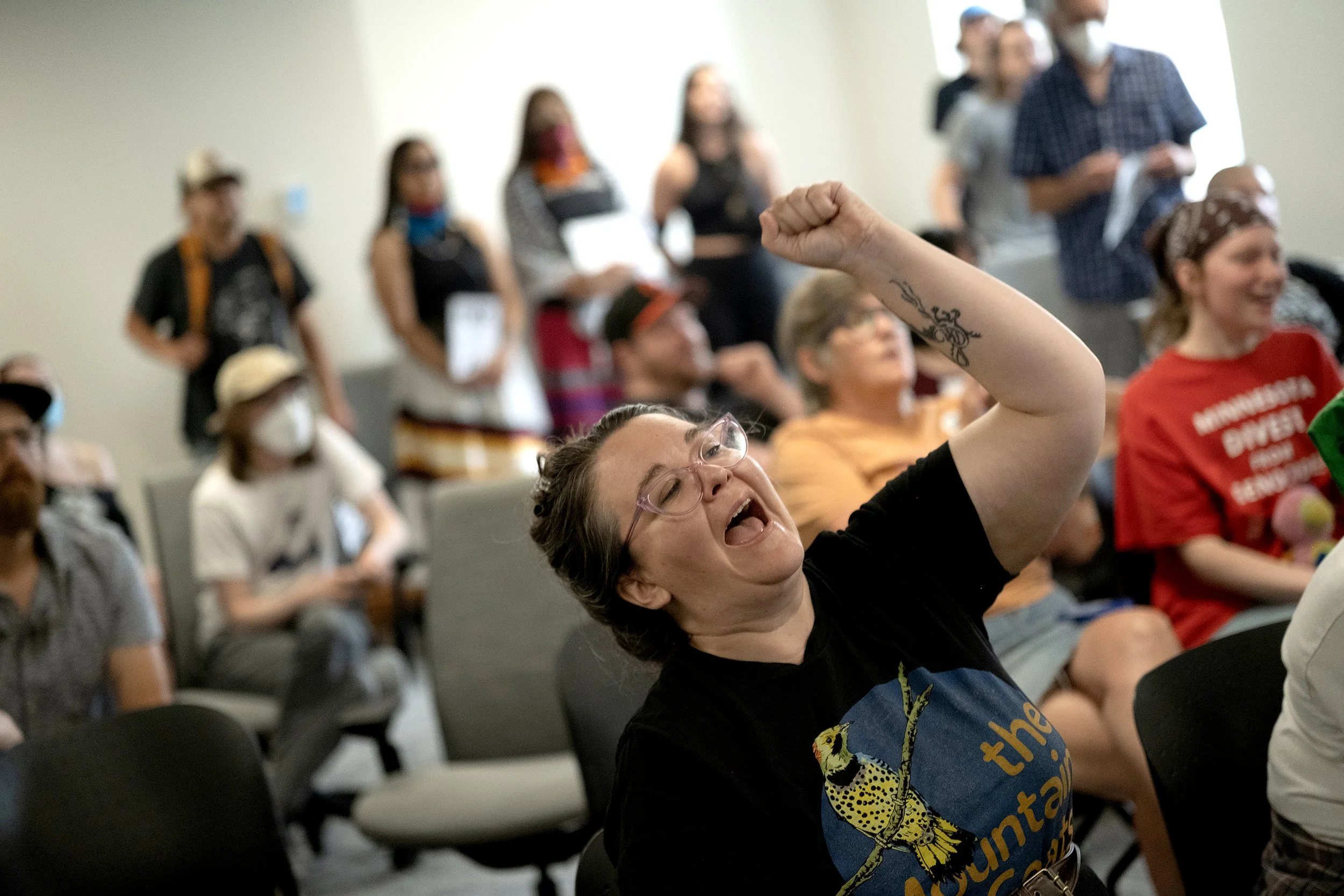
Ward 4 resident Sarah Heller was pleased when a council member announced their intention to vote against the pilot program. Photo by David Pierini
“I’m deeply disturbed that just months removed from Metro Surge, when drone technology was used to surveil our immigrant community and the protests that followed, that anyone would propose putting more drones in the sky over Minneapolis,” Ward 4 resident Bob Goonin said.
MPR reported in February that the federal government would not confirm its use of drones.
Council Members who voted to approve the drone pilot program on July 16 were LaTrisha Vetaw, Pearll Warren, Michael Rainville, Elizabeth Shaffer, Linea Palmisano, and Jamison Whiting. Council members who voted against were Aurin Chowdhury, Jason Chavez, Jamal Osman, Elliott Payne, Robin Wonsley, and Soren Stevenson. Council Member Aisha Chughtai was absent.
With reporting from Muhamad Ali, Jaedin Rooney, Milania Little, Saadiya Saed, Shy Martin, Arie Gatlin, Hanan Abdullahi, Isra Ali, Zenovia Little, and Dom Cintorino.