
A mother worries about her children breathing in mold. ‘We have to go’
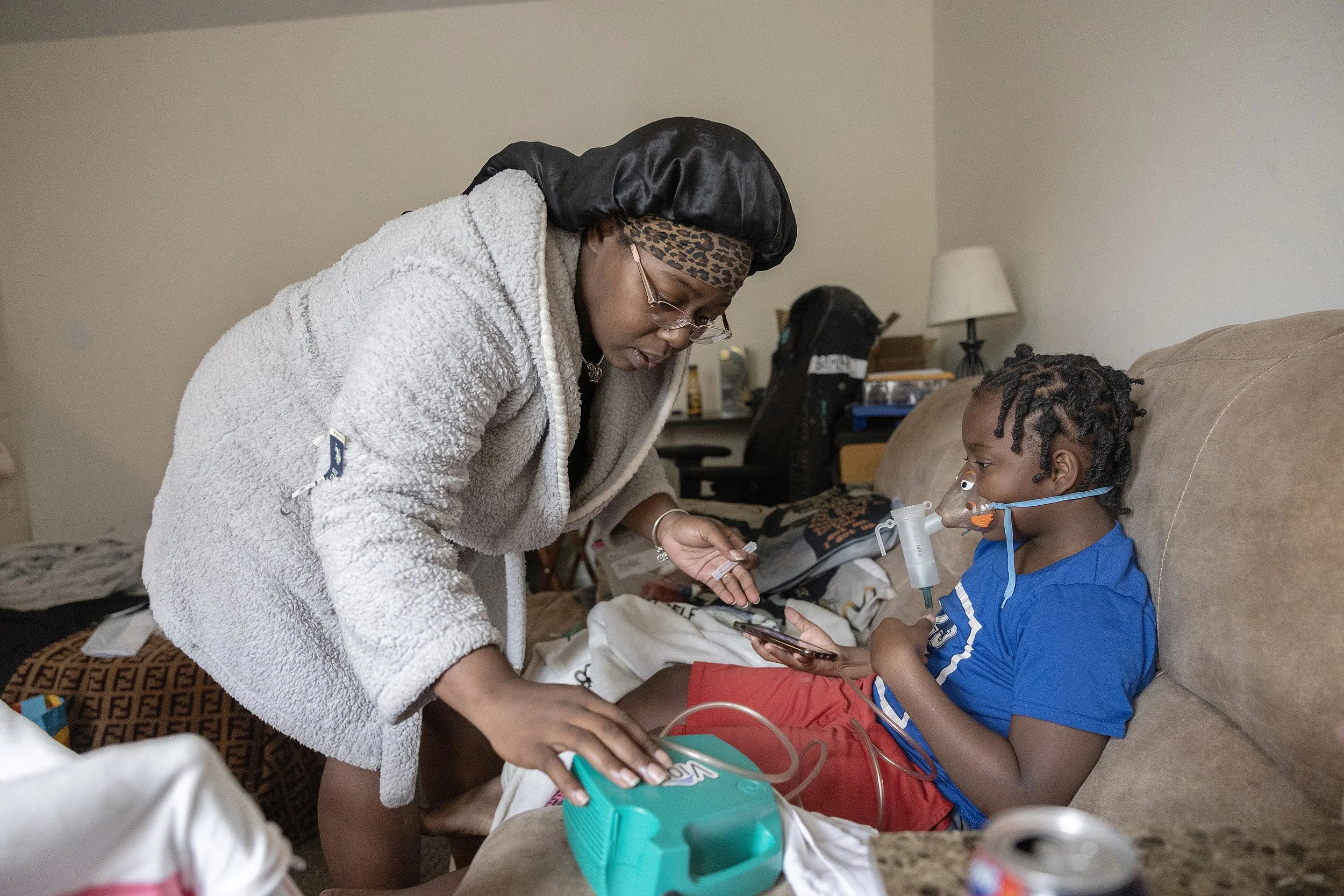
Keandra Guilmant sets up a nebulizer for her 9-year-old son, Qavion, who has asthma. They live in a townhome at Heritage Park, where excessive mold grows because of untreated moisture damage.
Story and photos by David Pierini, Editor
Keandra Guilmant strode to the podium, a baby in her left arm with her right free so she could point a finger at Minneapolis Mayor Jacob Frey.
The City vowed to relocate residents from their moldy, rodent-infested apartments and townhomes at Heritage Park, once considered the shining future of public housing.
But that was nearly two months ago, and Guilmant, whose children have asthma, is tired of waiting.
She was given two minutes to speak at the Sept. 10 Board of Estimate and Taxation meeting. She took just one.
“I came to speak directly to the mayor,” said Guilmant, one of a handful of Heritage Park residents who demanded that night to know when funds would flow to help them move. “Mayor Frey, you showed up to our meeting. It seemed like you really cared, made a lot of promises, yet we’re still living in this situation.
“We have to go. You promised us we was gone. Do something. You could do the Dougie. Move us.”

Keandra Guilmant, holding her 5-month-old daughter, Kearrah, recently went viral on social media after confronting Mayor Jacob Frey at a meeting over the slow response to relocating Heritage Park residents.
Guilmant’s reference to a video of Frey’s dance move at the recent Minnesota Black State Fair was quickly juxtaposed with her meeting comments on an Instagram channel called The Neighborhood Talk. It has received close to 10,000 views.
On July 15, the City Council unanimously approved $2.5 million to help relocate some 700 residents. The Minneapolis Public Housing Authority has also agreed to fund relocations, or temporary hotel stays while units are repaired.
City and public housing officials were still working out the details of how to move so many residents, but Guilmant hopes to learn soon whether she can get assistance with a security deposit for another apartment.
“It’s not an emergency to the City; they don’t have to live with these conditions,” she said. “Unfortunately, I don’t have the money to just up and move.”
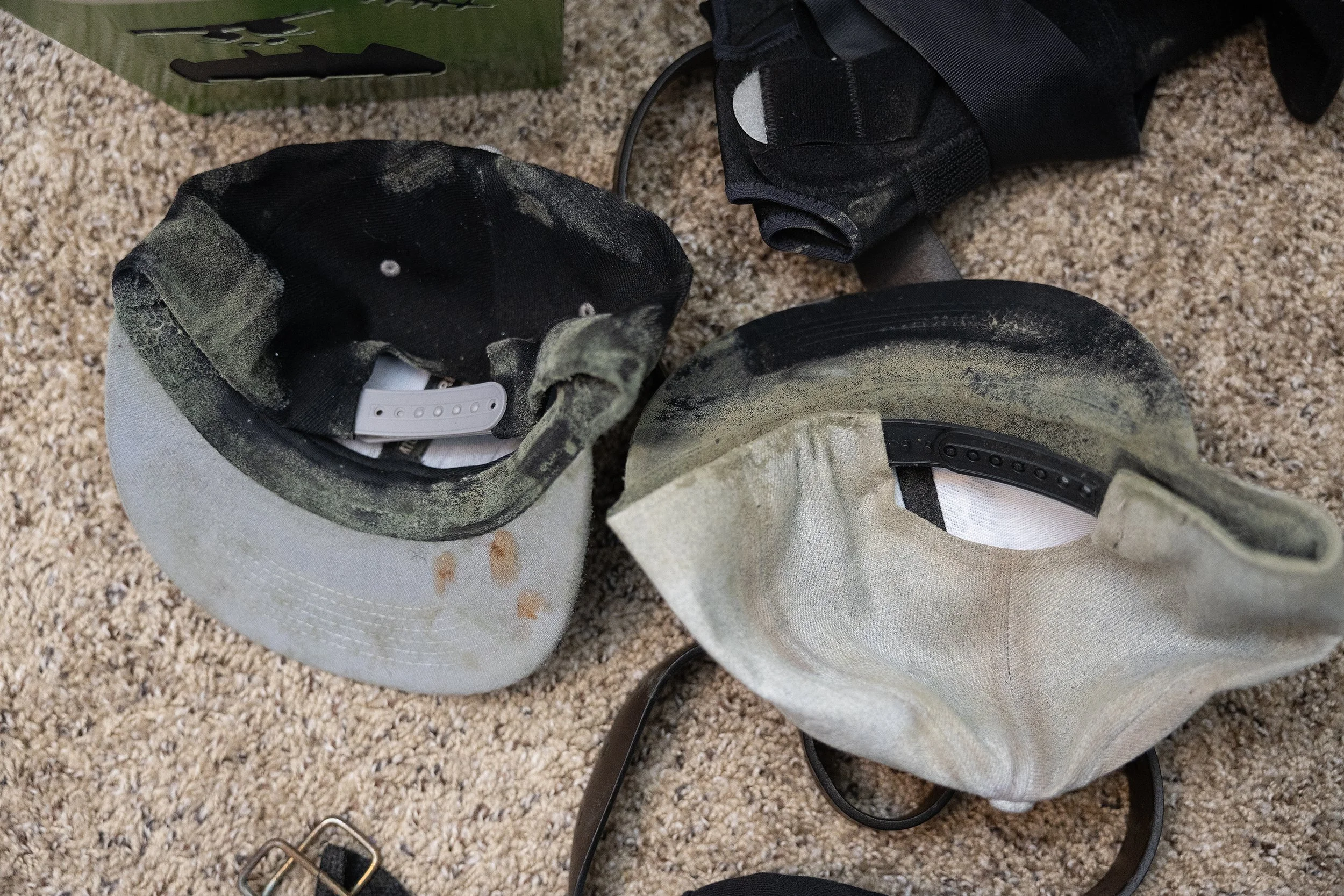
A green, fungal residue coats a pair of caps in an upstairs room of Guilmant’s townhome.
Mold became an issue in Guilmant’s townhome with a leaky toilet, and when a pipe upstairs burst, it flooded the upstairs and trickled down to the first floor. Management provided fans to dry rooms but did not replace flooring and carpet compromised by moisture.
Traces of black mold frame the vents in her Fifth Street North townhome. Greenish, black mold is caked on discarded clothes upstairs.
Guilmant, her husband, Bernand Walker, and 5-month-old Kearrah sleep in the downstairs living room. She keeps the air conditioning set to cold at all hours because she believes it slows mold growth.
Her son, Qavion, 9, receives twice-daily breathing treatments to help quell asthma, but breathing and coughing remain a problem for him.
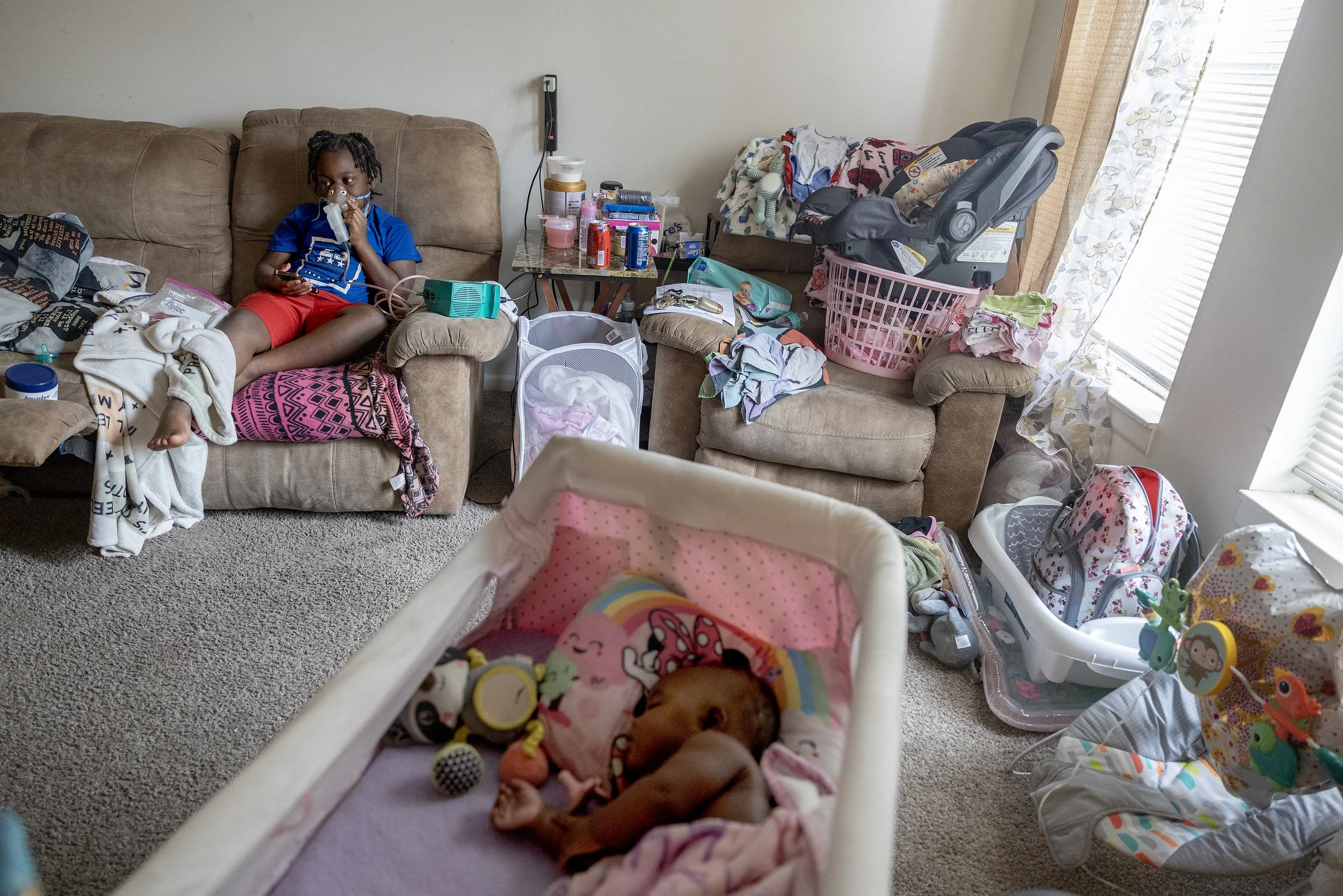
Guilmant’s son Qavion, 9, uses a nebulizer for asthma treatment, while his sister Kearrah lies in her crib. Guilmant moved her daughter into the living to reduce he exposure to mold on the upper floor.
Guilmant moved her bed and the baby’s crib to the living room to distance them from the worst of the mold.
Because her rent subsidy is with Heritage Park, not the public housing authority, she will likely lose the rent break.
“We don’t know how long it is going to be,” Walker said. “I just picked up a second job, so we eventually have the money to move.”