
With ICE the current crisis, Northsiders use proven blueprint to take care of community
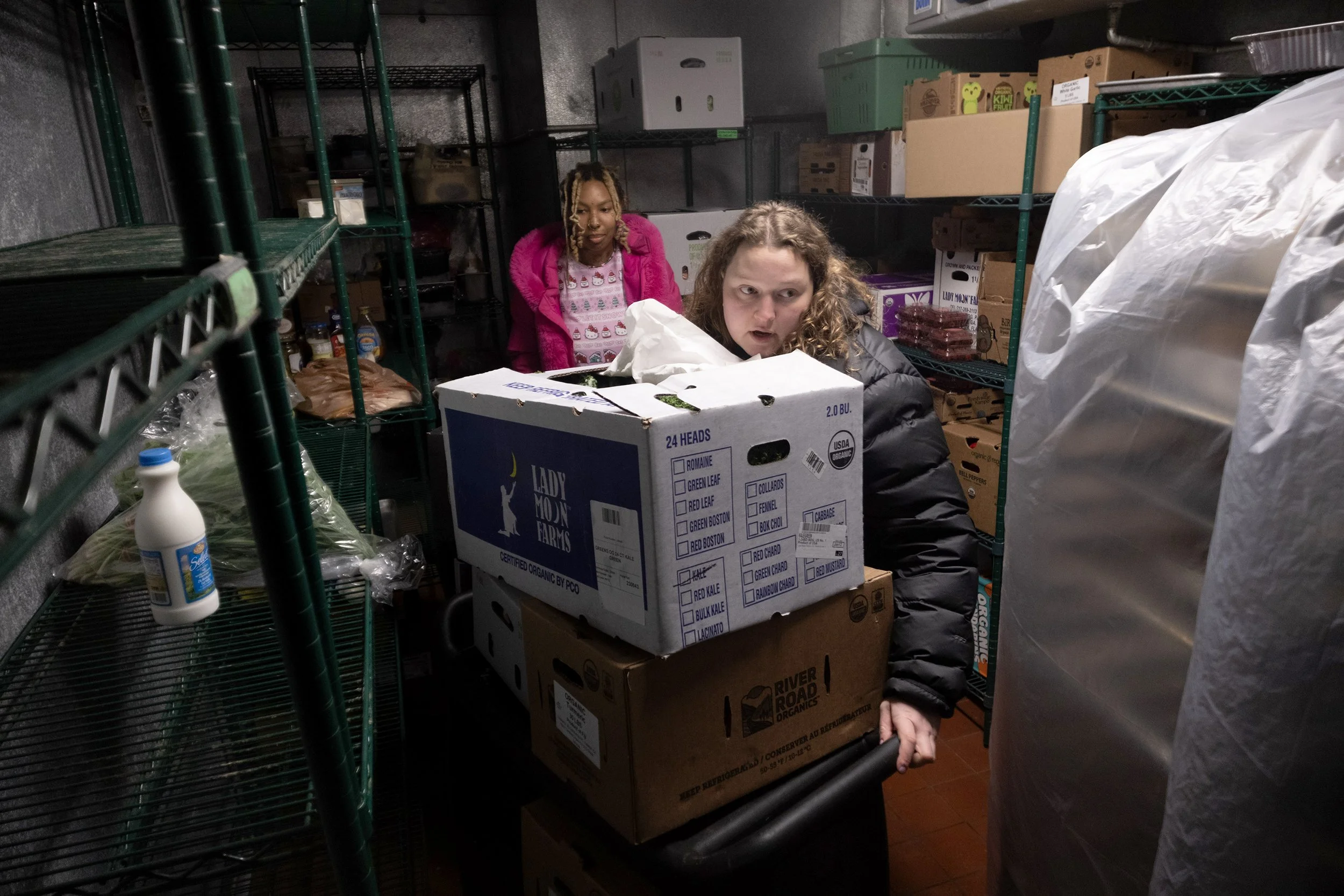
Olivia Maynard takes produce from a walk-in fridge at Keiko’s Food Trap Project Bodega to begin sorting for produce deliveries. Photo by Azhae’la Hanson
By Azhae’la Hanson and David Pierini, North News
President Donald Trump orchestrated a show of force when he sent more than 3,000 federal agents to Minnesota for a detain-and-deport operation of immigrants regardless of status.
Minneapolis was ready to resist.
A larger group of trained legal observers blew whistles, organized rallies, carried signs bearing bold messages, and, in many cases, stood between agents and their vulnerable targets. Two people lost their lives to an ICE agent’s gun.
But resistance here was far more formidable than what the news and social media projected.
Communities mobilized away from the front lines to deliver food to fearful immigrants, provide them with rides to work and school, and raise money to help families pay rent.
On the Northside alone, where crowd-sourced data reveals heavy ICE activity since December, residents have quietly worked to support fearful families in any way they could.
Events, such as the Northside Luminary Light Up in the Old Highland Peace Garden in January, raised money for a local church and school affected by ICE raids.

A two-evening Luminary Light Up in the Old Highland Peace Garden raised more than $5,000 for families impacted by Operation Metro Surge. Photo by David Pierini
Food pantries, including one known more for being a pet resource center, went into overdrive, taking food donations and recruiting volunteers to stock shelves and deliver staple items to shut-in families.
Several relief funds have been established for rent, utilities and food.
There were also many individual efforts. A Northside woman signed papers to be a legal guardian for a friend’s children should their parents be detained and deported. A local pastor has also moved church members to safe places when ICE was reportedly nearby. One local businessman has a community security team that confronts federal agents when they are staging on private property.
There is something uniquely Northside about the response, perhaps best illustrated by security guard Red Wooten, who in January stood up to ICE agents who tried to get behind the counter to pursue a fleeing suspect. He said he was standing his ground “10 toes down.”
Resident Danielle Tietjen, who volunteers, described the Northside as a community of talented and resourceful people. A place where not everyone can give much, but they give anyway.
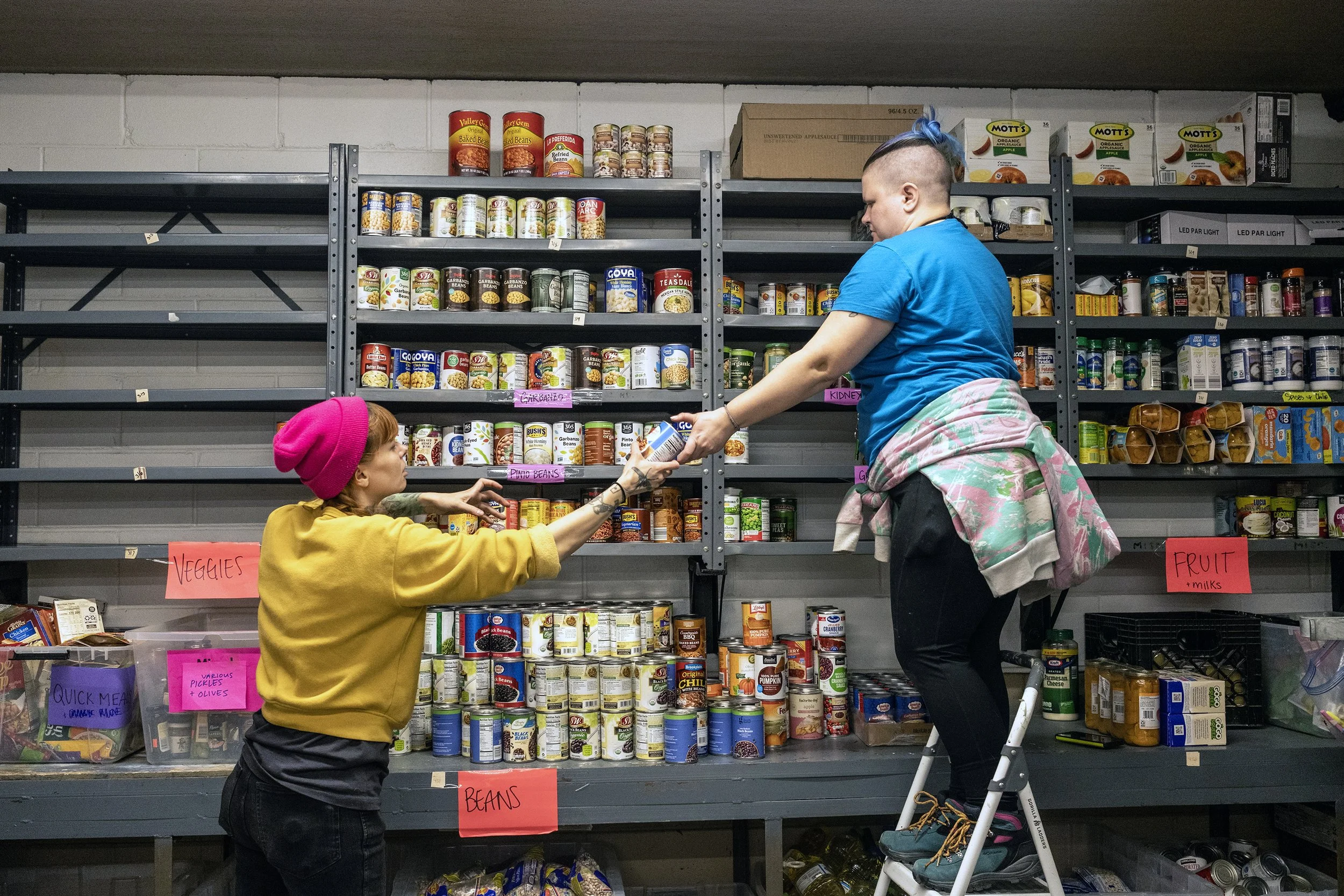
Volunteers with the Northside Pet Resource Center organize various types of beans in their People's Pantry. Photo by Azhae’la Hanson
“Everyone is bringing their tools to the table to build systems that work,” resident Danielle Tietgen said.
In this moment, the Northside is a community that walks the line of mobilizing in a crisis and doing so in a place where the majority of the population has histories of violent occupation and marginalization. It’s a quieter response, as necessary for survival, and protected from within.
As the story of this community continues to unfold, North News reported on a few of the many ways that North Minneapolis is responding to the crises of Trump's Metro Surge.
Helping both ends of the leash
The organization My Pitbull Is My Family at the Northside Pet Resource Center is primarily known for serving low-income pet owners. The organization has free pet food, low-cost vet care, and a food pantry called the People’s Pantry.
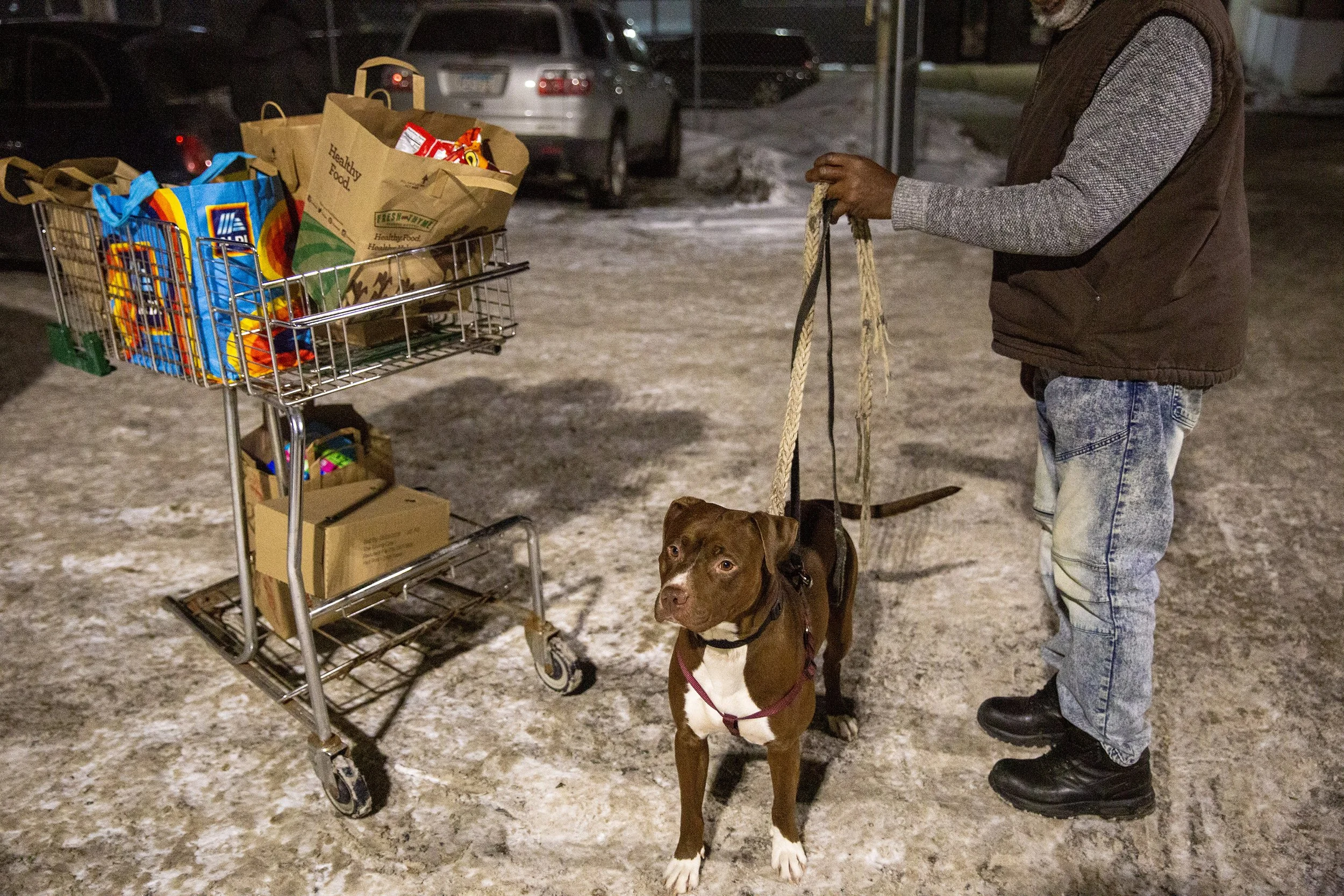
A man stood outside the Pet Resource Center after shopping with his dog. He left with free food for his household and for his dog. Photo by Azhae’la Hanson
In times of crisis, which include the ICE occupation and, previously, families with food insecurity following the murder of George Floyd, My Pitbull Is Family pivoted to help feed impacted families.
As more and more families were afraid to leave their homes, the non-profit mobilized nearly 200 volunteers to deliver groceries and pet supplies to shut-in families.
Executive Director Shannon Glenn said her organization is serving about 300 people per week.
“Oftentimes, people don't think of pets being impacted by societal impacts,” Glenn said. “We know that where there are pets, there are people, and where there's people, there's pets. And so if there's something that's impacting people, it's impacting the entire household. As an organization, we always focus on both ends of the leash.”
She said the need is growing rapidly as people look for ways to help their neighbors.
“The pantry is definitely exploding,” she said. “Community wants to come out and help and make sure that people are being taken care of.”
Camden family becomes a resource broker
Many grassroots aid operations are largely facilitated through a network of MPS teachers, students, and parents. Julie Ellingson and Hannah Miller, whose son Quinn and daughter Chloe attend Camden High School, have converted their family home into a donation drop-off and packaging site.
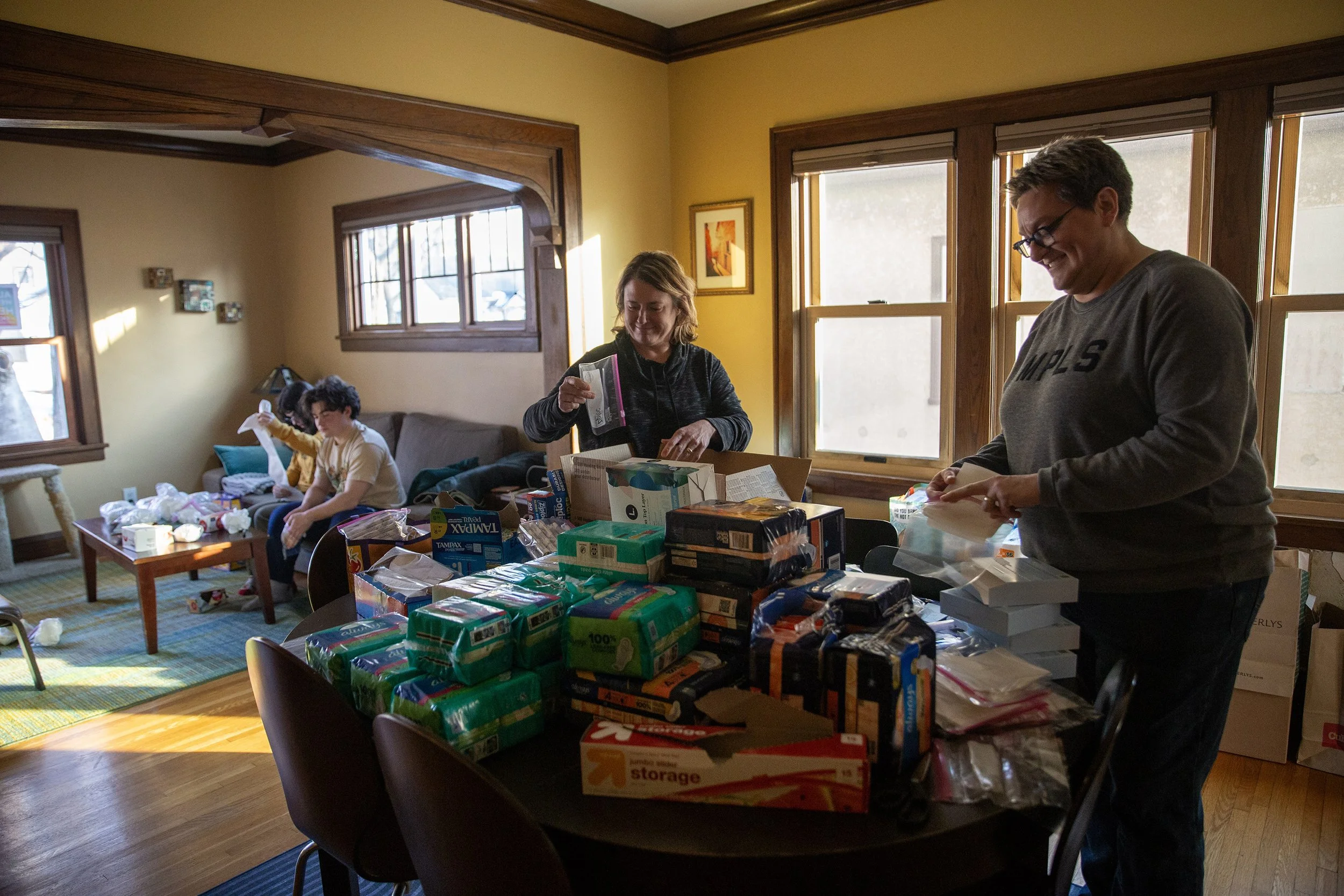
The Ellingson family spends a Sunday afternoon packing and organizing donations for families who are sheltering in place. Photo by Azhae’la Hanson
They estimate that some 300 Camden High students have opted to stay at home and continue class online. Their son Quinn, a baseball player, fears one of the team’s star players will be forced to sit out the season Quinn said. He added an inspirational quote he recently heard: “Let little acts build on each other and something that once felt daunting doesn't seem like that anymore.”
The murder of Renee Good sparked the family to be directly involved in helping immigrant families. While packing things like trash bags and feminine hygiene products, they’ve grown closer as a family and spend more time together than before.
While packing, a knock at the door interrupted and a bag of donations was quickly handed out.
“It’s a stunning display of democracy,” Miller said. “Neighborhood group pages have gone from event pages to real democratic spaces.”
Parents and teachers lead the relief
At Minneapolis Public Schools, like Bethune Elementary, teachers schedule shifts to patrol school properties before and after school, staring down large SUVs and tinted windows. Incidents close to the schools put them on lockdown. Hallways are quieter than usual, and everyone has their head on a swivel.
Children ask their teachers why recess is indoors today, and they are told that it’s to keep them safe.
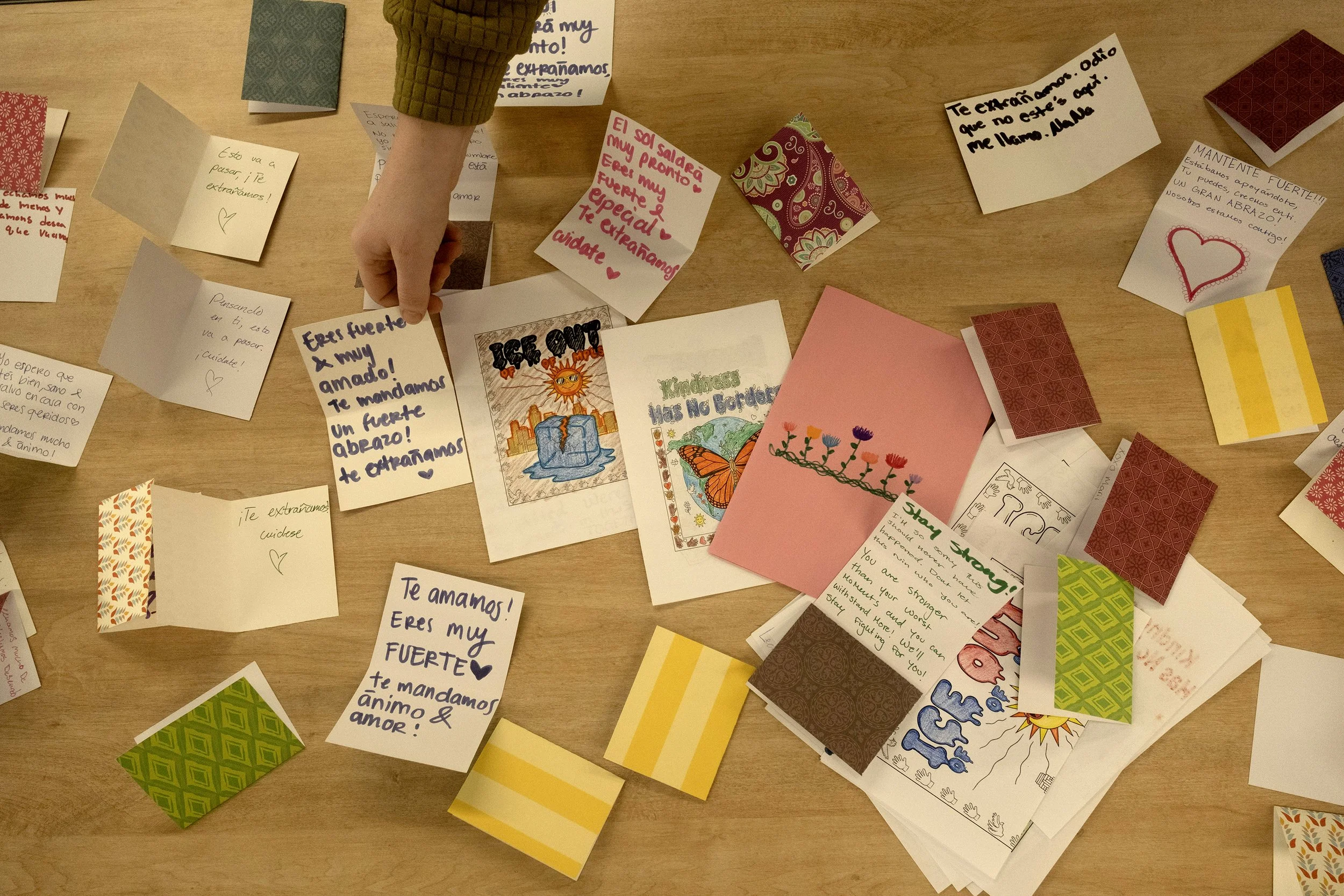
A local teacher prepares cards made for students that are sheltering in place. Photo by Azhae’la Hanson
Ellen Guettler, a Bethune parent, started a GoFundMe for families at the school.
Guettler said parents and teachers coordinate doing laundry, transporting people to medical appointments, and getting kids safely to and from school.
“The school was already in a crisis of being an underfunded North Minneapolis school,” she said. “It’s a crisis already on top of an injustice.”
Parents and teachers at every school have worked to assist impacted students and families. $72,000 was raised for North High in February.
Addressing growing food insecurity
Keiko Jackson opened her pantry, the Food Trap Project Bodega, last year in the back lot of the ZaRah Wellness Center on West Broadway Avenue in hopes of reinforcing the need for healthy food for Black and Indigenous members of North Minneapolis.
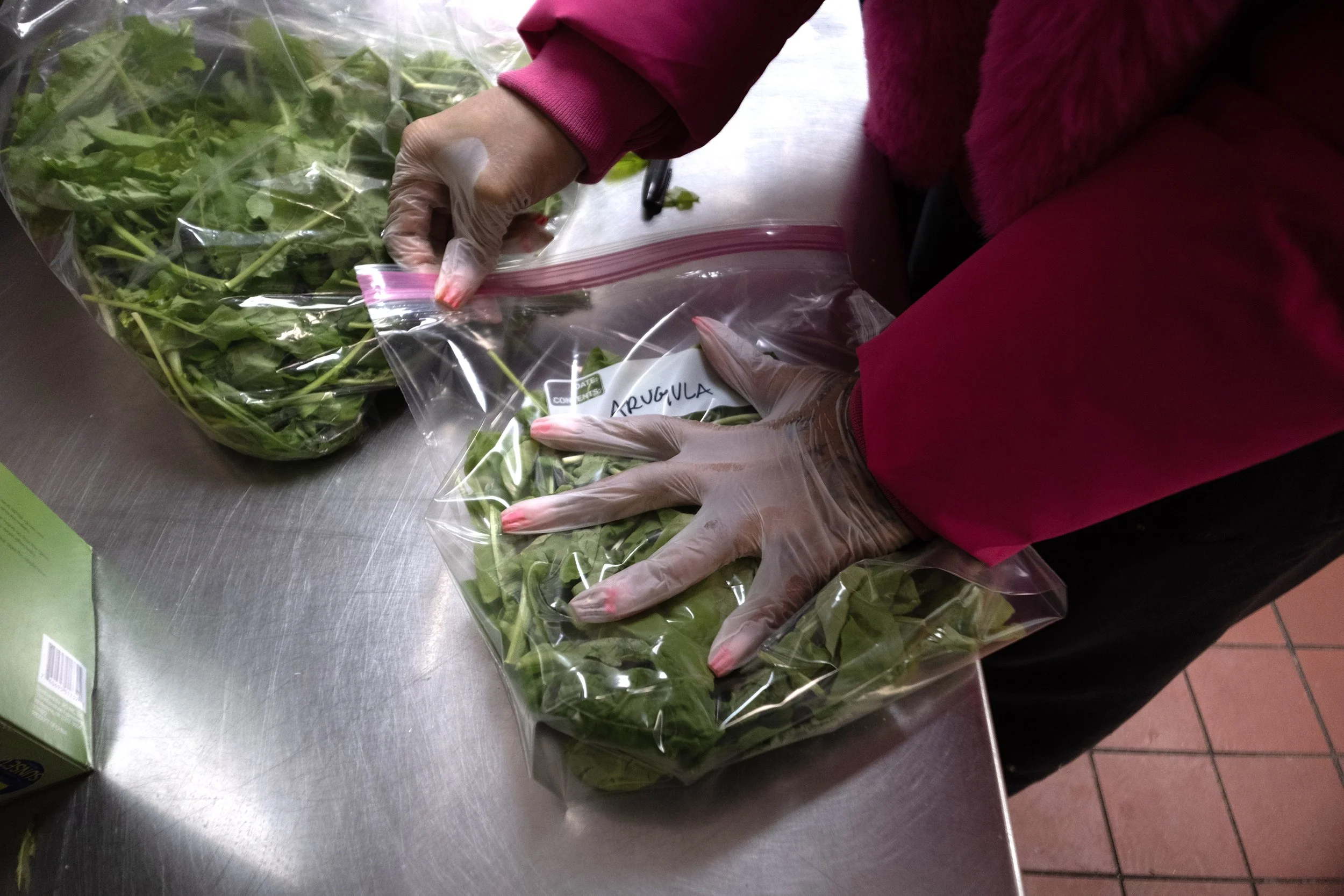
Keiko Jackson seals a bag of fresh arugula to pack for deliveries. She recently began delivering fresh produce from her Northside food pantry. Photo by Azhae’la Hanson
The pantry is free and unlocked for those who need it from 8 a.m. to 8 p.m. daily. But brutally cold weather and the fear of ICE raids forced Jackson in January to add volunteers and offer delivery, especially of fresh produce.
Jackson said her work was already being done before Operation Metro Surge, and even if the bulk of ICE agents leave the city, a food crisis still plagues the community. For her, it is about building community in a tangible way.
Sustainability is the next step up from rapid response.
“A lot of people who are doing the work right now are just a continued effort (of) what they have already been doing,” she said. “They may have upped the ante, or, you know, broadened their audience, but it’s always needed.”
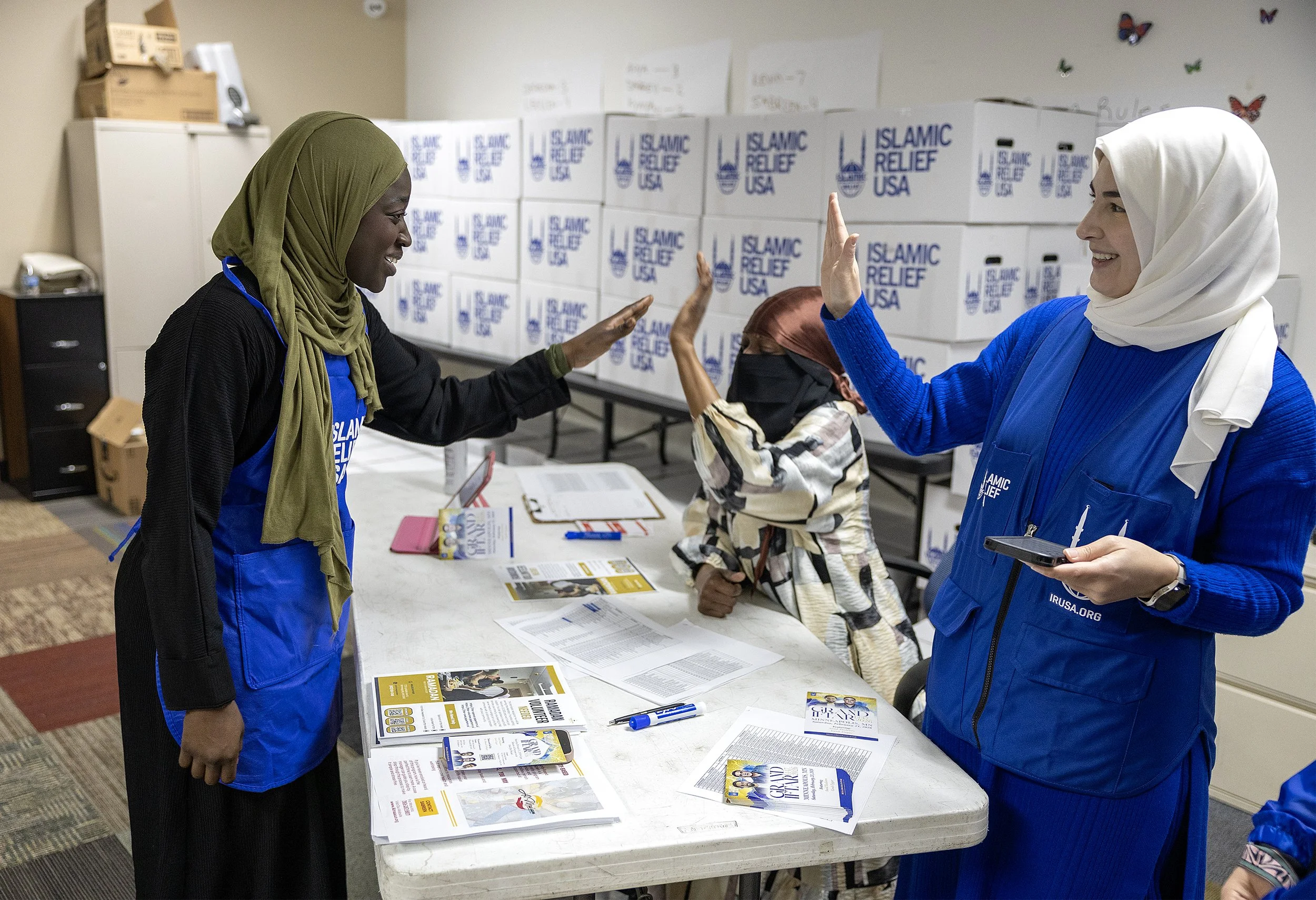
On the eve of the Muslim holy month of Ramadan, volunteers at Masjid An-Nur, including Omnay Mohamed, left, and Nora Nashawaty, right, helped distribute food boxes. The mosque and Islamic Relief USA prepared boxes for 92 families. Photo by David Pierin